Fun Puzzle Activities For Children At Every Age
Explore age-appropriate puzzle ideas that boost learning, focus, and fun for toddlers, preschoolers, and school-age kids.
Mar 27, 20259.2K Shares251K Views

Puzzles are a great way to support a child’s learning and development. Research in Developmental Scienceshows that children who play with puzzles often have better problem-solving and thinking skills. When kids match and fit pieces together, they learn how to think step by step and improve their memory. These simple activities also help build focus and logical thinking in a fun and engaging way.
Puzzles also spark creativity and give children a screen-free break. Instead of spending time on digital devices, kids can enjoy quiet time building shapes or solving pictures. This helps them grow patience, stay calm, and feel proud when they complete a puzzle. Overall, puzzles are a smart and playful way to help children grow both mentally and emotionally.
Age-Appropriate Puzzle Ideas For Different Developmental Stages
Children grow and learn at different speeds, so it’s important to choose puzzles that match their developmental stage. Picking the right puzzle helps kids stay engaged and build skills without feeling frustrated. Below are age-specific puzzle ideas that support healthy learning and fun.
Toddlers (1–3 Years Old)
Puzzle Types:
- Shape Sorters
- Knob Puzzles
- Chunky Wooden Puzzles
At this age, children are learning basic coordination and starting to understand shapes and colors. Shape sorters help toddlers match pieces based on size and form, improving hand-eye coordination. Knob puzzles, with large handles and simple images, support grip strength and object recognition. Chunky wooden puzzles with animal or vehicle pictures are also easy for small hands to handle.
📝 Tip: Use puzzles with just a few pieces (2–4) to avoid overwhelming the child.
Preschoolers (3–5 Years Old)
Puzzle Types:
- Jigsaw Puzzles(6–12 Pieces)
- Peg Puzzles
- Alphabet and Number Puzzles
Preschoolers enjoy more challenge and can handle puzzles with smaller pieces. Simple jigsaw puzzles help them recognize how shapes fit together. Peg puzzles still offer support with gripping but introduce more detail in the pictures. Alphabet and number puzzles help children get ready for school by teaching letter and number recognition in a playful way.
📝 Tip: Choose puzzles with familiar themes like animals, vehicles, or their favorite cartoons to keep them interested.
School-Age Children (6–9 Years Old)
Puzzle Types:
- Jigsaw Puzzles (25–100 Pieces)
- Word Searches
- Brain Teasers and Logic Puzzles
By this age, children are better at focusing and solving more complex problems. Larger jigsaw puzzles help strengthen their visual memory and patience. Word searches introduce reading and spelling in a fun way. Brain teasers and logic puzzles like matching games or “spot the difference” support critical thinking and attention to detail.
📝 Tip: Let children choose puzzles based on their hobbies or school subjects to make learning more fun.
DIY Puzzle Activities You Can Create At Home
DIY puzzle projects are a fantastic way to entertain and educate kids at home. Using everyday items like cardboard, buttons, or printable sheets, you can craft unique puzzles that cost next to nothingand give your children something new to play and learn with. These homemade puzzles aren’t just budget-friendly – they also encourage hands-on learning and quality family time. Working on puzzles together helps kids practice communication and problem-solving, all while strengthening family bonds through laughter and teamwork. Below are a few easy and creative puzzle activities you can make with common household materials.
1. Cereal Box Jigsaw Puzzle
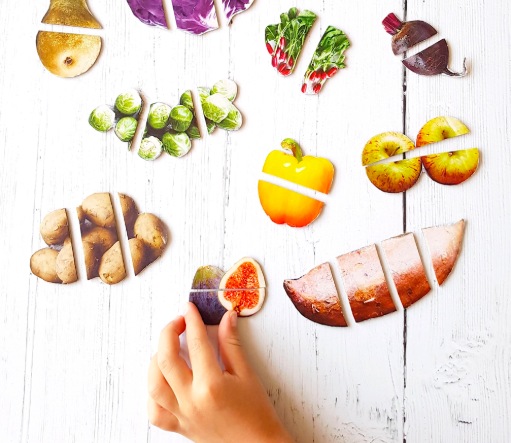
A child assembling a homemade puzzle using cut-out magazine pictures mounted on cardboard. Such recycled puzzles are simple to make and provide an engaging challenge for kids.
Turn an empty cereal boxinto a fun jigsaw puzzle. The front of a cereal (or cracker) box usually has a bright picture – perfect for a puzzle image. This activity reuses cardboardthat would otherwise be thrown away, making it eco-friendly and essentially freeto create. It’s also simple to adapt the difficulty by cutting the picture into as many pieces as you like. Here’s how to make your own:
Materials:
- An empty cereal box (or similar food box with a front image)
- Scissors or a craft knife (for adult use)
- Optional: Glue and a magazine picture or photo (if you want to use a different image)
Instructions:
- Cut Out the Panel:Carefully cut off the front panel of the cereal box. This will be the picture for your puzzle. (If you prefer to use a custom image, cut a piece of cardboard of similar size, glue a magazine picture or family photo onto it, and let it dry).
- Draw Puzzle Pieces (Optional):On the back of the cardboard, you can lightly sketch guiding lines for puzzle pieces. For young kids, start with just a few large, simple shapes. Older children can handle more, smaller pieces.
- Cut into Pieces:Cut the cardboard into puzzle pieces. You can start by cutting it into two or four big pieces for toddlers. For more challenge, cut those pieces again into irregular shapes. An adult should do the cutting if the cardboard is thick.
- Mix and Play:Jumble the pieces up and invite your child to put the picture back together. Show them how pieces align to form the whole image, then let them try on their own.
- Increase Challenge (For Later):Once they master the easy version, you can create new puzzles by cutting the box into more pieces or cutting along zigzag or curved lines for an “abstract” jigsaw.
Why It’s Affordable and Family-Friendly:This puzzle literally costs nothing– you’re recycling a used box and possibly old magazines, which is “a good way to recycle, reuse and educate”your child.
It’s also simple to adapt the difficulty by cutting the picture into as many pieces as you like. Here’s how to make your own: Crafting the puzzle together can be a fun art project (especially if you let the kids choose and glue on a picture). Then, solving the puzzle becomes a cooperative game. Parents and kids can work side by side hunting for the right piece, discussing the colors or characters on the pieces, and celebrating when the picture is complete. Puzzle-solving as a family not only boosts your child’s problem-solving skillsbut also provides quality bonding time, as everyone works toward a common goal in a playful way.
2. Button Matching Outline Puzzle
For this clever puzzle, all you need are some spare buttons(or jar lids or bottle caps – any small household objects will do) and paper. You’ll trace each button to create an outline, and the puzzle for your child is to match each button to its correct outline. It’s one of the quickest DIY puzzles to make, since you can use virtually anythingaround the house as the pieces. Kids love the challenge of figuring out which button fits which shape, and it subtly teaches them about shapes, sizes, and matching.
Materials:
- A variety of buttons in different sizes and shapes (ensure they are not so small as to be a choking hazard)
- A sheet of cardboard or heavy paper (light-colored, so outlines are visible)
- A pen or marker for tracing
- A glue stick or tape (optional, for securing the paper to a board)
Instructions:
- Prepare the Puzzle Board:If using thin paper, glue it onto cardboard for sturdiness. This will be your puzzle board.
- Trace the Buttons:Arrange several buttons on the board. Use a marker to carefully trace around each button, leaving distinct outlined shapes on the board. Make sure the outlines don’t overlap and that each is unique. You can trace some buttons right-side up and others upside down to vary the outlines if they differ.
- Mix Up the Pieces:Remove the buttons and shuffle them. Now the board has only the drawn outlines.
- Ready, Set, Match:Challenge your child to place each button onto its matching outline. They will examine the size and contour of each outline and figure out which button fits in that space. For very young children, start with a few very different buttons (e.g. one large, one small) to make it obvious. Increase the difficulty by using more buttons of similar shapes as they improve.
Why It’s Affordable and Fun for Families:This puzzle uses common odds and endsyou likely already have – no cost at all. Many of us have a jar of random buttons or bottle caps lying around. By turning them into a game, you’re getting extra use out of them. Parents can join in by helping trace the objects and then letting the kids take the lead in matching. Children will exercise fine motor skills and learn to notice shapes and sizes while fitting the buttons to the drawings.
It’s a great opportunity to sit together and talk (“Which one looks like this big circle? Let’s find a button that fills this outline.”). According to educators, such hands-on matching games let kids explore concepts like big and small, colors, and counting in a playful way. Solving this puzzle together also encourages teamwork and communication – you can take turns or race to find the right spot for each item, giggling along the way. In the end, it’s not just a puzzle solved, but time well spent together.
3. Print-and-Cut Picture Puzzle
If you have a printer (or even just paper and crayons), you can create a custom jigsaw-style puzzle using a printable template or a drawing made by your child. In this activity, kids get to design or color their own puzzle, then cut it out and reassemble it. Making the puzzle is half the fun! This creative process boosts their art skills and gives them a sense of accomplishment when they solve the puzzle they helped create.
Materials:
- A printable puzzle template ora drawn picture (you can find free blank puzzle templates online or draw a simple scene on paper)
- Printer and paper (if using a template)
- Crayons or markers (if coloring your own design)
- Cardboard (reuse a cereal box for backing)
- Scissors (and an adult’s help for cutting)
Instructions:
- Choose or Draw a Picture:Print a puzzle template from the internet, or draw a picture on a sheet of paper. Templates often have light lines showing puzzle piece shapes, or you can draw your own lines on the back of the paper later. If you printed a black-and-white template, let your child color in the picture creatively before moving on.
- Mount on Cardboard (Optional):For a durable puzzle, glue the paper onto a piece of cardboard (like a cut cereal box panel) and let it dry. This makes the pieces sturdier for little hands.
- Cut Out the Pieces:Following the puzzle piece lines (or the lines you’ve drawn on the back), cut the picture into puzzle pieces with scissors. Use fewer, larger pieces for a beginner puzzle (even just 4–6 pieces), and more pieces for a challenge. Older kids can practice their scissor skills by cutting along straight lines for square pieces. but an adult should help with trickier jigsaw shapes or if the material is thick.
- Solve Your Puzzle:Mix up the cut pieces and have your child put their puzzle back together. They will love seeing the picture they made come to life. If it’s too hard, offer hints or assemble the border together first. Once solved, you can scatter the pieces and let them try again anytime.
Why It’s Affordable and Engaging:Printable puzzle templates are usually free, and the other supplies (paper, glue, cardboard) are everyday items. This means you can make multiple puzzles at little to no cost. By drawing or coloring the puzzle image, kids invest their own creativity, making the activity more engaging for them. For example, a child might draw your family pet or a favorite cartoon, then enjoy cutting it into pieces and rebuilding it.
Parents will appreciate that this is a screen-free craft that holds children’s attention from start to finish. Moreover, doing art and puzzles together leads to wonderful bonding moments. You might sit and color side by side, then work as a team to solve the puzzle. The whole process “from creation to completion” becomes a fun family project, yielding lots of encouragement and pride when the final picture is revealed. Such shared activities create “lasting family memories”and turn an ordinary afternoon into quality family time. Plus, you end up with a homemade toy that can be reused or even gifted to grandparents to share the fun.
Educational Benefits Of Puzzle Play In Child Development
Puzzles are more than just fun – they help children grow important life skills. Here's how puzzle play supports early learning in a simple, hands-on way.
1. Builds Spatial Awareness
What it is:Spatial awareness is the ability to understand where things are in space — like knowing how puzzle pieces fit together.
How puzzles help:When kids rotate or flip pieces to find the right spot, they start to understand shapes, positions, and directions. This helps them with future tasks like reading maps, playing sports, and solving math problems.
Example:A child turning a triangle-shaped puzzle piece until it fits teaches the brain how to see objects from different angles.
Supported by:According to the National Association for the Education of Young Children (NAEYC), spatial play is key to strong math skills later in school.
2. Develops Fine Motor Skills
What it is:Fine motor skills involve the small muscles in the hands and fingers. These are needed for writing, buttoning clothes, and tying shoes.
How puzzles help:Picking up small pieces, turning them, and placing them in the right spots strengthens finger control and hand-eye coordination.
Example:A toddler trying to place a puzzle piece in the correct spot is practicing control, focus, and precision — all at once.
Supported by:The American Academy of Pediatricsemphasizes hands-on play like puzzles for building motor skills in early childhood.
3. Boosts Critical Thinking And Problem-Solving
What it is:Critical thinking means finding solutions, thinking ahead, and learning from mistakes.
How puzzles help:Kids learn to test different pieces, try again when they make a mistake, and notice patterns. This encourages persistence and independent thinking.
Example:A child learning that edge pieces go on the border first is solving a problem using logic.
Supported by:Studies in Early Childhood Education Journalshow puzzle-solving improves memory, reasoning, and decision-making in preschoolers.
4. Supports Language Development
What it is:Language development is how children learn to understand and use words.
How puzzles help:When parents talk about puzzle pieces — like colors, shapes, or animals — kids learn new words. Asking questions like “Where does this piece go?” helps children describe what they see and think.
Example:Pointing to a puzzle and saying “That’s a red square” teaches both color and shape vocabulary.
Supported by:Research by Zero to Three(a trusted child development organization) shows that shared play and talk during puzzles build early language and social skills.
5. Encourages Patience And Focus
What it is:Patience and focus help kids stay with a task and not give up when it gets hard.
How puzzles help:Solving a puzzle takes time. Children learn to stay calm, keep trying, and enjoy reaching the goal.
Example:Finishing a 12-piece puzzle gives a child confidence and a sense of success.
Supported by:Child psychologists agree that activities like puzzles teach delayed gratification and build concentration.
9 Tips To Keep Puzzle Time Engaging And Frustration-Free
1. Create a Cozy Puzzle Zone:Set up a calm, clutter-free space where your child can sit comfortably. Use a small table or a soft mat on the floor. Keep the area well-lit and quiet. A cozy space helps kids stay focused and relaxed while solving puzzles.
2. Rotate Puzzles Regularly:Don’t keep all puzzles out at once. Rotate them weekly or every few days. This keeps puzzle time fresh and exciting. Children love the surprise of trying something “new,” even if they’ve played with it before.
3. Start with the Right Level:Choose puzzles that match your child’s age and skill level. If a puzzle is too hard, it can cause frustration. If it’s too easy, they may lose interest. Start simple and slowly move to more complex puzzles as they gain confidence.
4. Celebrate Small Wins:Praise your child when they fit a piece correctly or finish a section. Use words like “Great job!” or “You did it!” Celebrating progress keeps them motivated and builds confidence.
5. Work Together:Join your child during puzzle time. Teamwork helps them stay focused and makes the experience fun. Ask gentle questions like, “Where do you think this piece might go?” to guide them without taking over.
6. Set a Time Limit:Don’t force long puzzle sessions. Set a time limit that matches your child’s attention span—maybe 10–15 minutes for younger kids. You can always come back later to finish.
7. Keep It Positive During Challenges:If your child gets stuck, stay calm. Offer help without pressure. Say things like, “This part is tricky, but we can figure it out together.” Avoid showing frustration. Your calm attitude will help them stay relaxed too.
8. Teach Breaks When Needed:If puzzle time gets too frustrating, encourage a short break. A few minutes away can refresh their mind. After the break, they often return with more focus and energy.
9. Use Encouraging Language:Use kind and simple phrases during play. Try “You’re getting better every time” or “That was a smart move!” Positive language builds patience and makes puzzle time more enjoyable.
🔍 FAQs: Fun Puzzle Activities For Children
What Types Of Puzzles Are Best For Toddlers?
The best puzzles for toddlers are wooden knob puzzles, large floor puzzles, and shape sorters. These puzzles are easy to hold and help improve hand-eye coordination, problem-solving skills, and early shape or color recognition. Choose puzzles with few pieces, bright colors, and safe, non-toxic materials.
How Do Puzzle Games Help In Early Childhood Development?
Puzzle games support early childhood development by improving memory, fine motor skills, and problem-solving. They also build patience, attention span, and hand-eye coordination. Working on puzzles helps children learn shapes, colors, and spatial awareness in a fun and active way.
Can Puzzles Improve My Child’s Problem-solving Skills?
Yes, puzzles can help improve your child’s problem-solving skills. As children try to fit pieces together, they learn how to think step by step, test ideas, and find solutions. This process builds thinking skills they will use in school and daily life.
What Are Some Fun DIY Puzzle Ideas For Preschoolers?
Some fun DIY puzzle ideas for preschoolers include cutting up a cereal box front into simple shapes, making puzzles from drawings on paper plates, or using popsicle sticks with pictures drawn across them. You can also cut shapes from cardboard and let kids match them. These activities support learning and are easy to make at home.
How Much Time Should A Child Spend Doing Puzzles Each Day?
Engaging in puzzles is a beneficial activity for children, enhancing skills like problem-solving and hand-eye coordination. While there isn't a specific daily time recommendation solely for puzzles, it's important to balance such sedentary activities with physical play. For children aged 1-4 years, the WHO advises spending at least 180 minutes in various physical activities spread throughout the day. Therefore, incorporating puzzles into a child's daily routine is valuable, but ensure they also have ample time for active play to support overall development.
Jump to
Age-Appropriate Puzzle Ideas For Different Developmental Stages
DIY Puzzle Activities You Can Create At Home
2. Button Matching Outline Puzzle
3. Print-and-Cut Picture Puzzle
Educational Benefits Of Puzzle Play In Child Development
9 Tips To Keep Puzzle Time Engaging And Frustration-Free
🔍 FAQs: Fun Puzzle Activities For Children
Latest Articles
Popular Articles