Puzzle Toys That Make A Better Choice Than Video Games
Designed to challenge the mind and enhance problem-solving skills, puzzle toys offer developmental benefits that extend far beyond simple play.
Jul 01, 20257.5K Shares109.5K Views
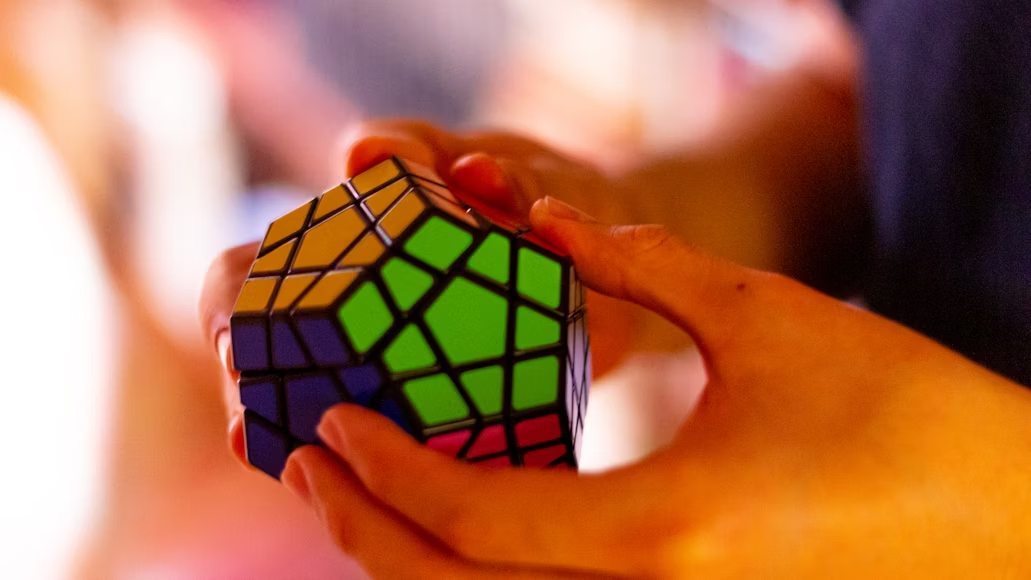
In a world where digital screens dominate children’s entertainment, many parents are turning to puzzle toys as a healthier, more enriching alternative. Designed to challenge the mind and enhance problem-solving skills, puzzle toys offer developmental benefits that extend far beyond simple play.
According to Verified Market Reports, the global puzzle toy market was valued at approximately USD 3.2 billion in 2024. It is projected to grow at a CAGR of 4.6% from 2024 to 2030. This reflects a clear rise in interest among parents, educators, and toy manufacturers.
As concerns grow over the potential negative effects of excessive screen time, puzzle toys present a valuable solution. They not only entertain but also support cognitive growth, motor skills, and independent thinking.
This article explores why puzzle toys are increasingly being seen as a smarter choice than video games. It also highlights some of the most engaging options available today.
Why Puzzle Toys Make A Better Choice Than Video Games
Puzzle toys offer a profoundly healthier and more enriching play experience than video games. While games often provide instant gratification, puzzles cultivate crucial long-term developmental skills: critical thinking, patience, and genuine problem-solving.
Unlike video games, which can lead to excessive screen exposure, puzzles champion tactile learning and real-world engagement, free from addictive digital reward loops. They challenge children to think deeply, focus, and progress at their own pace, promoting independent thought, emotional regulation, and vital perseverance.
Furthermore, puzzle play naturally promotes teamwork and conversation with family and friends, unlike solo gaming, which can often lead to isolation.
This difference is especially important in light of the ongoing video game lawsuit, which highlights concerns over addictive game design. The lawsuit underscores growing awareness around the mental and physical health risks linked to excessive gaming.
According to TorHoerman Law, these lawsuits allege that companies such as Rockstar Games, Epic Games, and Activision Blizzard intentionally designed games with addictive features. Parents claim that these companies failed to adequately warn about the risks of gaming addiction and related physical health problems.
Popular Puzzle Toys That Outperform Video Games
Below are some popular puzzle toys that provide meaningful engagement and are often considered better alternatives to video games:
1. Jigsaw Puzzles
Traditional jigsaw puzzlesremain one of the most effective alternatives to video games, offering varying levels of complexity suitable for all ages. Unlike digital puzzles, physical jigsaw puzzles engage tactile senses and require spatial visualization skills that translate to improved mathematical and scientific thinking.
The satisfaction of placing the final piece provides genuine accomplishment that digital achievements cannot replicate. These puzzles develop patience, attention to detail, and the ability to see how individual parts contribute to a larger whole.
2. Rubik's Cube And Twisting Puzzles
The iconic Rubik's Cube, created 50 years ago by Ernő Rubik and selling over 500 million units, epitomizes the power of twisting puzzles. These engaging toys cultivate algorithmic thinking, pattern recognition, and persistence. Solvers learn intricate move sequences, understanding how each action impacts the entire system. This inherent mathematical foundation provides excellent preparation for advanced thinking.
Modern variations, from beginner 2x2 cubes to complex multi-layered versions, continuously challenge and inspire young minds. These puzzles foster problem-solving skills and have captivated "countless students around the world" through a wide range of competitions.
3. Tangram Puzzles
Tangram puzzles, consisting of seven geometric shapes that can be arranged to form various figures, enhance spatial reasoning and creative problem-solving. These ancient Chinese puzzles encourage children to think about shapes, angles, and geometric relationships while promoting creativity and artistic expression.
Tangrams are particularly valuable because they have thousands of possible configurations, ensuring virtually unlimited replay value and continuous challenge.
4. LEGO And Building Block Systems
LEGO and similar building block toys combine puzzle-solving with imaginative construction, offering a hands-on, screen-free alternative to video games. These toys promote spatial awareness, engineering skills, and creativity, allowing children to build, test, and redesign without fixed outcomes.
According to Statista, LEGO had a brand value of nearly $8 billionin 2024, far ahead of competitors like Bandai Namco at $1.5 billion. In the U.S., nearly 90% of online toy shoppers recognized LEGO’s branded store, proving its enduring popularity and educational appeal.
5. Mechanical Puzzles
Mechanical puzzles like disentanglement puzzles, sliding puzzles, and sequential movement puzzlesdevelop logical reasoning and systematic thinking. Popular examples include metal wire puzzles, wooden burr puzzles, and sequential discovery puzzles.
These puzzles often require children to work backward from the solution, developing crucial analytical skills that benefit mathematical and scientific reasoning. The tactile nature of these puzzles engages fine motor skills while challenging cognitive abilities.
6. Pattern Blocks And Geometric Puzzles
Pattern blocks and geometric puzzles use colorful shapes to create designs and solve spatial challenges. These puzzles help children understand geometric concepts, symmetry, and mathematical relationships while encouraging artistic expression.
Unlike screen-based pattern games, physical pattern blocks allow children to manipulate shapes freely, rotate them, and explore three-dimensional relationships. This enhances spatial intelligence and mathematical understanding.
Frequently Asked Questions
How Do I Choose Age-appropriate Puzzle Toy Options For My Children?
To choose age-appropriate puzzle toys, consider your child’s developmental stage and interests. Look for toys labeled with suitable age ranges, focusing on safety, complexity, and skill-building. Younger children benefit from large, colorful pieces, while older kids enjoy more intricate puzzles that challenge logic, spatial reasoning, and problem-solving abilities.
How Can I Encourage My Child To Choose Puzzle Toys Over Video Games?
Encourage your child by making puzzle toys fun and accessible. Choose age-appropriate options, play together to spark interest, and praise their efforts. Highlight the satisfaction of solving puzzles and offer rewards for completing challenges to make learning feel rewarding and enjoyable.
What Is The Best Puzzle Game To Improve IQ?
Sudokuis one of the best puzzle games to boost IQ. It strengthens short-term memory and concentration by requiring players to plan and consider logical consequences. Solving Sudoku involves placing numbers strategically, enhancing pattern recognition, critical thinking, and mental agility.
Video games will likely remain a part of modern childhood. However, puzzle toys offer compelling advantages that make them superior choices for supporting healthy development. The physical engagement required by puzzle toys supports motor skill development while avoiding the sedentary lifestyle concerns associated with excessive gaming.
Investing in quality puzzle toys builds lasting benefits like sharper thinking, better academics, and stronger emotional resilience.
Latest Articles
Popular Articles