Master Simple Logic Puzzles With Solutions To Boost Your Brain Power
Challenge yourself with simple logic puzzles with solutions that sharpen focus, memory, and critical thinking skills. Start solving today!
Mar 27, 202528 Shares28.1K Views
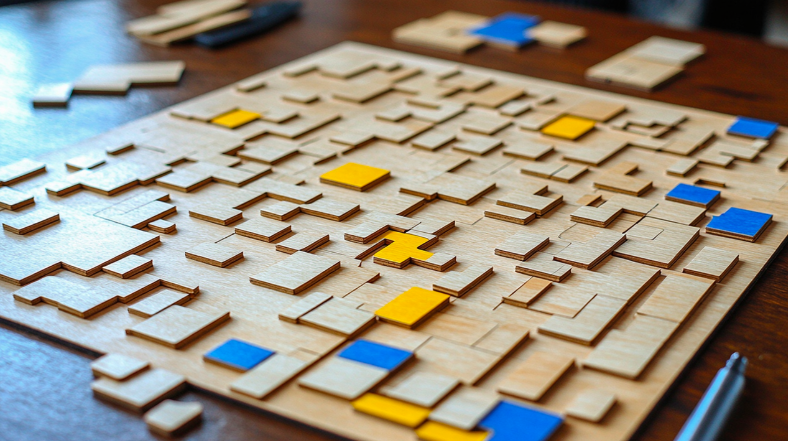
Logic puzzles are games or challenges that require you to use reasoning and critical thinking to solve them. They often involve patterns, sequences, or clues that lead to a solution. Solving logic-based brain teaserscan be a fun and engaging way to exercise your brain.
These puzzles are important because they help improve cognitive skills. By working through logic puzzles, you can boost your ability to think clearly, analyze situations, and make decisions. They also improve problem-solving abilities, which are useful in both everyday life and more complex situations.
People of all ages enjoy logic puzzles, from children to adults, because they provide a sense of accomplishment when solved. Logic-based brain teasersare not only fun but also help keep your mind sharp.
This article will explore a few simple yet challenging puzzles, along with their solutions, to show you how enjoyable and beneficial logic puzzles can be.
Benefits Of Solving Logic Puzzle
Solving logic puzzles offers a variety of mental and cognitive benefits that can help improve several aspects of brain function. These puzzles are not just fun; they are a powerful tool to enhance your mind.
Improved Focus
Logic puzzles require your full attention, helping you to practice and improve your ability to concentrate. When solving a puzzle, you need to block out distractions and stay focused on the task at hand. Regular practice can make it easier for you to focus on other tasks in your daily life as well.
Enhanced Memory
Engaging with logic puzzles helps improve both short-term and long-term memory. As you work through the challenges, your brain is constantly storing and recalling information. This boosts your ability to retain facts and recall them when needed. For example, remembering rules and patterns in puzzles can transfer to better memory function in daily activities.
Boosted Creativity
Solving puzzles stimulates creative thinking. By working through complex problems, you are trained to think outside the box. This creative thinking can be applied to other areas of life, from work to personal projects. When you regularly solve puzzles, you are essentially training your brain to approach challenges in new and innovative ways.
Development Of Critical Thinking
Logic puzzles encourage you to use critical thinking skills. You need to analyze situations, break down problems, and find solutions systematically. This strengthens your problem-solving skills and ability to think logically and strategically in any situation.
Anyone Can Benefit From Logic Puzzles
Regardless of age or background, everyone can enjoy the cognitive benefits of solving logic puzzles. Whether you are young or old, logic puzzles help keep your mind sharp. They are simple, accessible, and provide mental exercise that can benefit your overall brain health.
4 Types Of Simple Logic Puzzles
Logic puzzles are a fun way to exercise your brain. They can be simple or challenging, but all are designed to make you think critically and improve your problem-solving skills. Below are a few common types of simple logic puzzles that people of all levels can enjoy:
1. Sudoku Puzzles
Sudokuis a number-based logic puzzle. The grid consists of 9 rows and 9 columns, divided into 9 smaller 3x3 grids. The goal is to fill in the grid with numbers from 1 to 9, ensuring that each number appears exactly once in each row, column, and smaller grid.
Example:Here is a simple 4x4 Sudoku puzzle (instead of 9x9) to make it easier for beginners: Fill the empty cells with numbers 1-4, ensuring no number repeats in any row, column, or small grid.
2. Pattern Recognition Puzzles
Pattern recognition puzzles require you to identify a sequence or pattern within a series of shapes, numbers, or letters. These puzzles help enhance your ability to recognize regularities in data.
Example:What comes next in the pattern: 2, 4, 6, 8, __? Answer: 10. This is a simple number pattern that increases by 2 each time.
3. Riddles
Riddles are short puzzles that challenge your mind to think in creative ways. They often use wordplay and clues that are not always straightforward. The key to solving riddles is to think outside the box.
Example:"I speak without a mouth and hear without ears. I have no body, but I come alive with the wind. What am I?" Answer: An echo.
4. Number Puzzles
Number puzzles are problems that involve mathematical operations or logical reasoning to find the correct answer. These puzzles can involve addition, subtraction, multiplication, or division.
Example:If you add 5 to this number, you get 15. What is the number? Answer: 10. (15 - 5 = 10)
How To Solve Simple Logic Puzzles: Tips & Tricks
Solving logic puzzles can be both fun and challenging. To make it easier, you can use several strategies that break down the puzzle and make the process more manageable. Here are some practical tips to help you approach logic puzzles effectively:
1. Break Down The Puzzle Into Smaller Parts
The first step in solving any logic puzzle is to divide it into smaller sections. Instead of trying to solve the entire puzzle at once, focus on one part of the puzzle at a time. This will help you make sense of complex puzzles and prevent you from feeling overwhelmed.
2. Look For Patterns
Patterns are often key to solving logic puzzles. Whether it's a repeating number, a shape, or a sequence, identifying a pattern can give you a big clue about the solution. Always look for these patterns early on, as they can guide your next steps.
3. Use The Process Of Elimination
In many puzzles, not all options are correct. The process of elimination is a useful strategy to narrow down possible answers. If a particular choice doesn’t work, eliminate it and move on to the next option. This will help you focus on the remaining possibilities and solve the puzzle faster.
4. Stay Patient And Take Your Time
Patience is key when solving logic puzzles. Don’t rush through the process. Take your time to carefully think through the problem. If you get stuck, it’s okay to step back, take a break, and come back with fresh eyes. Sometimes, a solution becomes clear after a bit of time away from the puzzle.
5. Work Step-by-Step
Solving logic puzzles is a process that requires a methodical approach. Instead of jumping to conclusions, take each step carefully. Follow the clues and think logically about each decision. Stay organized by keeping track of your work, so you don’t repeat steps or miss important details.
6. Practice Regularly
Like any skill, solving logic puzzles gets easier with practice. The more you practice, the quicker you'll start recognizing common puzzle patterns and tricks. Regular practice will also help improve your problem-solving skills over time, making it easier to tackle more complex puzzles.
5 Popular Simple Logic Puzzles With Solutions
1. The Three Switches Puzzle
The Puzzle:You are in a room with three switches. Each switch controls one of three light bulbs in another room. You cannot see the light bulbs from the room with the switches. Your task is to figure out which switch controls which light bulb. You can only enter the room with the bulbs once. How do you do it?
Solution:
- Turn on the first switch and leave it on for a few minutes.
- After a few minutes, turn off the first switch and quickly turn on the second switch.
- Enter the room with the light bulbs.
2. The Two Doors Puzzle
The Puzzle:You are faced with two doors. One leads to freedom, the other to certain death. In front of each door, there is a guard. One guard always tells the truth, and the other always lies. You do not know which guard is which. You can ask one guard one question to determine which door leads to freedom. What question do you ask?
Solution:Ask either guard, “If I were to ask the other guard which door leads to freedom, which door would they point to?”
- The truth-teller will tell you the wrong door because they will honestly tell you what the liar would say.
- The liar will also tell you the wrong door because they will lie about what the truth-teller would say. Thus, you can always choose the opposite door to the one they tell you.
3. The River Crossing Puzzle
The Puzzle:A farmer needs to cross a river with a wolf, a goat, and a cabbage. He has a boat, but it can only carry himself and one other item at a time. He cannot leave the wolf and the goat together, or the wolf will eat the goat. He cannot leave the goat and the cabbage together, or the goat will eat the cabbage. How can the farmer get all three across safely?
Solution:
- The farmer takes the goat across the river first and leaves it on the other side.
- The farmer returns alone to the starting side.
- The farmer then takes the wolf across the river.
- The farmer leaves the wolf on the other side but takes the goat back with him.
- The farmer leaves the goat on the starting side and takes the cabbage across the river.
- The farmer leaves the cabbage with the wolf and returns to get the goat.
- Finally, the farmer takes the goat across, and all three are safely on the other side.
4. The Monty Hall Problem
The Puzzle:You are on a game show, and you are given a choice between three doors. Behind one door is a car, and behind the other two are goats. After you pick a door, the host, who knows what’s behind each door, opens one of the other two doors, revealing a goat. The host then asks if you want to switch your choice to the other unopened door. Should you switch or stay with your original choice?
Solution:You should always switch. Here’s why:
- When you first pick a door, there’s a 1/3 chance you chose the car and a 2/3 chance you chose a goat.
- When the host reveals a goat behind one of the other doors, the 2/3 chance that you originally picked a goat transfers to the remaining unopened door. Thus, by switching, you have a 2/3 chance of winning the car, compared to a 1/3 chance if you stay with your original choice.
5. The Box and Balls Puzzle
The Puzzle:You have 12 balls. One of them is slightly heavier or lighter than the rest, but you don’t know which one it is. You also have a balance scale. What is the fewest number of weighings needed to determine the odd ball and whether it is heavier or lighter?
Solution:The fewest number of weighings needed is 3. Here’s how:
- Divide the 12 balls into three groups of 4 balls each.
- Weigh two of the groups against each other.
- Take the group with the odd ball and divide it into three groups of 1 ball each.
- Weigh two of the balls against each other.
FAQs (Frequently Asked Questions)
How Can Logic Puzzles Improve My Problem-solving Skills?
Logic puzzles enhance problem-solving skills by encouraging critical thinking and pattern recognition. They require you to analyze information, identify relationships, and develop strategies to find solutions. Regular practice with these puzzles can improve your ability to approach complex problems methodically and think creatively.
Can Logic Puzzles Be Used To Enhance Memory And Concentration?
Engaging in logic puzzles can enhance memory and concentration by stimulating the prefrontal cortex, which is vital for cognitive functions like thinking, decision-making, and problem-solving. However, while these puzzles can improve performance on similar tasks, there's limited evidence that benefits transfer to broader cognitive abilities. Therefore, incorporating logic puzzles into your routine may offer specific cognitive benefits, but they should complement other activities that promote overall brain health.
What Age Group Can Benefit From Solving Logic Puzzles?
Logic puzzles are beneficial across various age groups, enhancing cognitive abilities and problem-solving skills.
Children (Ages 6-12):Engaging in logic puzzles helps school-aged children improve concentration, bolster academic skills, and foster social interaction. Complex jigsaw puzzles, crosswords, and logic games support learning in subjects like math and reading.
Teenagers (Ages 13-19):For teenagers, solving puzzles serves as an excellent stress reliever and a tool for mental health maintenance. Engaging in puzzles like Sudoku, mechanical puzzles, and escape room challenges can help teens manage the pressures of school and social life.
Adults (Ages 20-64):Adults benefit from puzzles in several ways, including cognitive maintenance, stress management, and digital detox. Expert-level jigsaw puzzles, crossword puzzles, and brain teasers keep the mind sharp and offer a reprieve from digital screens.
Seniors (Ages 65+):For seniors, puzzles are key in preventing cognitive decline and promoting memory retention. Engaging in large-piece jigsaw puzzles, memory games, and trivia can help maintain cognitive functions and offer social engagement.
How Long Should I Spend On A Simple Logic Puzzle Before Moving On To Another One?
When solving simple logic puzzles, it's generally recommended to spend about 5 to 10 minutes per puzzle. This timeframe allows you to apply logical reasoning effectively without becoming overly frustrated. If you haven't found the solution within this period, it's often more beneficial to move on to another puzzle. This approach keeps your practice sessions engaging and prevents diminishing returns from prolonged struggle.
Latest Articles
Popular Articles