Why Online Gaming Is Still So Popular In 2026
Why is online gaming so popular in 2026? Explore social play, mobile access, constant updates, competition and technology that keep players coming back.
Oct 09, 2026
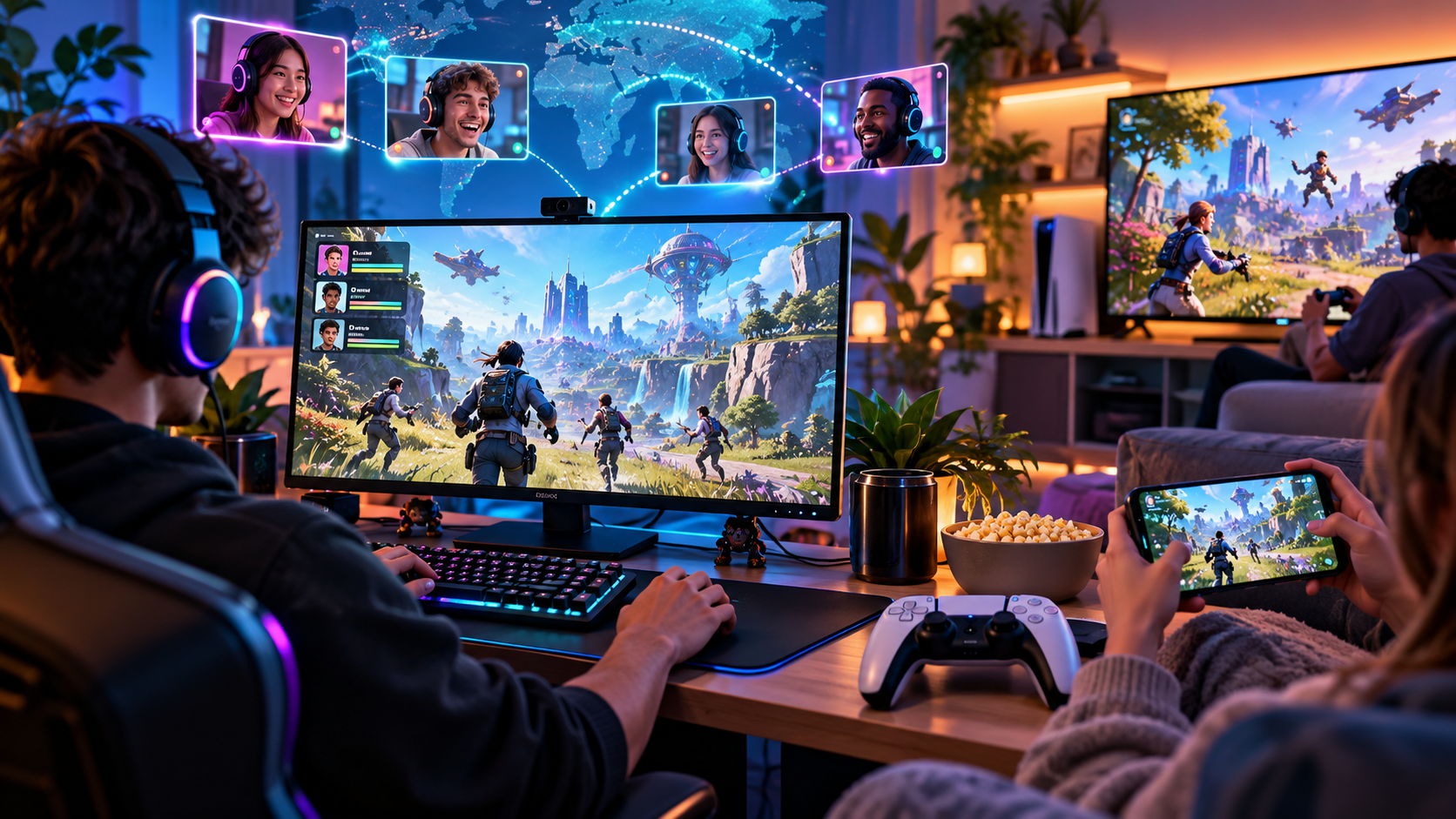
Online gaming has become one of the most flexible forms of digital entertainment. Players can compete, cooperate, explore, solve puzzles or simply unwind, often across phones, PCs and consoles.
Its staying power is not explained by one hit game or short-lived trend. It comes from a combination of social connection, easy access, enormous variety, regular updates and technology that keeps reducing the barriers to playing.
Why Is Online Gaming So Popular In 2026?
Online gaming remains popular because several advantages reinforce each other. It is easy to access, offers an enormous range of experiences and can be social, competitive or relaxing depending on what a player wants.
The main reasons include:
- Social connection:friends and communities can play together regardless of distance.
- Huge variety:players can move between competitive games, cooperative adventures, puzzles, sports, strategy and many other genres.
- Easy access:phones, PCs, consoles and tablets provide several ways to play.
- Cross-platform features:many games make it easier for people on different devices to play together.
- Regular updates:new content can keep established games interesting for years.
- Progression and competition:rankings, achievements and skill development give players reasons to return.
- Streaming and communities:games now extend into livestreams, esports, guides and online fan communities.
- Improving technology:better connectivity, cloud services and matchmaking reduce friction.
These factors help explain why online gaming has developed into a long-term form of mainstream entertainment rather than a short-lived technology trend.
Social Play Turns Games Into Places To Meet
One of online gaming's biggest strengths is that the experience does not have to end with the game itself.
Friends who live in different cities or countries can meet for a cooperative mission, a racing session, a football match or a few rounds of a competitive shooter. Guilds, clans, voice chat and recurring multiplayer groups can turn a game into a regular social meeting place.
That helps explain why multiplayer games can remain active for years. Players may initially arrive because they like the mechanics, but friendships and communities can give them another reason to return.
A 2025 global surveyof 24,216 active players across 21 countries found that 62% believed video games foster positive connections, while 64% said gaming helped them feel less isolated or lonely by connecting them with other people.
Players looking specifically for shared experiences can also explore some of the best multiplayer games for PC, ranging from competitive titles to games designed around cooperation.
There Is A Game For Almost Every Kind Of Player
Online gaming is not a single experience.
A competitive player might want tactical shooters, racing games or ranked strategy matches. Someone else may prefer an MMORPG that provides months of exploration and character development. Other players gravitate towards digital card games, social party games, sports titles or short puzzle sessions.
That range matters because people do not always want the same type of entertainment.
A long campaign may suit a free weekend, while a ten-minute puzzle may work better during a commute or lunch break. Some players want a difficult challenge. Others simply want a familiar game that helps them switch off.
For people interested in the quieter end of that spectrum, there are plenty of puzzle games for adultsthat focus more on logic, exploration and problem-solving than competition.
The ability to choose between intense and relaxed experiences makes gaming adaptable rather than restrictive.
Mobile Gaming Makes Online Play Easy To Access
The smartphone has substantially lowered the practical barrier to gaming.
Free-to-play models can lower the upfront barrier even further, letting people try a game before deciding whether to spend money. That accessibility can widen a game's audience, although optional purchases and monetisation systems vary substantially between titles.
Mobile gaming is central to that accessibility. Newzoo forecasts 3.7 billion players worldwide in 2026and identifies mobile as the largest gaming platform by revenue, ahead of console and PC. That scale shows how far gaming has expanded beyond dedicated consoles and PCs.
Digital puzzle appsare a good example of how mobile games can range from simple daily challenges to more elaborate story-led and spatial puzzles.
That ability to play almost immediately is a major part of online gaming's staying power.
Cross-Platform Play Has Removed More Barriers
Historically, owning the wrong system could mean being unable to play with a friend.
That problem has not disappeared completely, but many modern games now support some combination of cross-play, shared accounts or cross-progression.
Where those features are supported, a PC player may be able to join someone on a console, while account-based progression can make switching between compatible devices less disruptive.
This matters because multiplayer games depend on people being able to find one another. The fewer technical barriers between friends, the easier it becomes for a group to keep playing the same title.
Cross-platform features can also extend the useful life of a game by combining communities that might previously have been separated by hardware.
Constant Updates Keep Familiar Games Fresh
For many online games, release day is now the beginning rather than the end of development.
Developers can introduce new maps, modes, characters, missions, seasonal events, balance changes and expansions long after launch. A familiar game can therefore change enough to provide new reasons to return without requiring players to learn an entirely new system.
This is particularly powerful in games with persistent online communities. Players already understand the core mechanics and may already have friends there, so new content has an immediate audience.
Updates can also respond to player behaviour. A balance problem can be adjusted, unpopular mechanics can be revised and successful ideas can be expanded.
There is a downside. Too many limited-time events, aggressive monetisation systems or constant progression requirements can make a game feel like an obligation rather than entertainment.
The strongest long-running games tend to give players reasons to return without making every absence feel like a punishment.
That balance between familiarity and novelty is one of the reasons successful online titles can survive for years.
Progression And Mastery Give Players Reasons To Return
Online games are particularly good at showing progress.
Ranks, achievements, unlocks, equipment, character builds and increasingly difficult challenges give players visible evidence that they are improving or moving towards something.
Sometimes the reward is practical. A new item might change the way the game is played. Sometimes it is mostly symbolic, such as a rare achievement or cosmetic item that demonstrates what a player has completed.
The strongest systems make the journey itself worthwhile rather than relying entirely on the prize at the end.
That is also why memorable video game completion rewardscan feel satisfying. A good reward recognises the effort a player has already invested instead of simply creating another repetitive task.
Skill provides a different form of progression. Competitive games offer almost unlimited room to improve positioning, timing, teamwork, decision-making or mechanical ability.
Even after the content is familiar, mastery can provide another reason to keep playing.
Gaming Can Be Relaxing As Well As Competitive
Online gaming is often associated with competition, but competition is only one reason people play.
The same global Power of Play survey found that 66% of players cited having fun as a reason for playing, while 58% cited stress relief or relaxation.
That helps explain the popularity of slower experiences such as puzzles, building games, life simulations and cooperative adventures.
A familiar game can provide structure after a busy day. Players already know the rules, know where to find what they need and can choose an activity appropriate to the amount of time available.
For some people that means an intense ranked match. For others it might mean decorating a virtual home, completing a daily puzzle or exploring a world with friends.
Online gaming succeeds partly because it can accommodate both.
Streaming, Esports And Communities Extend Games Beyond Playing
A successful game can now entertain people even when they are not actively playing it.
Competitive tournaments turn games into spectator events. Livestreams and recorded videos let audiences watch skilled players, entertainers or friends. Online communities create guides, discussions, challenges, modifications and fan content.
This gives games a wider cultural life.
A difficult competitive title, for example, may attract people who enjoy watching high-level play even if they have no intention of reaching that level themselves. A complicated role-playing game can develop an ecosystem of guides and community knowledge that makes it easier for new players to participate.
Creators also expose audiences to games they may never have discovered through a traditional advertisement or shop page.
As a result, the audience surrounding a game can become almost as important as the software itself.
Better Technology Has Reduced Friction
Online gaming still depends on hardware, software and a suitable internet connection, but many parts of the experience have become easier.
Faster connections can reduce waiting and improve real-time multiplayer experiences. Automatic updates simplify maintenance. Cloud saves can protect progress and make supported account transfers easier. Voice tools allow groups to coordinate without needing a separate physical setup.
Cloud gaming has added another option. It does not remove the need for suitable devices or reliable internet, and availability varies by service and title, but it can reduce the local hardware demands of supported games.
Matchmaking has also improved the ability of large communities to find suitable opponents or teammates without manually organising every session.
None of these developments makes a weak game enjoyable by itself. What technology can do is remove some of the friction between deciding to play and actually getting into a game.
Where Online Casino Gaming Fits
The phrase "online gaming" is sometimes also used in connection with online casinos, although gambling is a separate, regulated activity from ordinary video gaming.
Online casinos share some of the characteristics that have made digital entertainment convenient. They can provide many types of games through one account, including slots, blackjack, roulette and live dealer formats, while mobile interfaces allow eligible users to access those games without visiting a physical venue.
People comparing platforms may use resources such as Card Player's updated listto look at features including payment methods, game selection and promotional terms.
Online casino rules, licensing requirements and minimum ages vary by jurisdiction, so players should check the rules and regulatory status that apply where they live before using a platform.
That distinction matters. Casino gaming involves financial risk, while most of the online gaming discussed elsewhere in this article is conventional video gaming.
Why Online Gaming Is Likely To Remain Popular
Online gaming does not depend on one genre, one device or one generation of players.
Its durability comes from its ability to change.
A game can be a competitive sport for one person and a social meeting place for another. Mobile players can fill a few spare minutes, while dedicated groups can spend an evening completing a raid or tournament. Puzzle games can provide quiet concentration, while persistent online worlds can give communities a place to meet for years.
New technology will continue to alter how games are delivered, but convenience alone is not the main reason players return.
The strongest online games combine accessibility with something worth returning for, whether that is friendship, competition, discovery, mastery or relaxation.
That combination explains why online gaming is still so popular in 2026 and why it is likely to remain a major form of entertainment for the foreseeable future.
Frequently Asked Questions
Why Is Online Gaming So Popular?
Online gaming combines convenience, variety, social interaction and progression. Players can choose between short casual sessions and deeper competitive or cooperative experiences, often while staying connected with friends and wider communities.
Is Online Gaming Only Popular With Younger Players?
No. Gaming now spans a much wider age range. Recent industry research shows substantial participation among adults as well as younger players, with the average player considerably older than the stereotypical teenage-gamer image suggests.
Why Has Mobile Gaming Become So Important?
Mobile phones make gaming accessible without requiring a dedicated console or gaming PC. They are particularly suited to short sessions and allow people to play in more places and at more times.
What Keeps Online Games Popular For Years?
Strong communities, regular content updates, competitive depth, progression systems and social relationships can all extend a game's lifespan. Games that continue evolving without overwhelming players have more opportunities to remain relevant.
Is Online Gaming Still Growing in 2026?
Yes. The global gaming audience is still expanding, although growth varies by region and platform. Mobile remains particularly important because it gives billions of people access to games without requiring a dedicated console or gaming PC.
Why Do Online Games Often Last Longer Than Offline Games?
Online games can evolve after release through new modes, events, characters, expansions and balance changes. Multiplayer communities also give players social and competitive reasons to return even after they are familiar with the core game.
Jump to
Why Is Online Gaming So Popular In 2026?
Social Play Turns Games Into Places To Meet
There Is A Game For Almost Every Kind Of Player
Mobile Gaming Makes Online Play Easy To Access
Cross-Platform Play Has Removed More Barriers
Constant Updates Keep Familiar Games Fresh
Progression And Mastery Give Players Reasons To Return
Gaming Can Be Relaxing As Well As Competitive
Streaming, Esports And Communities Extend Games Beyond Playing
Better Technology Has Reduced Friction
Where Online Casino Gaming Fits
Why Online Gaming Is Likely To Remain Popular
Frequently Asked Questions
Latest Articles
Popular Articles