A One Piece Game Fruit Tier List: Best Picks Before You Reset
A One Piece Game fruit tier list that ranks fruits by goal, upgrade path, PvE, PvP, and beginner value so you can choose the right fruit to keep.
Mar 09, 202617.8K Shares539.6K Views
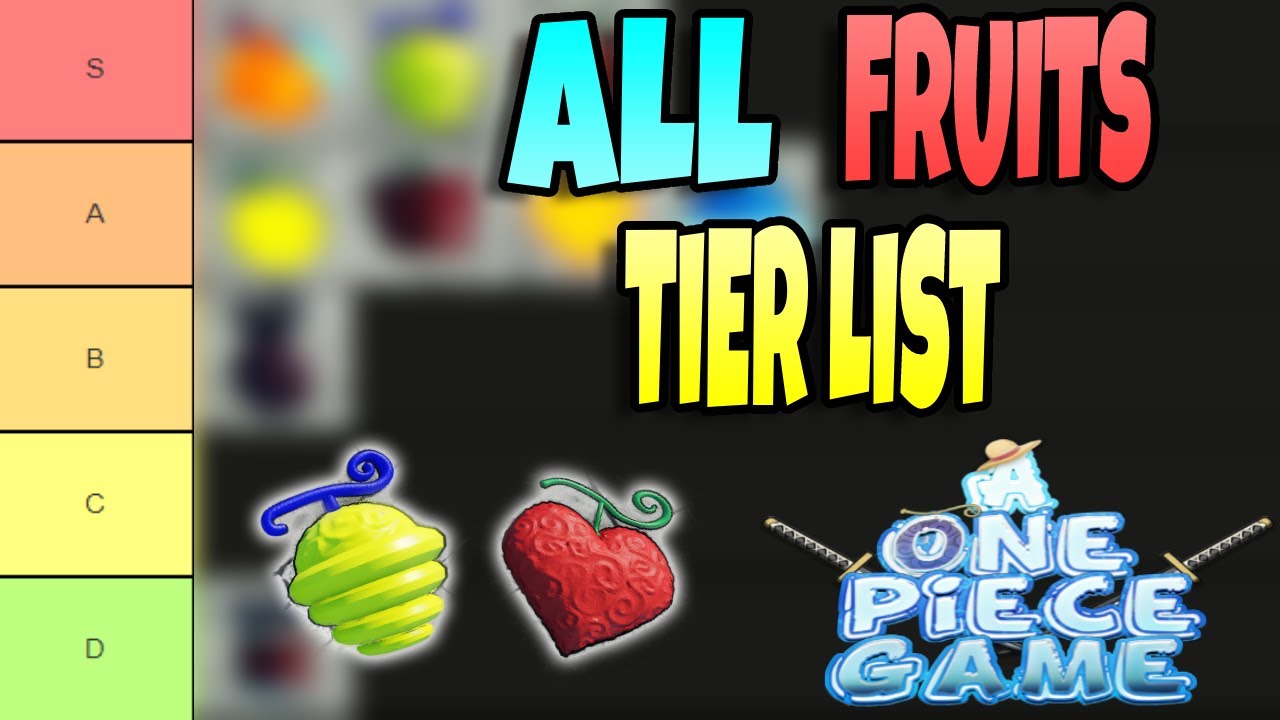
A One Piece Game Fruit Tier List By Goal And Upgrade Path
Most AOPG fruit tier listsfail in the exact same place: they rank base fruits and fully upgraded forms like they are the same thing. That is why one guide calls a fruit broken, another calls it mid, and you end up wasting a reset on a fruit that only becomes amazing after a long grind.
A better way to judge the meta is to rank fruits by purpose and upgrade state. That matters even more now because AOPG is still an active Roblox experience, and the game’s live page and wiki both point to a fast-moving update cycle.
Quick answer
- Best late-game ceiling:Rubber, Dragon, Okuchi, Final Flame, Gold, and Phoenix are the clearest S-tier endgame projects, while Operation and Soul remain excellent A-tier long-term picks.
- Best beginner direction:Light and Magma are the safest early-game picks because they offer reliable value before your account is fully built.
- Best grinding priority:Pick fruits with AoE, mobility, and smooth upgrade paths, not just rare labels.
- Best PvP direction:Pick fruits with pressure, movement, and punish tools, especially upgraded Zoans and high-control Paramecias.
- Best rule before using a reset:Judge the form you can realistically reach, not the fully built version you saw in a clip.
How This Tier List Was Ranked
I rank fruits using six questions:
- How fast does it clear mobs?
- How safe is it while farming?
- How hard does it scale with V2, V3, gears, or final forms?
- How much boss damage and uptime does it offer?
- How strong is the PvP pressure?
- How realistic is the upgrade path for a normal player?
That last point matters most. Awakened fruits are often better than their counterparts, but many awakenings demand scrolls, gems, raids, quests, or all four.
So the rule is simple: I rank what a fruit is worth to your account, not just what it looks like at absolute max build. With that lens in place, the full tier list makes a lot more sense.
The Full A One Piece Game Fruit Tier List
Each fruit gets a short reason that shows whether its placement comes from base strength, upgrade path, or late-game ceiling.
S Tier
These are the fruits worth chasing if your account can support advanced forms, transformations, or final upgrades.
- Gold:A top-end fruit with major late-game payoff thanks to Midas mode and Golden Golem mode. If you can finish the progression path, it has one of the highest ceilings in AOPG.
- Rubber:One of the strongest late-game projects because its upgrade ladder is huge: Gear Second, Gear Fourth: Bounceman, Gear Fourth: Snakeman, Gear Fifth, and Final Rubber.
- Serpent:A Limited/Lunar Special Mythical Zoan with Serpent’s Heart progression, giving it the kind of transformation-based scaling that fits the top tier.
- Okuchi:Strong enough for the top group because it comes with 9 moves, a transformation, and 2 separate modes, giving it serious endgame depth.
- Dragon:A true endgame fruit that grows from base form into Dragon V2 and then Final Dragon, making it one of the best long-term investments.
- Fire / Final Flame:Base Fire is already strong, but the real value comes from climbing into Fire V2 and then Final Flame, where its damage and raid value jump sharply.
- Phoenix:Its full value comes from the path into Phoenix V2 and Final Phoenix, which gives it one of the stronger late-game upgrade payoffs.
A Tier
These are excellent fruits with strong value and growth, but they fall just short of the most dominant endgame finishers.
- Operation: A very strong long-term fruit with V2 and Final Operation, plus one of the best overall kits for players who want reliable grinding value without giving up late-game potential.
- Soul: Already powerful as a Mythical fruit, then gets even better with Soul V2, giving it one of the cleaner scaling paths outside the very top tier.
- Leopard: Gains a lot of value from Leopard V2 and Final Leopard, which makes it a serious PvP and endgame option.
- Mochi: Stronger than most one-form fruits because it grows through both Mochi V2 and Mochi V3.
- Magma: One of the best “good now, better later” fruits thanks to Magma V2 and Magma V3.
- Light: A very safe and useful pick with Light V2 and Light V3, which helps it stay relevant beyond early progression.
- Quake: Its value comes from scaling into Quake V2 and Quake V3, giving it more long-term relevance than a lot of mid-tier fruits.
B Tier
These fruits are solid and usable, but they do not outperform the S - and A-tier group consistently enough to rank higher.
- Dark: Mythical status helps, and Dark V2 adds real value, but it still falls short of the cleaner top-end projects.
- Buddha: Buddha V2 keeps it competitive, though its payoff is less universal than the fruits above it.
- Gravity: Gravity V2 gives it meaningful scaling, just not enough to push it into the higher tiers.
- Paw: Paw V2 keeps it respectable, but not strong enough to make it a priority pick.
- String: String V2 improves its ceiling, though it still feels more like a strong secondary fruit than a core-meta one.
- Ice: Ice V2 and Ice V3 give it good scaling and useful mobility, but I still rate Light and Magma higher for overall account value.
- Lightning: Lightning V2 and Lightning V3 keep it viable, even if it is not the kind of fruit I would build an account around first.
- King: Still a Mythical Ancient Zoan, but it lacks the deeper documented progression that lifts other Mythicals higher.
- Sing: Gains value through Tot Musica via transformation scroll, which keeps it useful without making it elite.
C Tier
These fruits can work, but they are usually more niche, more replaceable, or too dependent on your setup to justify a higher rank.
- Smoke: Smoke V2 helps, but not enough to compete with stronger progression fruits like Light or Magma.
- Gas: Gas V2 exists, though the overall payoff still feels too limited compared with better A - and B-tier picks.
- Sand: Reaches Sand V2, yet still feels more niche than broadly reliable.
- Flower: Legendary rarity looks nice, but with no listed upgrade path on the main fruit page, it is hard to prioritize.
- Magnet: Mythical rarity gives it some appeal, but the lack of a further upgrade hurts its long-term value.
- Shadow: Another Mythical fruit that suffers from having no documented upgrade path on the main fruit page.
- Vampire: As a Donation Mythical Zoan, it has novelty value, but without a listed upgrade route it feels more niche than meta.
- Venom: Venom V2 gives it some growth, just not enough to rise above the stronger B-tier options.
D Tier
These are the fruits I would replace first unless you are keeping them for fun, collection value, or a very specific niche setup.
- Chop: Even with Chop V2, it is still a Common fruit and does not keep pace with stronger progression options.
- Invisible: A Common Paramecia with no listed upgrade path, which makes it difficult to justify long term.
- Barrier: Being Uncommon with no listed upgrade path leaves it too far behind the fruits with real scaling.
- Bomb: No upgrade route, no serious long-term ceiling, and little reason to hold the slot.
- Revive: Mythical on paper, but the lack of a listed upgrade path makes it weaker in practice than the label suggests.
- Love: Another Mythical fruit that looks better by rarity than by actual long-term value, especially compared with fruits that have V2, V3, or final forms.
The main idea stays the same: fruits rise when they have either real present-day value or a documented upgrade ladder that justifies the grind. That is why the next section should move into use-case recommendations like beginners, grinding, bosses, and PvP.
Best Fruits By Goal In AOPG
If you only need one answer before you swap fruits, use the table first and then read the short notes under the goal that matches your account.
| Your goal | Best fruit direction |
| New account / easy progression | Light, Magma |
| Fast PvE grinding | Light, Magma, Operation |
| Bosses and raids | Dragon, Operation, Final Flame, Rubber |
| PvP / duels | Rubber, Leopard, Mochi, Dragon, Okuchi |
| Best long-term investment | Rubber, Dragon, Operation, Soul |
| Best value if you are underbuilt | Light or Magma over a hard-to-finish Mythical |
I weight these picks around two realities: many fruits scale hard through upgrades, and awakened fruits are generally stronger than their counterparts once you pay the gem, scroll, raid, or quest cost.
Best Fruit For Beginners
If you are early-game, Lightis the cleanest “no-regrets” direction. A beginner needs a fruit that is useful before the account has top-end gear, titles, stats, or dungeon unlocks, and Light already sits on a documented upgrade ladder into V2 and V3.
My second beginner pick is Magmabecause it is a Logia fruit with V2 and V3 progression, and Logia fruits are defined around element-based control and body transformation. That usually gives newer accounts a smoother damage floor than “late-blooming” fruits that only explode after rare drops.
Best Fruit For PvE Grinding
For pure grinding, I care most about clear speed, mobility, and low-friction damage loops. That is why Light, Magma, and Operationstay near the top of my PvE recommendations.
Operationdeserves special mention because its toolkit is built around a Room-based control space, teleport access inside that space, and object/enemy manipulation. On paper and in practice, that gives it one of the cleanest “farm smarter, not harder” identities in the game.
Best Fruit For Bosses And Raids
Bossing shifts the question from “How fast can I clear mobs?” to “How much damage and uptime can I keep on a real target?” That pushes Dragon, Operation, Final Flame, and fully built Rubberhigher.
These fruits either have deep upgrade laddersor strong final forms tied to raids, dungeons, or advanced progression. If your account is built to reach those forms, their ceiling is worth chasing. If not, they can feel overrated.
Best Fruit For PvP
PvP rewards a different skill set: movement, control, pressure, and punish potential. That is why I rate Rubber, Leopard, Mochi, Dragon, and Okuchi so highly for duel-focused players.
A common mistake I see is importing a grind ranking straight into PvP. That is how players end up with a fruit that farms beautifully but feels clumsy when the other player can dodge, bait, and burst.
Best “value” Fruit If You Are Not Late-game Yet
If you are underbuilt, the smartest move is often notto chase the fruit with the highest clip-worthy ceiling. The smarter move is to keep a fruit that is already helping you progress and only pivot when your account can actually pay the upgrade cost in gems, raid access, or quest requirements.
That is why Lightand Magmabeat a lot of “sexier” picks for real-world account value. Next, here is the ranking logic so the tier placements do not feel arbitrary.
Base Vs V2 Vs Final Forms: Why Rankings Change So Much
This is the section most competitors miss, and it is the main reason flat tier lists feel inconsistent. AOPG is not built around “one fruit, one power level.” It is built around fruit ladders.
Why Some Base Fruits Look Weak But Scale Later
Many fruits do not stop at their base form. Fire moves into Fire V2and then Final Flame; Rubber climbs through multiple gears and then Final Rubber; Dragon reaches Dragon V2and Final Dragon; Leopard moves through V2and Final Leopard.
That means a fruit can be mid as a pickupand still be elite as a project. If a tier list does not separate those two realities, it is ranking the wrong thing.
Which Fruits Are Only “top Tier” After Upgrades
For me, the biggest “do not confuse the base with the final product” fruits are:
- Rubber
- Fire
- Dragon
- Leopard
- Operation
- Soul
These fruits earn their best reputation once the upgrade path is finished or close to finished. That is why they can feel underwhelming to one player and broken to another.
Why This Matters Before You Spend A Reset
If you are about to delete a stable grinding fruit because someone told you a Mythical is “S tier,” stop and ask one question: Can my account actually reach the version of that fruit that deserves S tier?
That question saves more Beli, Robux, and time than any ranking table ever will. Up next, here is the taxonomy behind the fruits so the labels make more sense.
Fruit Types And Rarities Explained
You do not need a lore lecture here. You just need the parts that affect gameplay decisions.
Logia Vs Paramecia Vs Zoan
The AOPG wiki breaks Devil Fruitsinto Logia, Zoan, and Paramecia. Logias are built around natural elements and elemental transformation; Zoans are transformation fruits; Paramecias cover the broader miscellaneous power set. Mochi is treated as a special Paramecia in AOPG rather than a true Logia.
That matters because these categories often hint at how a fruit plays. Logias frequently feel smooth for progression, while Zoans and advanced Paramecias tend to produce more dramatic late-game power spikes.
Rare Vs Legendary Vs Mythical
Rarity helps, but it does not decide everything. In AOPG, fruits can fall into Rare, Legendary, Mythical, limited, or donation categories, but those labels do not automatically tell you what is best for your account.
The mistake is assuming Mythical always means the strongest choice right now. Sometimes it does. Other times, it just means a fruit with a higher ceiling, a heavier grind, or a more expensive upgrade path.
Why Rarity Does Not Automatically Equal Best
A weaker-rarity fruit that you can use right nowis often better than a higher-rarity fruit that needs raids, gems, or quest chains you are nowhere near finishing. That is why this article treats account fitas part of the ranking, not as an afterthought.
Once you understand that, fruit acquisition stops feeling random and starts feeling strategic.
How To Get Fruits In A One Piece Game

This section helps you match the ranking to a real acquisition plan. If you know how fruits actually enter your account, your tier decisions get much better.
World Spawns
Spawn hunting can work, but it is the least stable way to plan around a specific fruit. Before you reset anything, check the A One Piece Game Trelloso you are not making a decision from outdated information.
Chests
Chests are useful for passive farming because they can give you Beliand a small chance at a Devil Fruit. They are good for background progress, but not reliable enough to be your main targeting method.
Shop / Beli / Paid Routes
For predictable progression, the Fruit Merchantis the safest route. Buying a fruit with Beliis much more consistent than depending on random drops, especially if you already know what kind of fruit you want next.
Raids And Other Reward Paths
Raids matter because they do more than drop random fruits. The raid pages and drops tables show raids can award fruits, scrolls, gems, and specific fruit-related progression pieces, including things like Operation, Light Scroll, Mochi, and upgrade scrolls.
Before you reroll or reset your fruit
- Check whether your current fruit has a V2, V3, gear, or final path.
- Check whether you can actually reach the required raid, dungeon, or quest.
- Check whether your real goal is grinding, bosses, or PvP.
- Check the official Trello before following any older video or tier chart.
- Only swap if the new fruit improves your current stage, not just your dream build.
That checklist matters because fruit removal is more expensive than most players expect.
Fruit Resets, Removal, And Upgrades
This is where bad decisions get costly. If you are thinking about swapping, you need to understand the difference between deleting a fruit, storing a fruit, and removing an awakening.
Fruit Reset Vs Awakening Removal
You can only have one active Devil Fruit ability at a time, but you can store multiple fruits and swap them through the Fruit Shop storage system. It also says awakenings and Rubber gear progress stay tied to the fruit on your account, so re-equipping the fruit restores that progress.
That is a huge quality-of-life point. It means some “should I reset?” questions are really “should I store and revisit later?” questions.
What Players Usually Mean By “remove Fruit”
The businessman in Logue Towncan delete your fruit ability for 5 million Beli, and it also mentions paid or code-based routes for fruit removal. Data as of 2026; check the latest official guidance.
That is why I tell players not to use “remove fruit” casually. In AOPG, that phrase can mean three completely different actions.
What To Do Before Swapping Fruits
If you only want to undo an awakening, Logue Town NPCs can remove awakened moves and refund the gems you spent on awakening.
That makes the best workflow pretty clear: undo the smallest expensive mistake first, then escalate to a full fruit swap only if the account still needs it. The next section shows where to verify any live changes before you commit.
Trello, Wiki, And Verification Resources
A tier list is only useful if you know where it can go stale. This section points you to the resources that should overrule any aging guide, including mine.
Is There An Official AOPG Trello?
Yes. The AOPG wiki links an Official AOPG Trelloand says the information there is verified with the game developers.
That makes Trello the first place to verify volatile details like fruit routes, new update content, and progression steps.
Is The Wiki Worth Using?
Yes, with one important caveat: it is a community wiki, but it is useful because it is broad, current, and tied into the game’s official-resource ecosystem. The wiki also describes itself as updating often to match the game’s fast updates.
Frequently Asked Questions
What’s The Best Fruit Right Now?
Rubber, Dragon, Okuchi, Final Flame, Gold, and Phoenixare the clearest S-tier endgame projects, while Operationand Soulremain excellent long-term picks.
What’s Best For Beginners?
For most new accounts, Lightis my safest first recommendation, with Magmaclose behind. Both are easier to justify than high-investment Mythicals because they already offer useful baseline value and documented upgrade paths.
What’s Best For Grinding?
The best grinding fruits are the ones that combine AoE, movement, and low-friction farming loops. That is why I put Light, Magma, and Operation at the top of the PvE conversation.
What’s Best For PvP?
For PvP, I lean toward Rubber, Leopard, Mochi, Dragon, and Okuchi because they give you better pressure, transformations, or punish windows than pure farming picks. PvP rewards threat and control more than smooth grinding speed.
Are Mythical Fruits Always Better?
No. Mythical rarity signals potential, not guaranteed value. A lower-rarity fruit that is already helping your account can be a smarter pick than a Mythical fruit whose best form is still locked behind raids, scrolls, or high gem costs.
Is There An AOPG Trello?
Yes. The wiki links an Official Trelloand says Trello information is verified with the developers.
Does AOPG Have A Wiki?
Yes. The AOPG wiki is active, broad, and positioned as a fast-updating reference hub for the game. It is community-run, so use it with judgment, but it is still one of the best places to check fruit, raid, and island information quickly.
Can I Remove A Fruit Or Awakening?
Yes, but those are different actions. In AOPG, you can remove a fruit, store fruits for later swapping, or remove awakened moves separately, so it is important to know which option you actually need before spending anything.
Do Codes Help With Fruit Resets?
They can. Some reset options may come through codes or other live reward sources, so it is worth checking current AOPG channels before spending Beli or Robux on a fruit reset.
Quick Recap
Rank fruits by purpose, not hype. Separate base forms from V2, V3, gears, awakenings, and final forms before deciding what to keep. For early value, Light and Magma are the safest picks. If your account can handle the grind, Rubber, Dragon, Operation, Soul, Okuchi, and Final Flame offer stronger endgame payoff.
Before you reset anything, check the official Trello to avoid outdated information. The best way to use an A One Piece Game fruit tier listis as a decision tool for your account now, because a fruit that helps you progress today can be more useful than one with a higher ceiling later.
Jump to
A One Piece Game Fruit Tier List By Goal And Upgrade Path
How This Tier List Was Ranked
The Full A One Piece Game Fruit Tier List
Best Fruits By Goal In AOPG
Base Vs V2 Vs Final Forms: Why Rankings Change So Much
Fruit Types And Rarities Explained
How To Get Fruits In A One Piece Game
Fruit Resets, Removal, And Upgrades
Trello, Wiki, And Verification Resources
Frequently Asked Questions
Quick Recap
Latest Articles
Popular Articles