Best Jewel Games On Steam - Classics, RPGs & Free Picks
Best jewel games on Steam, sorted by player fit. Compare premium classics, hidden indies, and RPG hybrids so you can choose the right puzzle game faster.
Mar 11, 20266.4K Shares463.3K Views
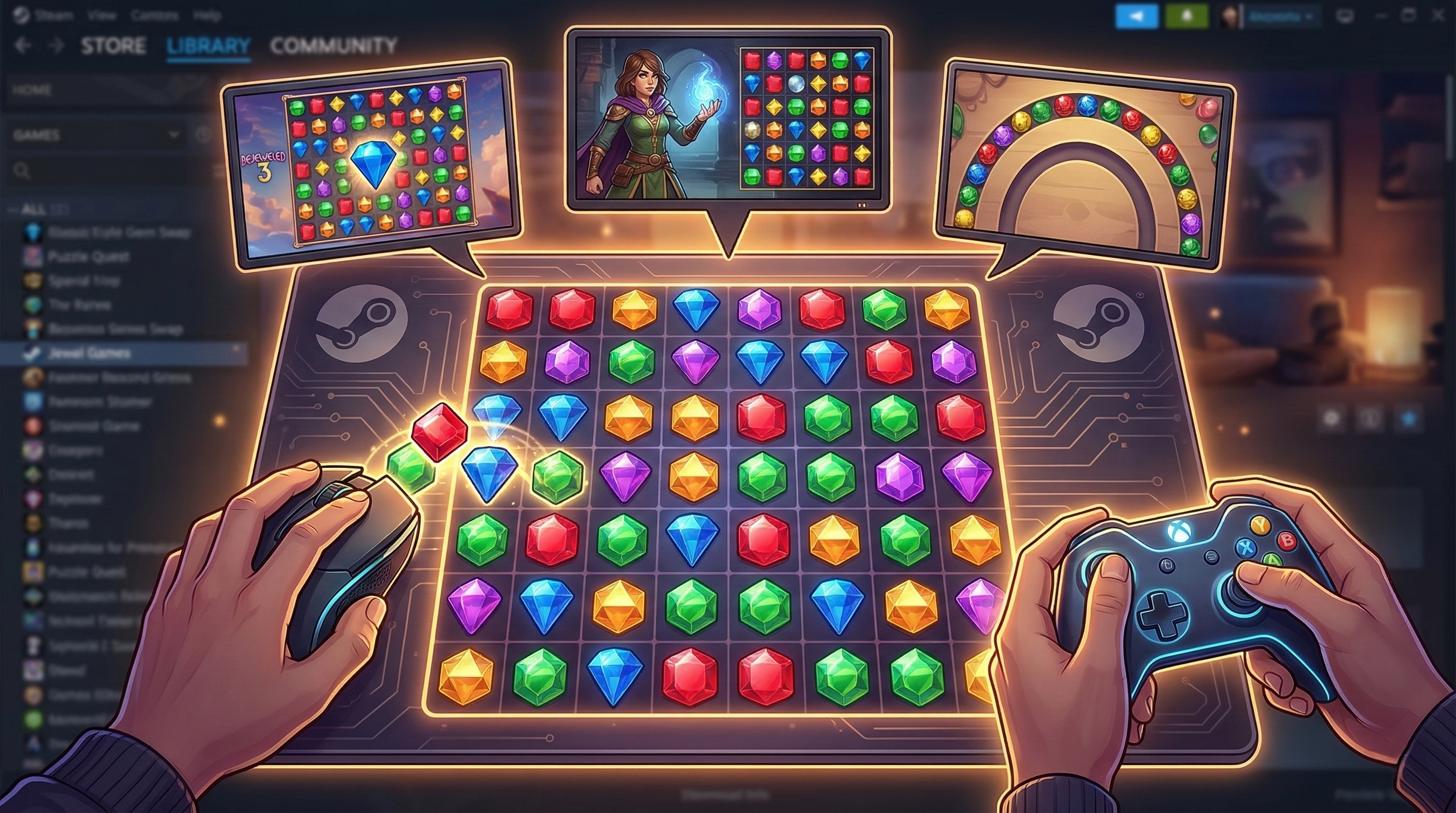
Best Jewel Games On Steam For Every Kind Of Puzzle Player
Search this topic on Steam, and you do not get one clean genre. You get classic gem-swappers, adventure-heavy match-3 games, RPG hybrids, and marble-shooter cousins all crowding the same space.
Steam’s own Match 3 tagging and search results make that broadness obvious, which is helpful for discovery but messy for readers who want a sharper answer.
The better way to rank the best jewel games on Steamis by player fit. Someone chasing pure Bejeweled-style flow usually wants a different game from someone who wants quests, loot, or multiplayer systems layered on top.
Key Takeaways
- Best classic jewel game: Bejeweled 3
- Best nostalgia pick: Jewel Quest Pack
- Best match-3 RPG hybrid: Puzzle Quest: Immortal Edition
- Best marble-shooter alternative: Sparkle 2
- Best free jewel-style option: Gunspell 2
- Best budget classic with demo access: Bejeweled Deluxe or Bejeweled Twist
How We Picked These Games
This list prioritizes four things: current Steam availability, review-label quality, demo or free-to-play access, and genre fit.
A game ranked highly here is not just popular. It also needs to match what most readers actually mean when they search for the best jewel games on Steam.
A strong classic gem-matching experience, a clearly labeled adjacent alternative, or a worthwhile hybrid that earns its place without muddying the category.
| Quick fact | What it means |
| Best pure classic: Bejeweled 3 | The safest all-around pick if you want polished, recognizable jewel-board gameplay. |
| Best nostalgia lane: Jewel Quest Pack | Better for readers who want older PC puzzle energy and an adventure-wrapped classic loop. |
| Best demos on Steam: Bejeweled Deluxe and Bejeweled Twist | Two of the easiest low-risk ways to test the genre before buying. |
| Most multiplayer options are hybrids. | If you want PvP or live-service systems, you usually need to leave pure jewel games and move into puzzle RPG territory. |
| Steam’s Match 3 tag is broader than jewel games. | It includes pure gem-swappers, marble-shooter cousins, and heavier RPG hybrids, so tags need to be read carefully. |
| The best hidden-value picks are usually indie. | Smaller indie match-3 games often deliver more handcrafted levels and cleaner theme focus than the broader genre pages suggest. |
The Quickest Way To Choose The Right Game
Most readers do not need ten equal recommendations. They need one strong starting point and a few smart alternatives based on mood.
If the goal is a clean, classic jewel game purchase, Bejeweled 3 is still the safest answer.
Steam lists it with eight modes, strong recent and all-time review labels, and the tag mix you would expect from a genre-defining entry: Casual, Puzzle, Match 3, Singleplayer, and Relaxing.
If the goal is nostalgia, Jewel Quest Pack is the better fit because Steam frames it as the first three Jewel Quest games in one bundle. If the goal is more depth, Puzzle Quest: Immortal Edition is the best step up because Steam explicitly positions it as a match-3 game fused with RPG systems.
If a reader says, I want something close, but not necessarily a gem-swapping board, Sparkle 2 is the right adjacent pick.
If they say, I want to spend nothing first, Gunspell 2 is the free option, with the important caveat that it is much more hybrid and much less clean than a classic Bejeweled-style game.
That quick sort solves the purchase decision for many readers. The next step is making the genre boundaries clear, because that is where most competing pages get fuzzy.
What Counts As A Jewel Game On Steam, And What Does Not
A jewel game is usually what most people picture when they think of Bejeweled: a readable board, fast gem matching, short sessions, and satisfying cascades.
A match-3 game is the bigger umbrella that also includes story adventures, RPG systems, and other puzzle structures built around three-in-a-row logic.
That distinction matters on Steam. A page can carry the Match 3 tag and still feel very different from a classic jewel game once you actually play it.
Puzzle Quest: Immortal Edition is a good example: it keeps the board, but the real loop also includes mana, spells, quests, items, and character building.
Sparkle 2 is another important edge case. It carries the Match 3 tag on Steam, but its orb-matching structure makes it feel closer to a marble shooter than to a strict jewel-board game.
That does not make it a bad recommendation. It just needs to be labeled honestly.
The cleanest destination article for this keyword should not pretend all of these games are interchangeable. It should show where the lines are, then recommend the best option inside each lane.
Adjacent Classics Worth Knowing Before You Buy
Not everyone wants a strict jewel-board list with zero overlap. Two older PopCap-era names are worth calling out because they still show up naturally in Steam search and in the broader games like Bejeweled conversation.
Bejeweled 2 Deluxe
Bejeweled 2 Deluxe deserves a mention because it still appears cleanly on Steam and sits right inside the classic PopCap family.
If you want an older, simpler midpoint between Bejeweled Deluxe and Bejeweled 3, this is one of the most obvious missing names to acknowledge.
Zuma Deluxe
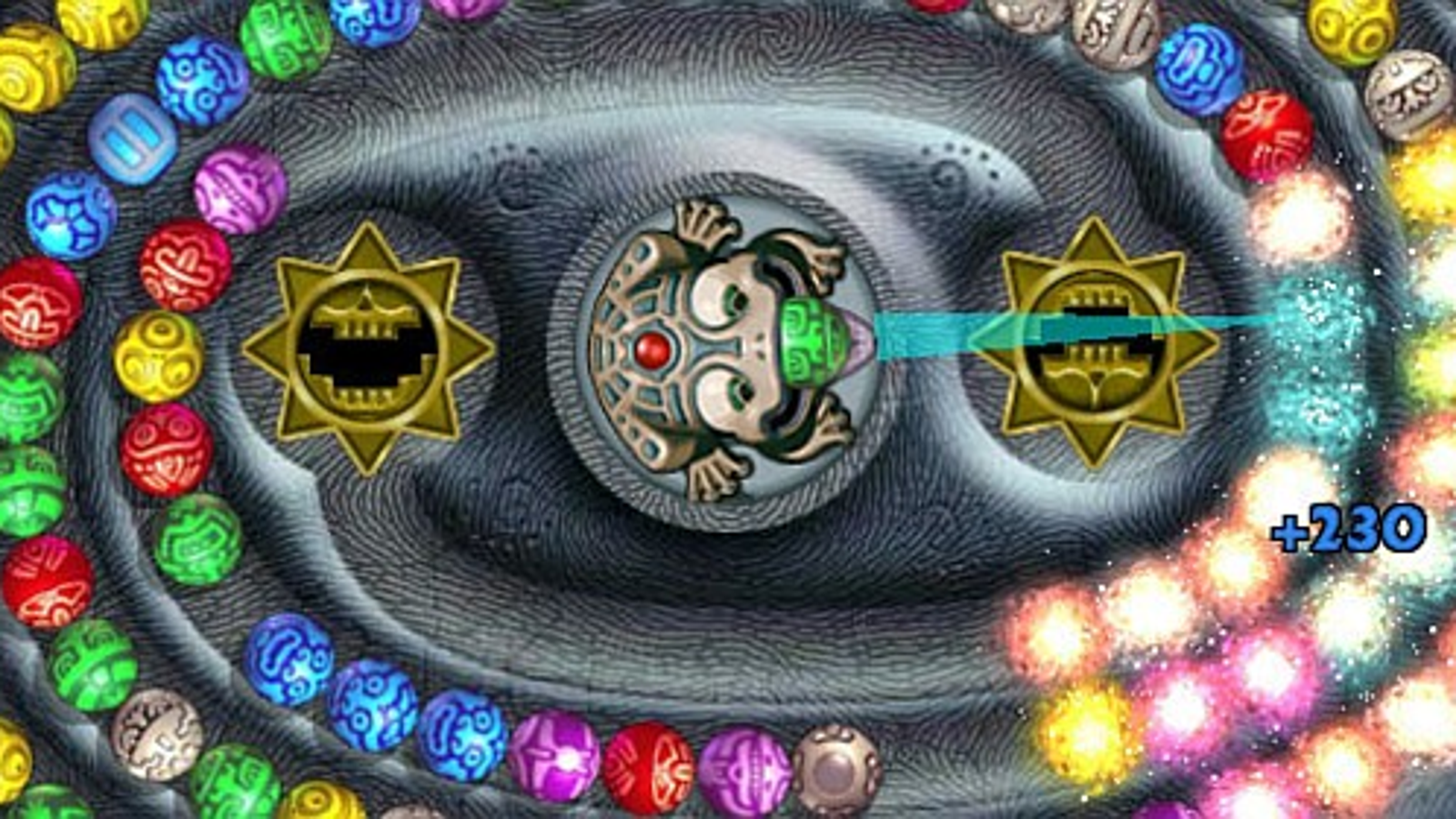
Zuma Deluxe is not a pure jewel-board game, but it is one of the clearest adjacent classics in this space. It swaps gem-swapping for marble-shooter chain clearing, which makes it a related alternative rather than a direct substitute.
It belongs here because players are searching for Bejeweled-like puzzle comfort, and often cross-shop it anyway.
The Best Jewel Games On Steam, Reviewed By Fit And Feel
This is the core of the article. Each game entry stays as an H3 so readers can jump directly to titles they already know, while still keeping the whole shortlist under one strong review section.
Bejeweled 3

For most readers, this is the default recommendation. Steam describes it as the biggest, brightest Bejeweled ever, highlights 8 game modes, and shows both Very Positive recent reviews and Overwhelmingly Positive overall reviews.
That mix matters because it means the game still holds up, not just historically but for current Steam players too.
The reason it wins is balance. A player who wants short arcade sessions can jump into Lightning. A player who wants a calmer evening can use Zen.
A player who wants the pure, familiar loop can stay in Classic. In an illustrative scenario, this is the game you recommend to the friend who says, I just want the clean version of this genre done right.
The only real downside is that it may feel too familiar for readers who want a genre mutation rather than a gold-standard classic. That is where the next few titles come in.
Bejeweled Deluxe
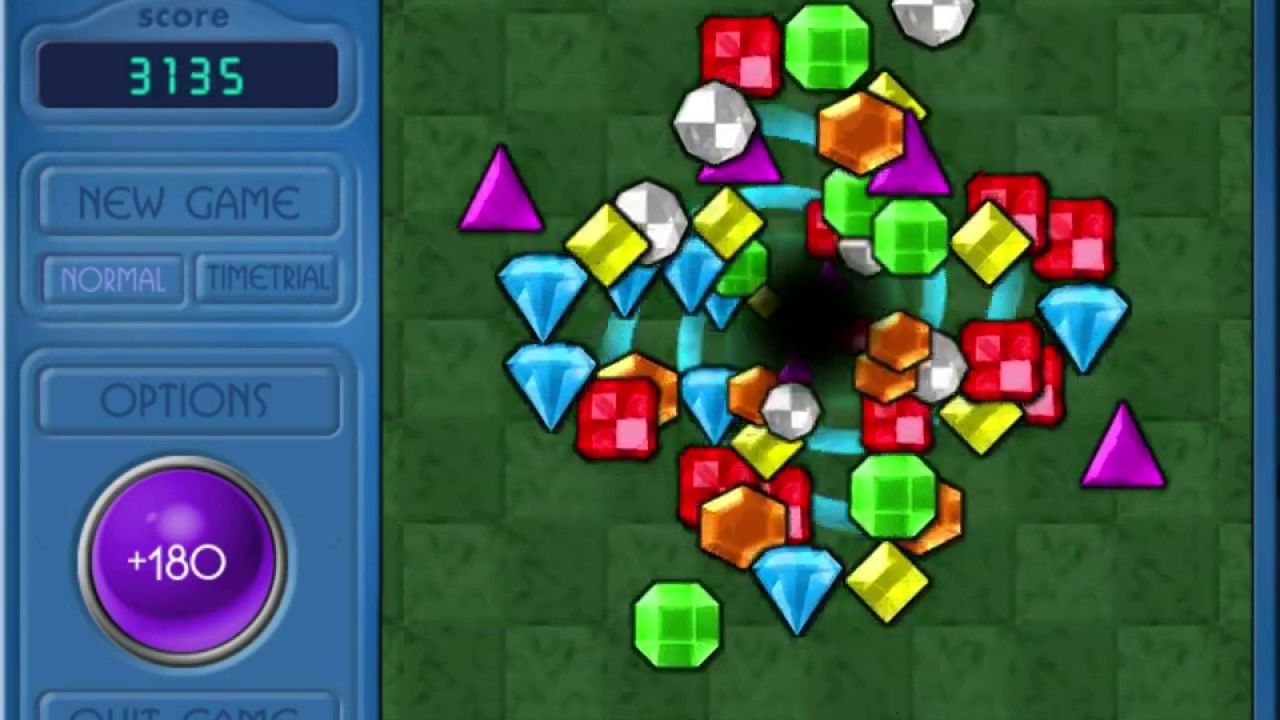
Bejeweled Deluxe is the budget-friendly classic for readers who want the old-school formula in a simpler package. Steam still lists it, and the page includes a free demo, which makes it one of the easiest low-risk starting points in the whole category.
This is the right pick for someone who is not chasing depth, story, or feature sprawl. They want adjacent-gem swapping, straightforward board logic, and a familiar rhythm.
In a practical buying sequence, it is the classic try this first option when someone wants to test whether the genre still clicks for them.
Its weakness is also part of its appeal: it is simple. Readers who want more modes, more polish, or a more modern-feeling package should move up to Bejeweled 3.
Bejeweled Twist
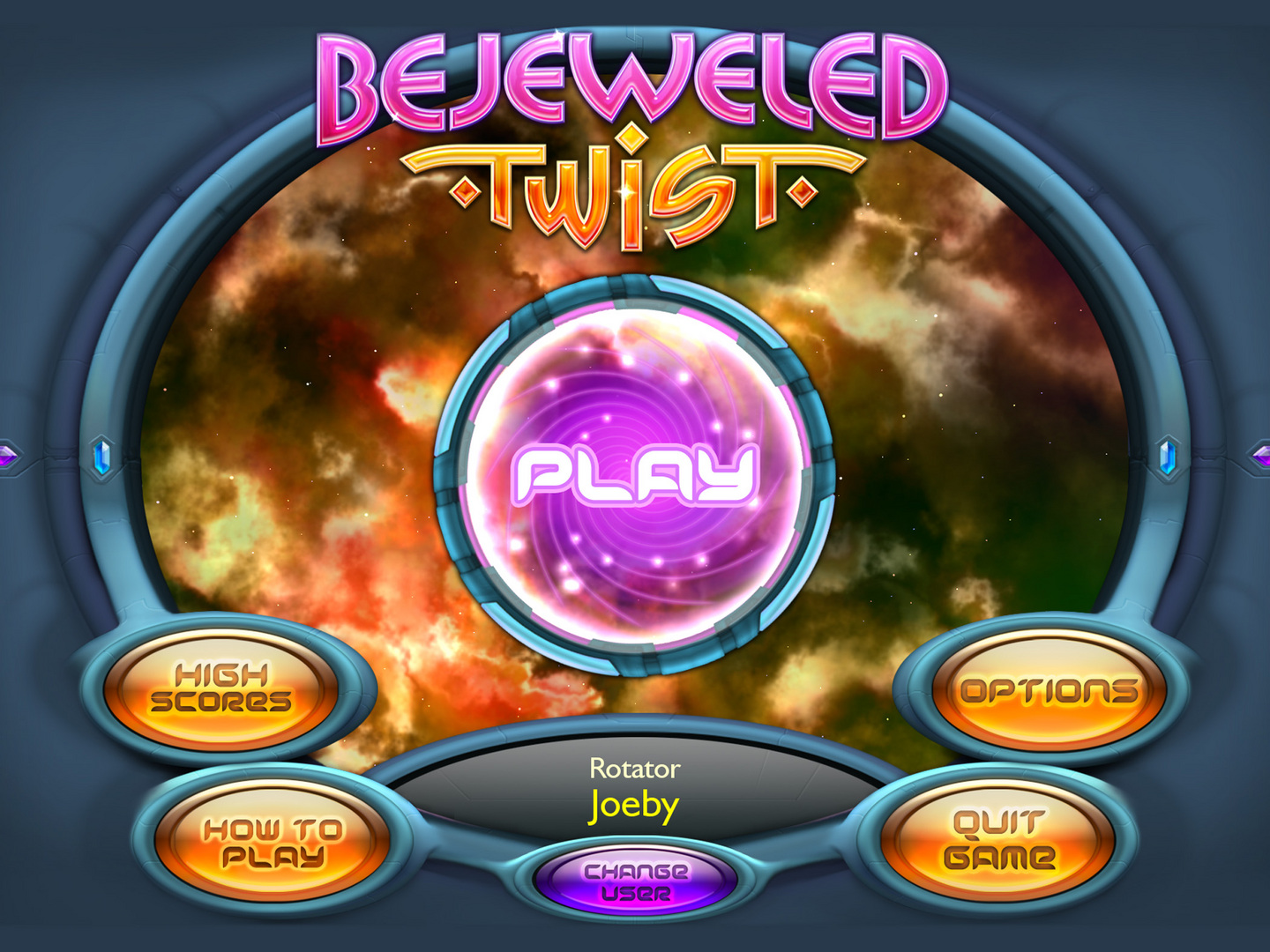
Bejeweled Twist is the best recommendation for players who like PopCap-era jewel games but do not want the same move grammar. Steam offers a free demo here, too, which makes it easy to test before buying.
What separates it from the rest is its rotating-cluster mechanic. That one change makes the board feel more playful and more tactical without losing the readability that keeps the genre relaxing.
In an illustrative scenario, this is the game for the reader who says, I want classic Bejeweled energy, but I do not want it to feel identical to the one I already played for years.
The tradeoff is obvious: if you want the purest possible expression of the genre, Bejeweled 3 is still cleaner.
Jewel Quest Pack
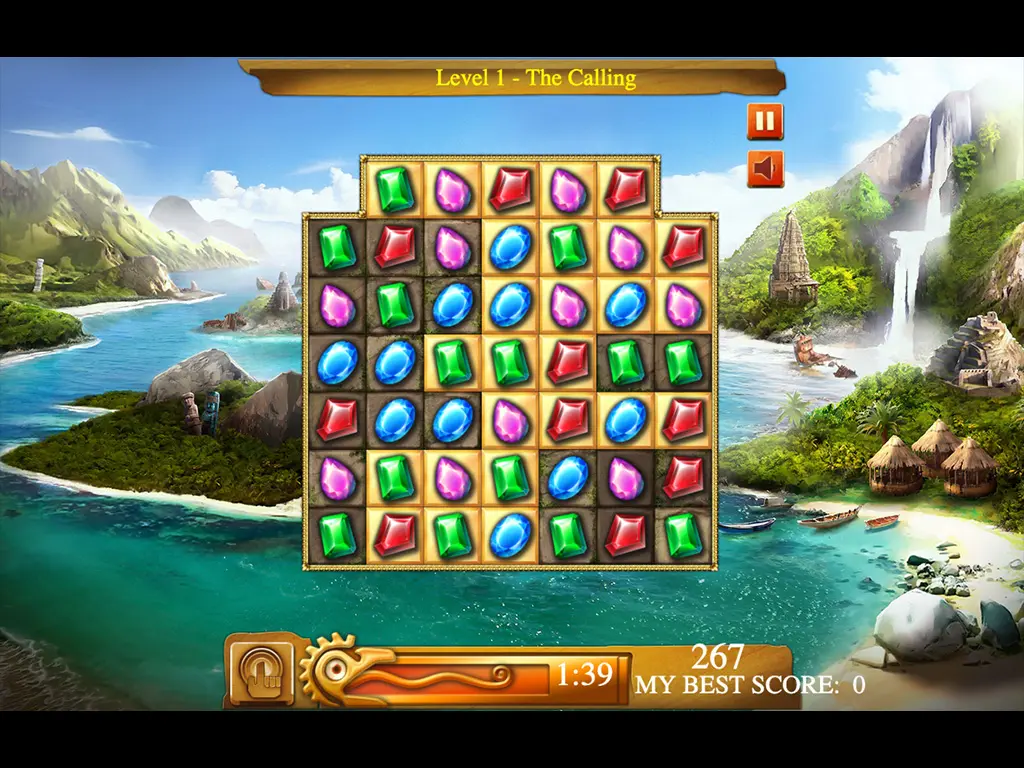
Jewel Quest Pack is the strongest nostalgia pick on Steam. The listing explicitly says it includes the first three Jewel Quest titles, and its review label is Very Positive.
What makes it valuable is not just the matching. It is the framing. Jewel Quest has always carried more adventure-board journey energy than pure score-chasing classics, and that makes it feel a little more like a trip than a loop.
This is the title for the reader who remembers older PC puzzle shelves and wants that specific museum-curio atmosphere back.
The watch-out is age. That older identity is exactly why many readers will love it, but some players who expect slicker modern interfaces may bounce off faster than they would with Bejeweled 3.
The Treasures Of Montezuma 4
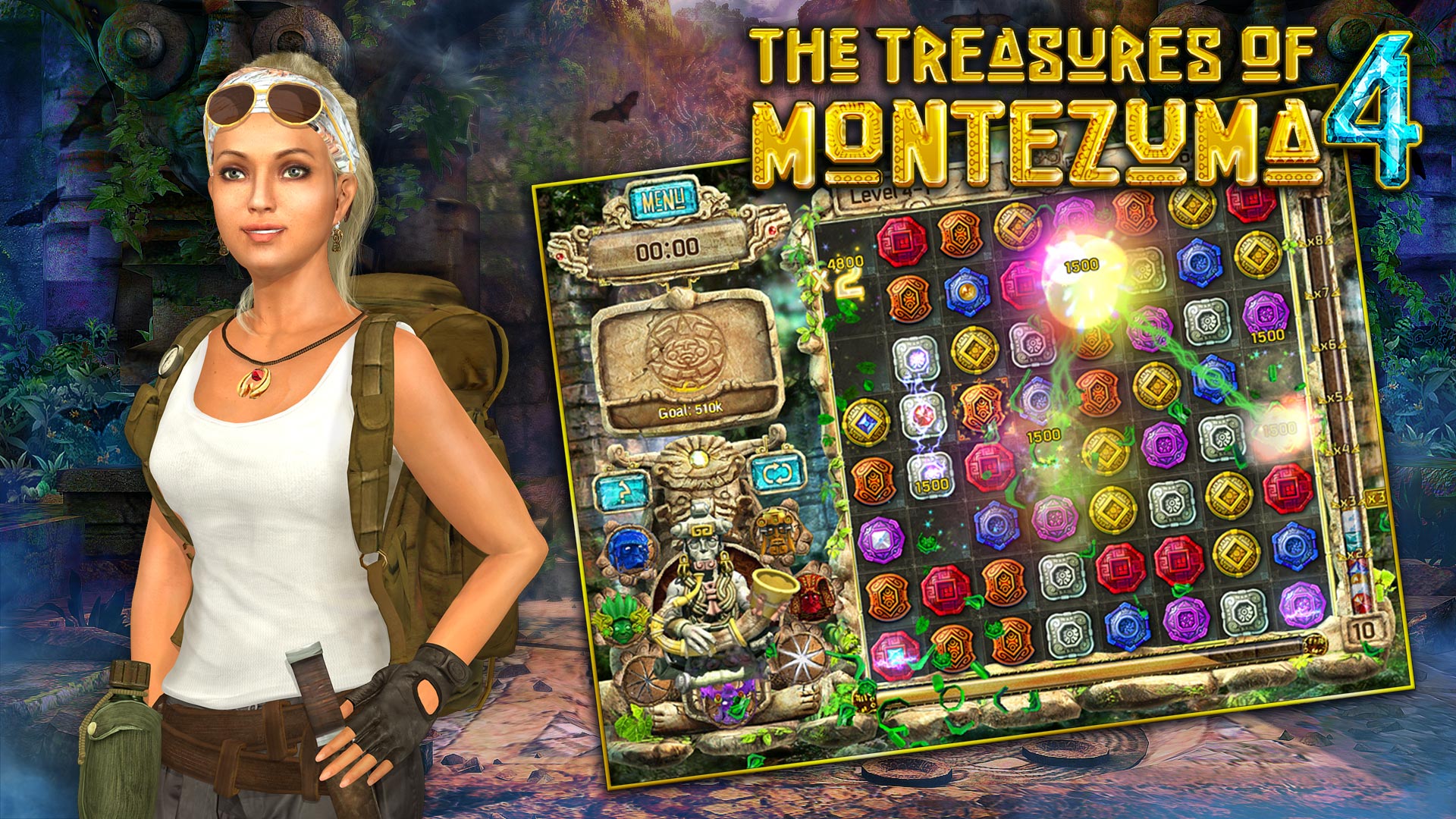
This is the best traditional match-3 pick for readers who want more theme and momentum around the board. Steam gives it Very Positive reviews and tags it with Casual, Match 3, Adventure, and Puzzle.
That tag mix tells you what kind of experience it is. It is still recognizably in the jewel-game family, but it wraps the loop in more spectacle and adventure flavor.
In an illustrative scenario, this is the title for the player who finds pure board-clearing a little too dry and wants more forward motion.
It is not the best entry for strict purists. It is the best entry for readers who want classic matching with more energy around it.
Sparkle 2
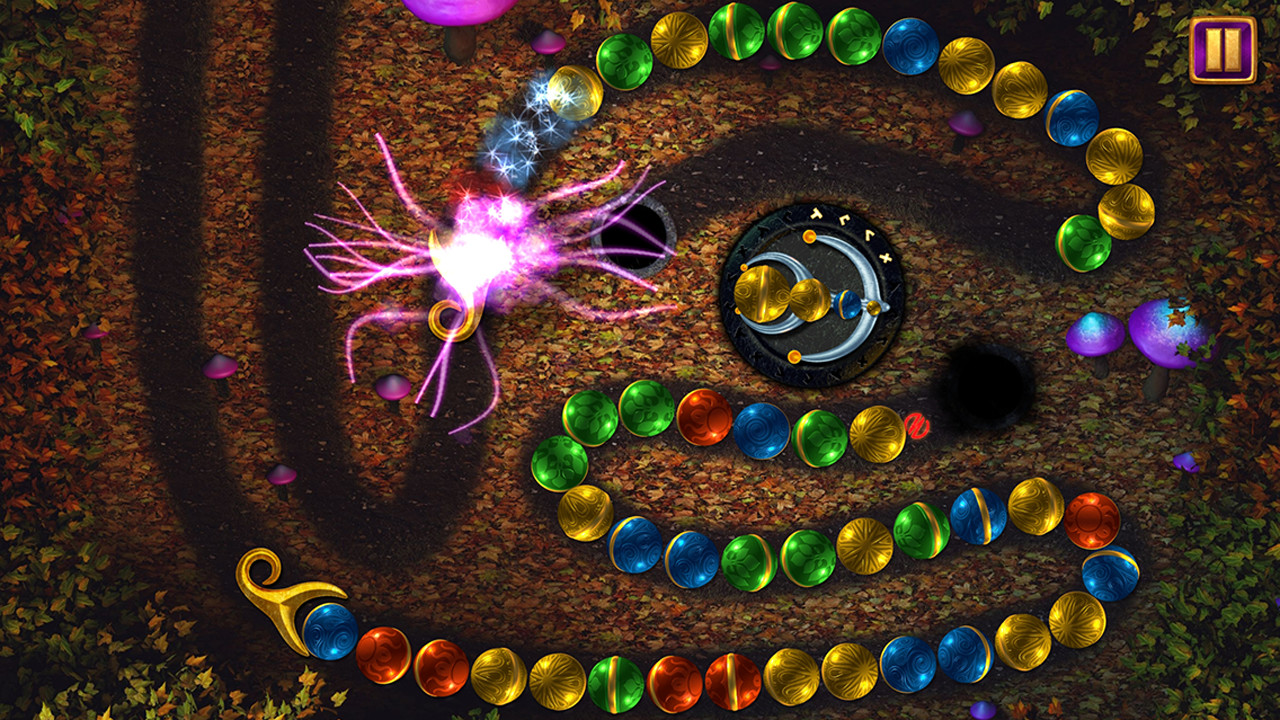
Sparkle 2 earns its place because many searchers use the jewel game as shorthand for a broader kind of relaxing, colorful, combo-driven casual puzzle.
Steam shows Very Positive reviews and a Match 3 tag, but the actual feel is more Marble Shooter than jewel-board swappers.
That makes it an adjacent recommendation, not a pure one. It is a great fit for the reader who liked Zuma-style tension and wants a polished cousin on Steam. It is a weaker fit for the reader who specifically wants gem swapping on a stationary board.
Used honestly, it improves the article because it answers a real adjacent intent. Used carelessly, it muddies the genre. That is why the label matters.
Puzzle Quest: Immortal Edition

This is the top recommendation for readers who want jewel-style play with real strategic depth. Steam describes it as combining classic match-3 puzzle play with deep-level role-playing, and the page tags it with Match 3, RPG, and Singleplayer.
That combination changes the reason you make matches. You are not only clearing space and chasing cascades.
You are building mana, triggering abilities, collecting rewards, and advancing through a larger system. In an illustrative scenario, this is the pick for the reader who says, I like the core loop, but I need more consequence behind each move.
Its one limit is accessibility. For a player seeking a purely soothing classic, it may feel like too much machinery.
Cradle Of Rome
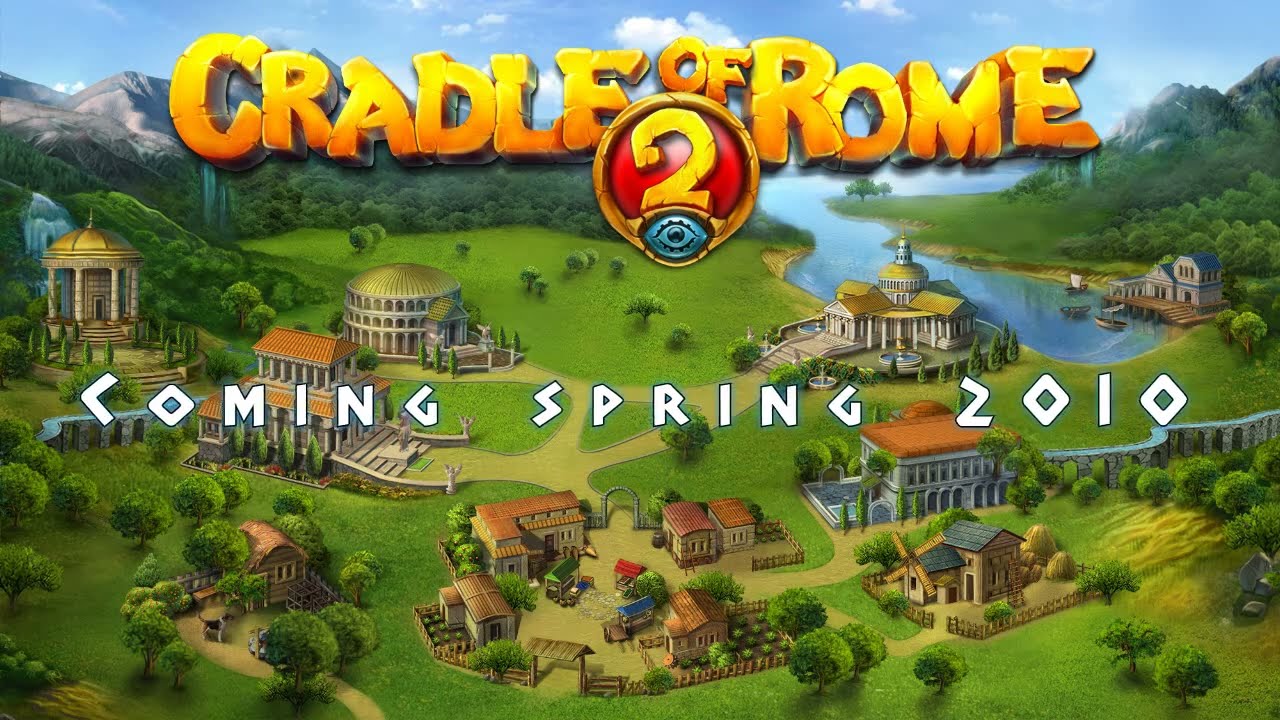
Cradle of Rome is a strong recommendation for readers who want a classic-feeling match-3 game with a little more structure wrapped around it. Steam shows Very Positive reviews and a straightforward Casual / Match 3 identity.
What makes it stand out is the city-building flavor. It gives a sense of accumulation and progression without turning into a full RPG hybrid. That puts it in a useful middle lane between stripped-down classics and heavier system-driven games.
The main caution is that it is unmistakably older. Some readers will experience that as charm; others will feel the age immediately.
Azkend 2: The World Beneath
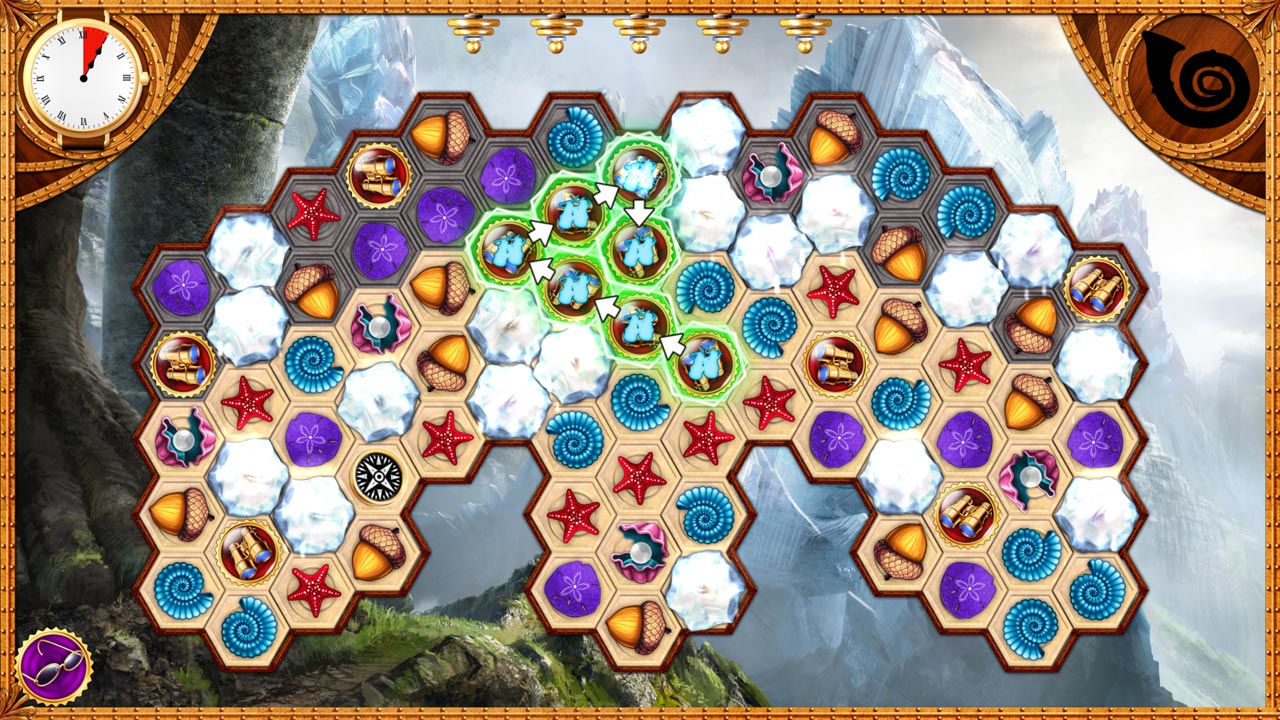
Azkend 2 is a more atmospheric, presentation-driven pick. Steam tags it with Hidden Object, Match 3, Puzzle, Relaxing, and Adventure, which already tells you this is not a pure genre-core recommendation.
This is the game for the reader who wants casual puzzle play wrapped in a stronger visual mood and more guided progression.
In an illustrative scenario, it suits the player who wants something pretty and slower-paced rather than something sharp and arcade-like.
The tradeoff is trust signal strength. Its review sample is much smaller and more mixed than the safest top-tier picks in this article.
Atlantic Quest 2 - New Adventure
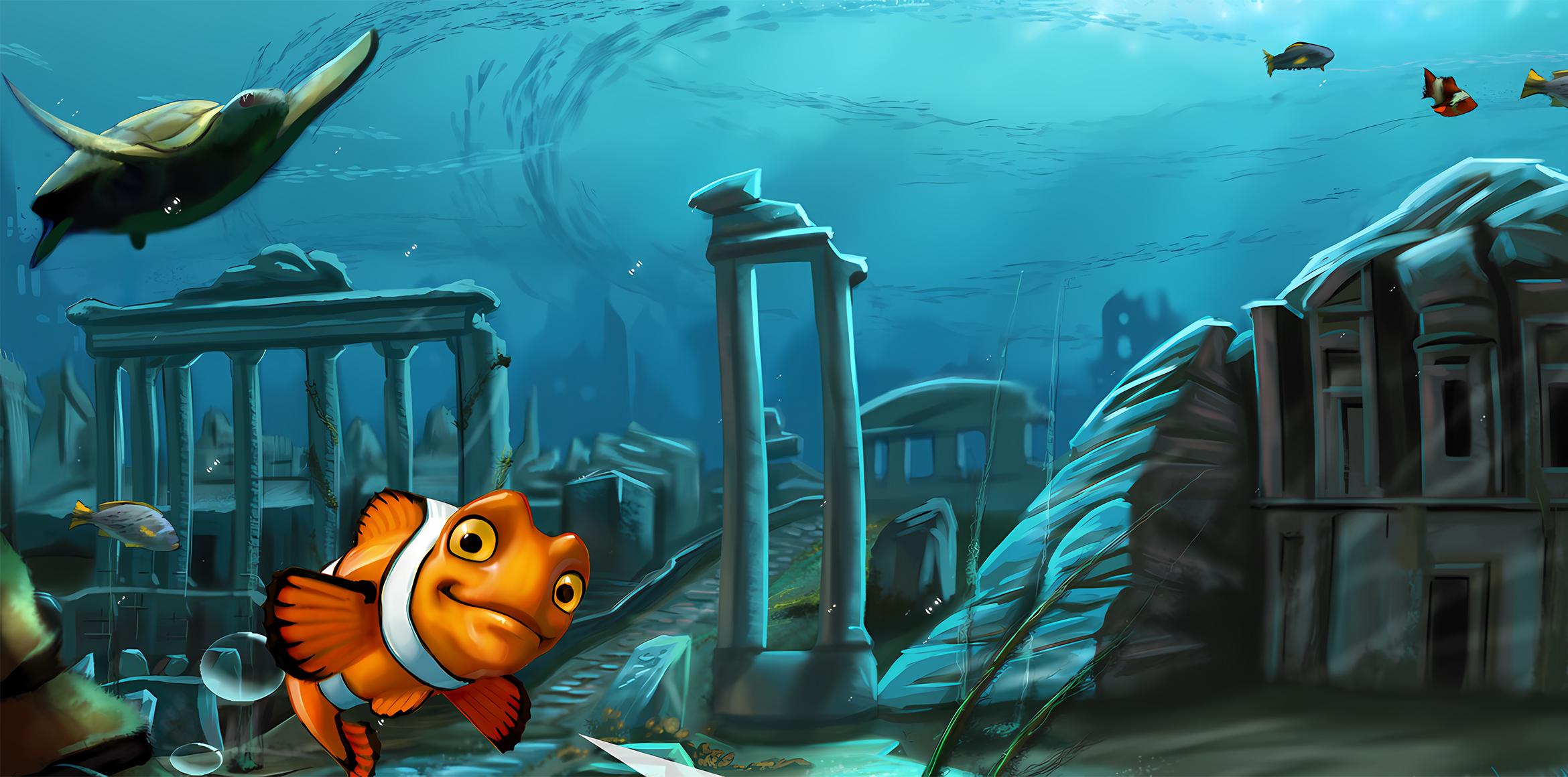
Atlantic Quest 2 is best treated as a lower-priority curiosity, not a headliner. Steam tags it with Casual, Match 3, Adventure, and even Solitaire, which immediately signals that it sits at the edge of the category rather than the center.
That does not make it irrelevant. For a reader who likes inexpensive casual puzzle blends and does not mind a genre mashup, it can still be worth a look. But it is not the title to recommend first when someone simply asks for the best jewel games on Steam.
Its role here is honest completeness, not top-tier priority.
Gunspell 2 – Match 3 Puzzle RPG
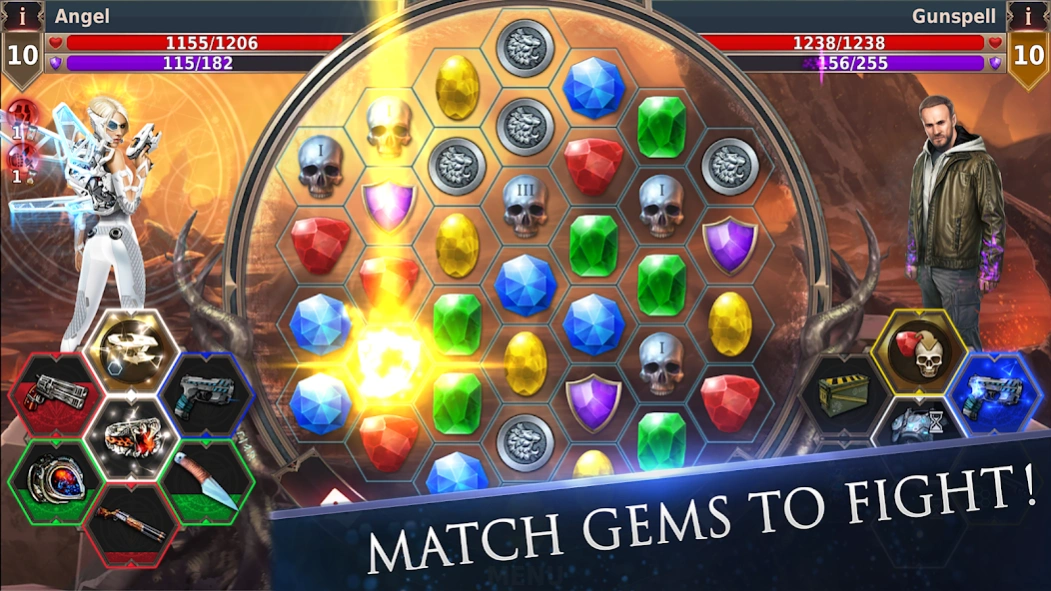
Gunspell 2 is the best free jewel-style option only when free is the first filter. Steam labels it Mixed, tags it with RPG, Match 3, PvP, Multiplayer, and Singleplayer, and positions it as a system-heavy hybrid rather than a pure classic.
That makes it useful for a specific reader: someone who wants to sample the genre space without paying and does not mind extra mechanics, combat framing, or multiplayer elements.
In an illustrative scenario, it is the game a curious reader downloads first, then uses to decide whether they actually want a cleaner, premium classic afterward.
Its downside is the same reason it is not ranked higher. The further a game moves from pure jewel-play clarity, the more niche its appeal becomes.
Indie Mentions
The goal is to reward those of you who already know the obvious classics and want sharper indie recommendations that still fit the jewel-game mood.
Avalon Jewels

Avalon Jewels is one of the cleanest modern indie additions to this space.
Its Steam page sells it as an enchanting match-3 puzzle game with 250+ levels, Rainbow Gems, unique enemies, and both Relaxed and Puzzle Mode, which makes it easy to recommend to readers who want classic jewel-board satisfaction with a fresh fantasy wrapper.
It feels more modern and polished than many bargain-bin match-3 indies without losing the relaxed genre identity.
Artifact Quest 2 - Match 3 Puzzle
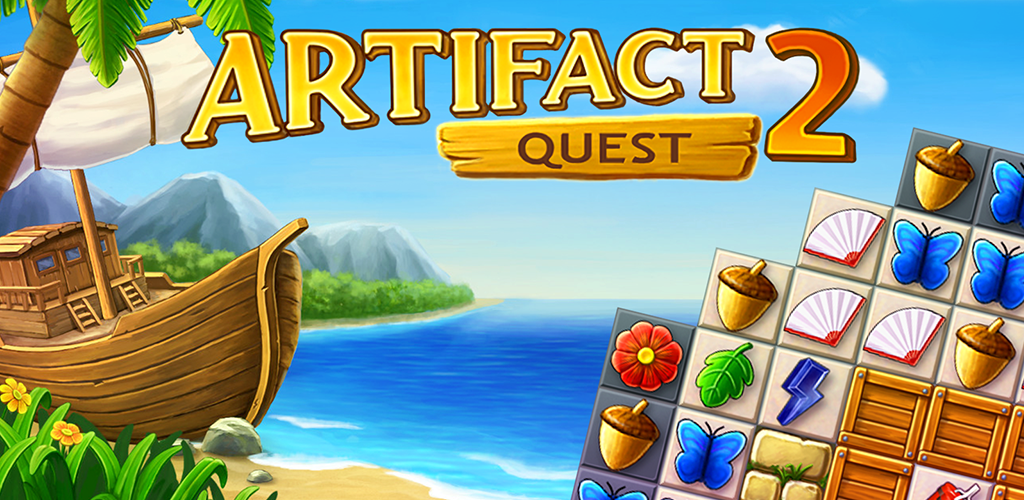
Artifact Quest 2 is the best indie anchor to add because it feels immediately recognizable to Steam shoppers without being one of the obvious classics.
Steam describes it as a mix of match-3, collapse, and puzzle gameplay, with island restoration and treasure-hunting layered around the core board loop.
That makes it a smart recommendation for readers who want a handcrafted casual puzzle game with more structure than a bare-bones gem-swapper, but without moving all the way into a heavy RPG hybrid.
Seven Seas Jewels Collector’s Edition
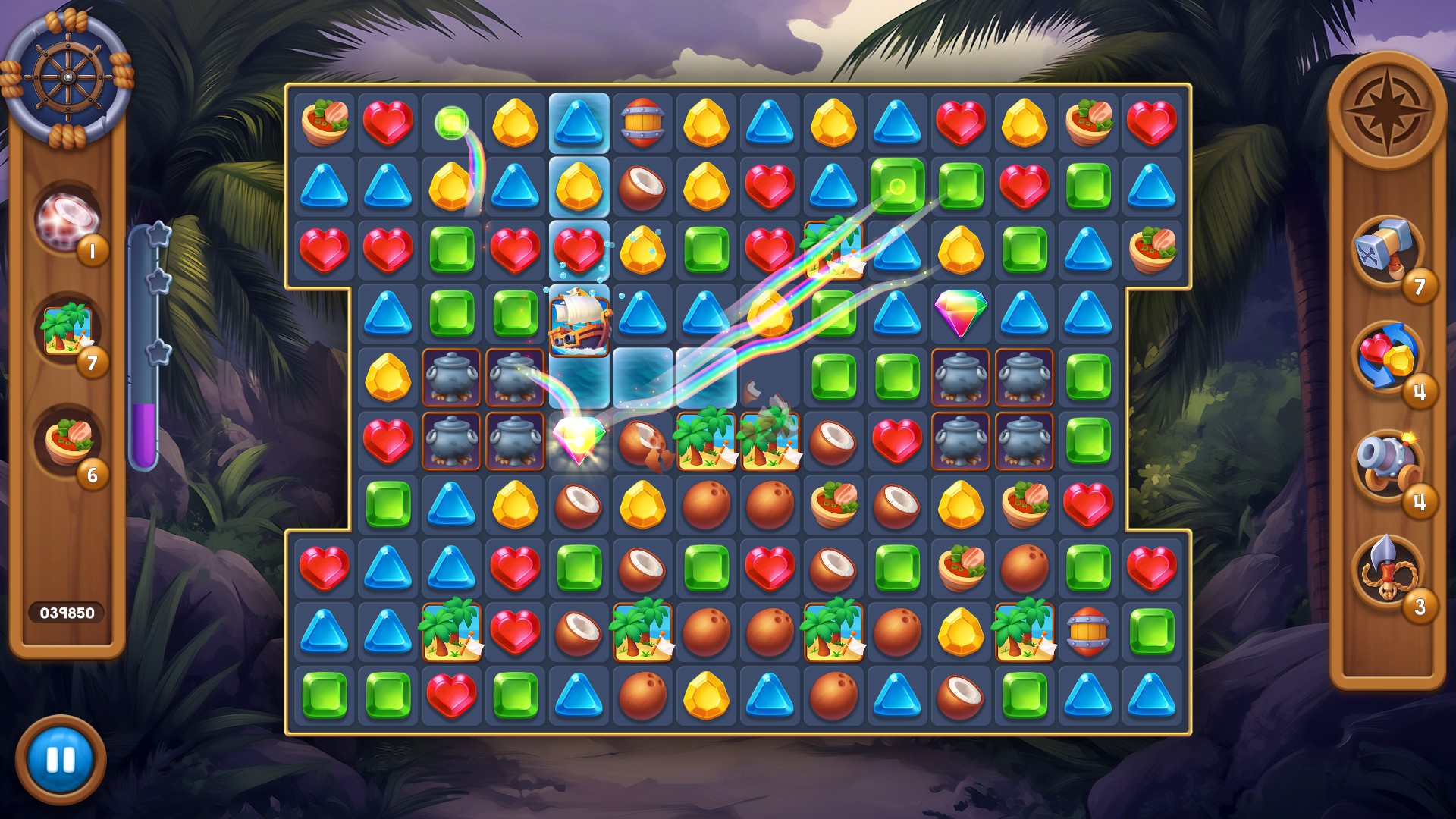
Seven Seas Jewels Collector’s Edition is the strongest pirate-themed indie mention for readers who want a story-led casual match-3 game without jumping all the way into RPG systems.
Steam describes it as a 220-level adventure built around treasure, cursed pirates, and island exploration, which makes it a good fit for players who like progression and theme but still want a familiar jewel-matching core.
Jewel Legends: Atlantis
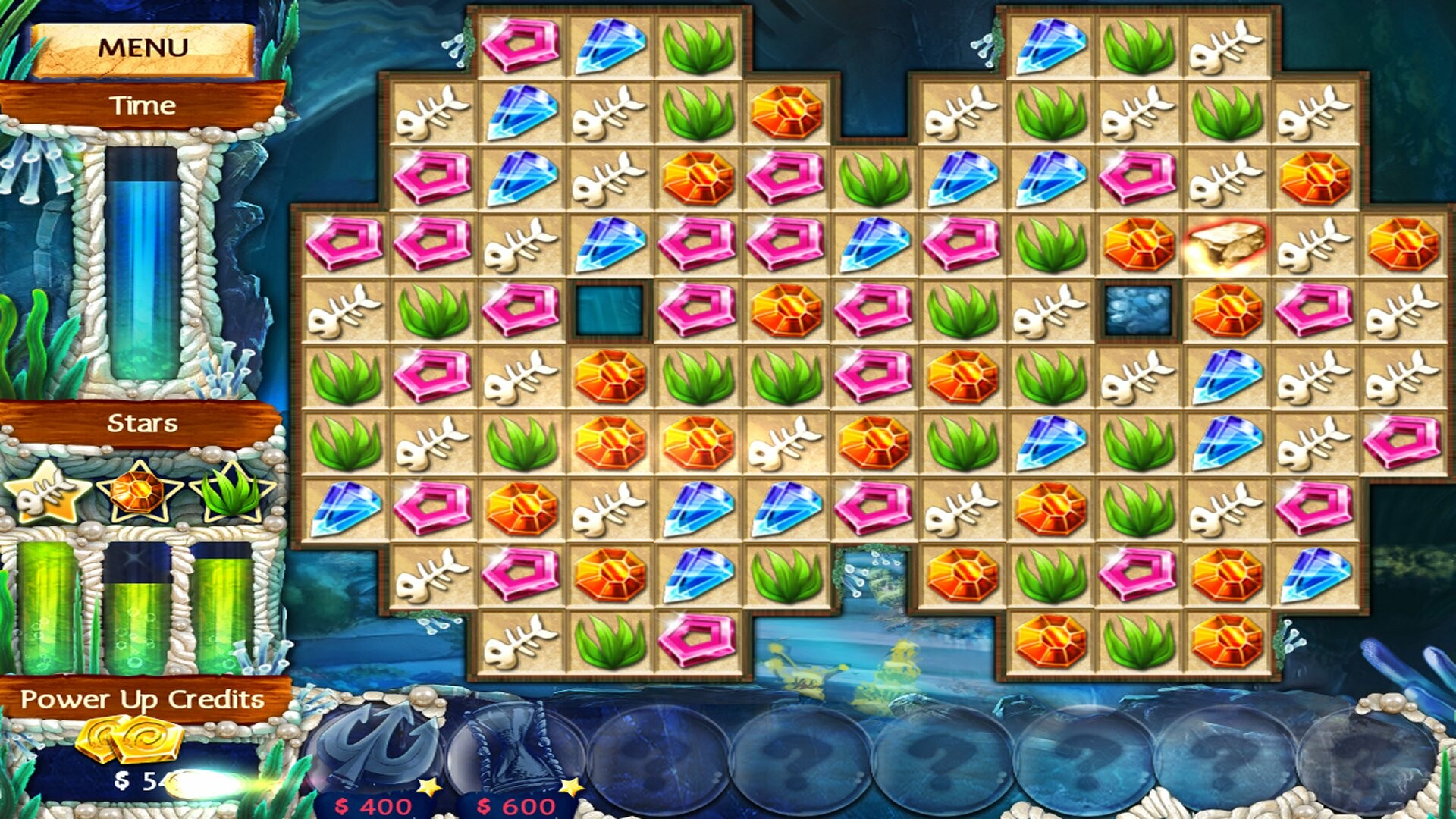
Jewel Legends: Atlantis is a good indie pick for readers who enjoy city-repair or restoration framing around their match-3 loop.
Steam’s description focuses on uncovering Atlantis, building huge chains, collecting artifacts, and rebuilding the city, so it sits nicely between a pure casual jewel game and a light progression title.
It is especially useful as a recommendation for readers who like the idea of Cradle of Rome but want a different theme and a more under-the-radar Steam entry.
Jewels Of The Mysterious Woodland
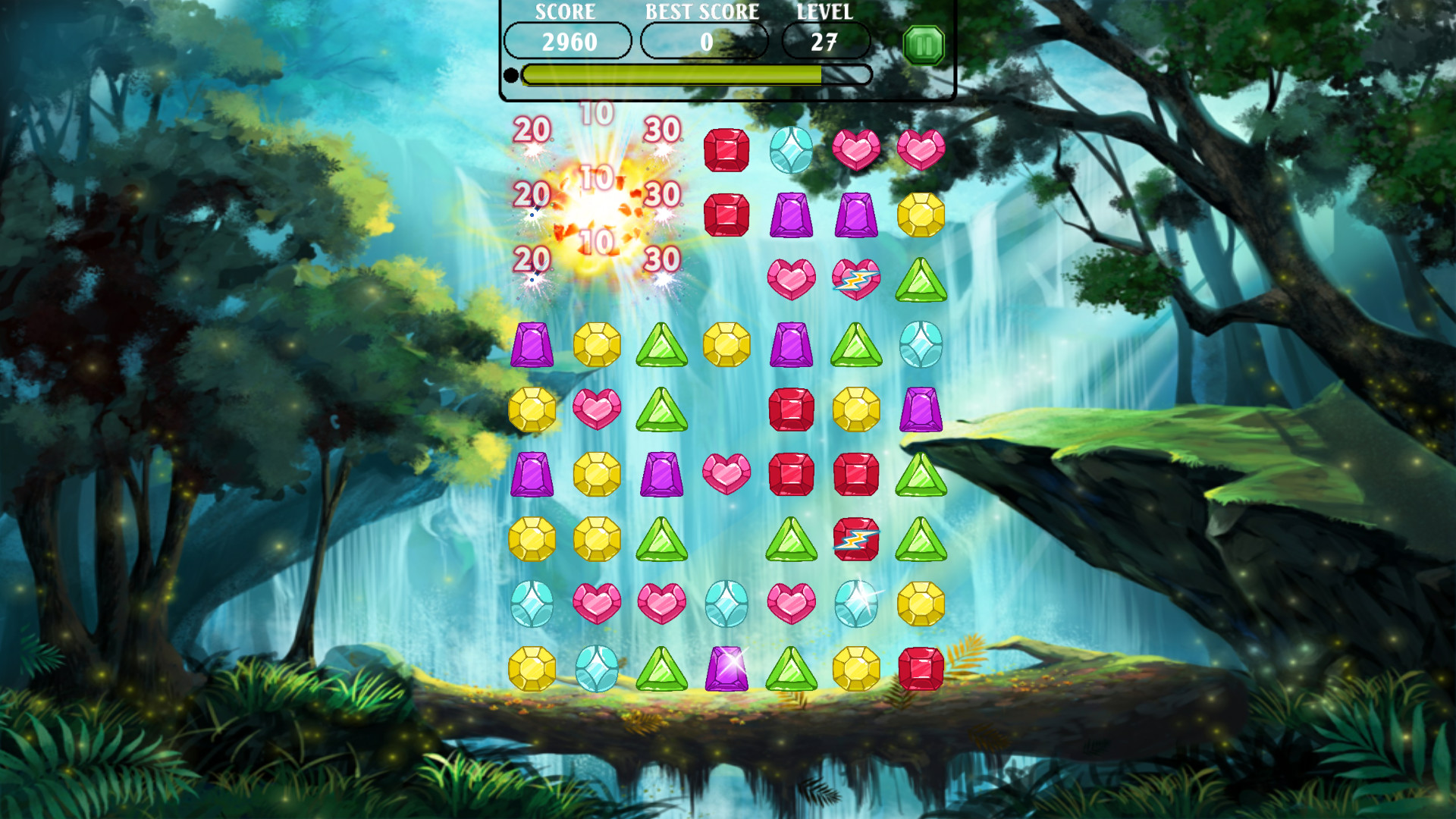
Jewels of the Mysterious Woodland is a solid, cheap hidden gem mentioned because it stays close to the fantasy-jewel identity many readers are actually looking for.
Steam describes it as a magical match-3 game with 600+ puzzles, bright jewel visuals, and a straightforward swap jewels and clear the way structure.
That makes it one of the easiest indie adds for readers who want volume, color, and genre purity more than novelty.
The Hybrids: Best Puzzle RPGs & Free-to-Play Options
These picks are here for Players who like the rhythm of matching gems but want something bigger, busier, or cheaper to try first.
They are not the core answer to the best jewel games on Steam. They are the best off-ramp for players who enjoy the genre’s matching logic but want RPG progression, live-service structure, or free-to-play experimentation layered on top.
Gems Of War - Puzzle RPG
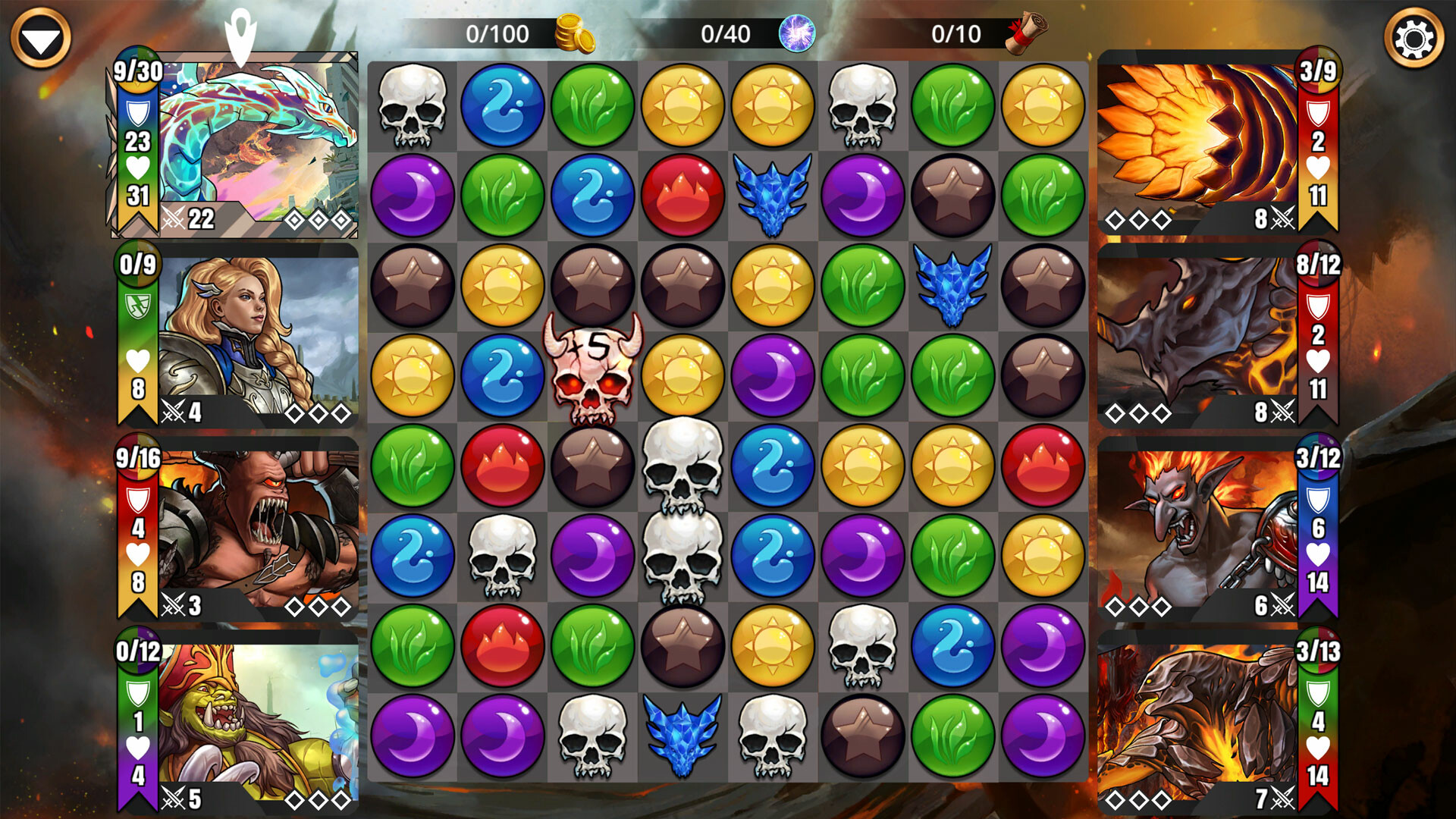
Gems of War is one of the biggest free-to-play match-3 RPGs on Steam, and Steam explicitly frames it as being from the original creators of Puzzle Quest.
The page highlights hundreds of quests, strategic PvP match-3 combat, and army-building systems, which makes it a smart recommendation for readers who want the board-play of jewel games but also want a live-service progression loop.
It is much busier than a classic gem-swapper, but that is exactly why it belongs in the hybrid lane.
MARVEL Puzzle Quest

MARVEL Puzzle Quest is the best branded hybrid mention for readers who want fast puzzle-RPG sessions tied to a recognizable license.
Steam describes it as a tactical match-3 board where every move is crucial, with character collection, PvP tournaments, and year-round events.
It is not a pure jewel-game recommendation, but it is one of the clearest examples of how far the genre can stretch once matching becomes a combat engine rather than the entire point.
Hero Emblems II
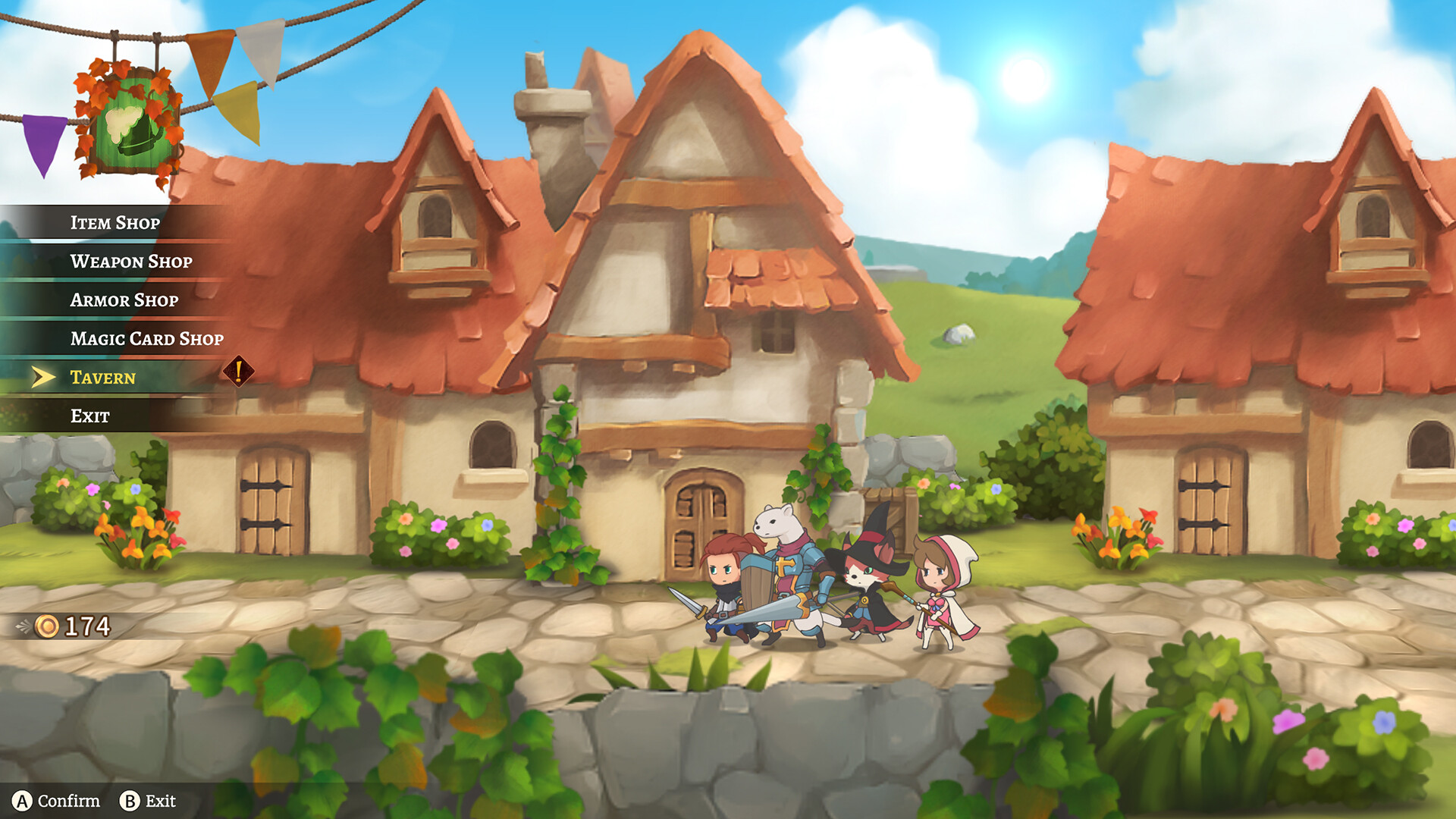
Hero Emblems II is one of the sharper premium hybrid recommendations because it is not just match-3 plus stats.
Steam describes it as a Japanese-style RPG combining side-scroller elements with match-3 gameplay, and the Steam listing also shows a demo, which lowers the barrier for curious readers.
This is the right recommendation for someone who likes puzzle combat but wants a more authored, adventure-forward structure than a typical free-to-play hybrid.
Roguematch: The Extraplanar Invasion
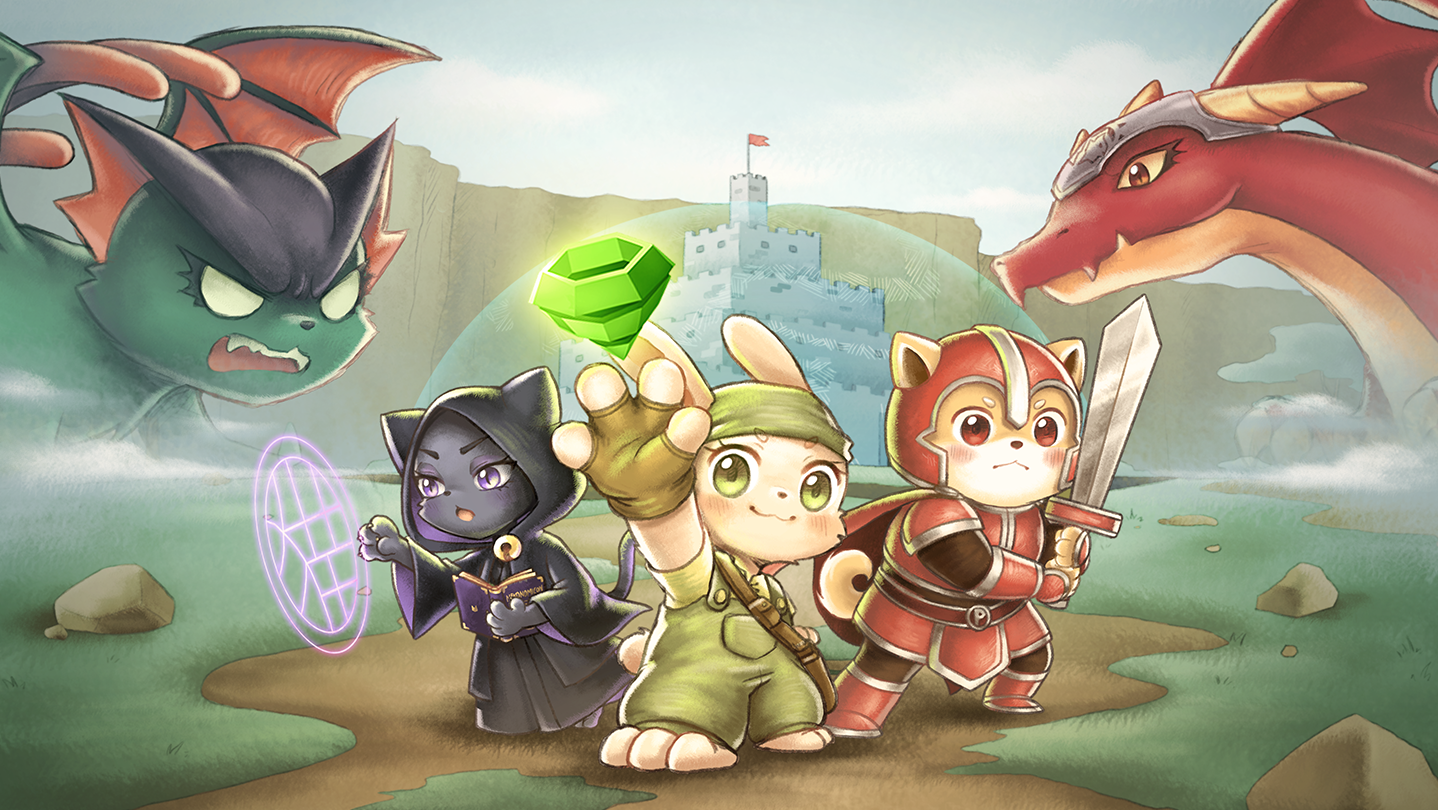
Roguematch: The Extraplanar Invasion is the most interesting deep-cut hybrid to add because it pushes match-3 into tactical dungeon-crawler territory.
Steam describes it as a turn-based dungeon crawler where match-3 is the tactician’s weapon, and the review snapshot is positive.
That makes it a strong recommendation for readers who have outgrown casual jewel boards and want something that treats matching as a strategic combat tool instead of a purely relaxing pastime.
How To Choose By Mood, Skill Level, And Budget
A good recommendation gets easier when you stop asking which game is best in the abstract and start asking what kind of session you want.
For pure score-chasing and short sessions, start with Bejeweled 3. For nostalgia and old-PC-puzzle energy, start with Jewel Quest Pack.
For deeper progression, choose Puzzle Quest: Immortal Edition. For free experimentation, try Gunspell 2 first, then move to a cleaner premium title if the hybrid structure feels too noisy.
For budget testing, the smartest move is not guessing. It is using the demos attached to Bejeweled Deluxe and Bejeweled Twist. That is a small but meaningful Steam-specific advantage because it lowers friction before purchase.
For players who want multiplayer-adjacent systems, classic jewel games are usually the wrong place to look.
Steam shows those features more often in hybrids like Gunspell 2 or Puzzle Quest 3, and Puzzle Quest 3’s listing also carries an Asynchronous Multiplayer tag alongside a Mixed review label.
How Do They Play On The Couch?
If you are planning to hook your PC up to a TV and play from the couch, your choice of game will largely dictate your hardware. The line between a pure classic jewel game and a modern hybrid is most obvious in how you control them.
The undisputed classics-Bejeweled 3, Bejeweled Deluxe, Bejeweled Twist, and the Jewel Quest Pack-were built during the golden age of PC point-and-click gaming.
They are fundamentally designed for a mouse. While Steam Input allows you to map mouse movements to an analog stick, these games lack native gamepad user interfaces.
To get the fast, twitch-reaction gem swaps these games demand, you really need a mouse in your hand.
Conversely, the modern RPG hybrids were designed with multi-platform console releases in mind.
Gems of War and Puzzle Quest:Immortal Edition feature full, flawless controller support out of the box.
You can navigate the grids instantly using a D-pad or analog stick, making them the ultimate choices for a relaxed, lean-back gaming session.
Even our adjacent marble-shooter pick, Sparkle 2, translates surprisingly well to a controller thanks to its twin-stick aiming mechanics.
Can You Take Them On The Go?
Puzzle games are practically built for handhelds, but Steam’s expansive library means compatibility varies wildly depending on when a game was released.
If you are a Steam Deck user, you need to know exactly how these games translate to the portable screen.
If you want a flawless, out-of-the-box experience, you have to look toward the hybrids. Both Gems of War and Puzzle Quest 3 hold Valve’s coveted Verified status.
The text scaling is perfect for the 7-inch screen, and the native controller support means you won't be fighting the hardware to make a match.
The purist classics require a slight compromise. Bejeweled 3, Jewel Quest Pack, and Sparkle 2 are officially categorized as Playable rather than Verified.
Because these older titles lack native gamepad support, playing them on the Steam Deck means relying heavily on the right trackpad to simulate mouse clicks for your gem swaps.
Furthermore, you will occasionally see outdated keyboard prompts or have to manually invoke the Steam Deck's on-screen keyboard to enter your name for a high score.
It is a minor hurdle, but for the sake of playing the greatest match-3 games of all time on the bus, the trackpad layout is more than adequate.
Steam-specific Checks Are Most Skipped.
The storefront itself gives you better buying clues than many listicles do. Steam Support explains that review scores are calculated from user reviews, and the store interface also makes it easy to compare all-time reputation against recent sentiment when both are available.
Tags are the next fast filter. A page built around Puzzle, Match 3, Casual, and Singleplayer usually aligns more closely with the classic jewel ideal. A page stacked with RPG, PvP, Asynchronous Multiplayer, or Solitaire is signaling a hybrid or offshoot.
Search preferences matter too. Steam’s own search results state that some titles are already excluded based on user preferences, which is useful when browsing a broad genre lane like Match 3.
A short buying checklist helps:
- Check whether the game is a pure jewel classic or a hybrid.
- Read the review label before trusting the theme.
- Use a demo when Steam offers one.
- Scan the tags for genre drift.
- Adjust Store Preferences if search results feel noisy.
The Real-World Appeal Of Gem Stacking
The satisfaction of arranging colorful, sparkling gems does not have to end when you close Steam.
Part of the reason games like Bejeweled or Jewel Quest are so universally relaxing is the visual reward of organizing beautiful, glittering stones into perfect sequences.
If you appreciate the aesthetic of a perfectly coordinated jewel board, you might find that same creative satisfaction in your offline style.
In fact, the real-world equivalent of setting up a flawless, customized gem combo is curatingstackable bracelet jewelry. It allows you to mix and match colors, metals, and textures with the same playful strategy you use on a match-3 grid.
It is a fun, stylish way to bring a little bit of that colorful, combo-driven energy into your everyday life.
Frequently Asked Questions
What Are The Best Jewel Games On Steam?
For most readers, the strongest shortlist is Bejeweled 3, Jewel Quest Pack, The Treasures of Montezuma 4, and Puzzle Quest: Immortal Edition, with Sparkle 2 as the best adjacent alternative.
Does Steam Have Bejeweled?
Yes. Steam currently lists Bejeweled 3, Bejeweled Deluxe, and Bejeweled Twist.
Is Jewel Quest On Steam?
Yes. Steam currently lists Jewel Quest Pack, which includes the first three Jewel Quest games.
Is Bejeweled 2 Deluxe On Steam?
Yes. Bejeweled 2 Deluxe is currently listed on Steam, and it is one of the more obvious older PopCap-era entries readers expect to see when browsing Bejeweled games on the platform.
Are Zuma And Luxor Jewel Games Or Just Related Alternatives?
They are related alternatives, not pure jewel-board games. Zuma Deluxe and Luxor use marble-shooter or orb-chain matching instead of a stationary gem-swapping board, so they fit best as adjacent classics rather than true jewel-game picks.
What’s The Difference Between Jewel Games And Match-3 Games?
A jewel game is one recognizable style within the wider match-3 genre. Match-3 is the umbrella; jewel games are one of its clearest classic forms.
Are There Free Jewel Games On Steam?
Yes, but the strongest free options usually lean hybrid rather than pure classic. Gunspell 2 and Puzzle Quest 3 are examples.
Are There Multiplayer Jewel Games On Steam?
Pure jewel games on Steam are mostly single-player. Multiplayer shows up more often in hybrid titles such as Gunspell 2 or through asynchronous systems in Puzzle Quest 3.
Which Jewel Game Is Best For Nostalgia?
Jewel Quest Pack is the strongest nostalgia pick, with Bejeweled Deluxe and Bejeweled Twist as close alternatives for PopCap-era comfort.
How Do I Hide 18+ Games On Steam?
Use your Store Preferences and content settings to reduce irrelevant results. Steam search also notes that some titles can already be excluded based on your preferences.
Conclusion
The safest all-around answer is still Bejeweled 3 because it combines classic identity, high review strength, and enough mode variety to suit almost anyone who came to Steam looking for a jewel game first.
The sharper answer depends on the itch. Jewel Quest Pack suits nostalgia. Puzzle Quest: Immortal Edition suits depth.
Sparkle 2 suits players who want a close cousin with faster arcade flow. Gunspell 2 suits readers who care more about free access than about genre purity.
That is the real way to make this keyword useful. Do not flatten every match-3 into the same recommendation.
Keep the game entries clear, keep the genre lines honest, and the right Steam pick becomes much easier to see.
Jump to
Best Jewel Games On Steam For Every Kind Of Puzzle Player
The Quickest Way To Choose The Right Game
What Counts As A Jewel Game On Steam, And What Does Not
Adjacent Classics Worth Knowing Before You Buy
The Best Jewel Games On Steam, Reviewed By Fit And Feel
Indie Mentions
The Hybrids: Best Puzzle RPGs & Free-to-Play Options
How To Choose By Mood, Skill Level, And Budget
How Do They Play On The Couch?
Can You Take Them On The Go?
Steam-specific Checks Are Most Skipped.
The Real-World Appeal Of Gem Stacking
Frequently Asked Questions
Conclusion
Latest Articles
Popular Articles