Best Spells For Eldritch Knight | D&D 5e & Baldur’s Gate 3
Eldritch Knight D&D 5e spells revealed! Access essential cantrips, 1st-4th level magic, & BG3 build insights. Equip your warrior-mage with powerful arcana today.
Mar 08, 202615.2K Shares390.8K Views

Ultimate Eldritch Knight Spell Guide For D&D 5e
Steel clashes with spellfire. Every swing of the sword is backed by arcane force, every movement calculated for both impact and strategy. This is no ordinary warrior - this is the Eldritch Knight, the quintessential blend of martial skill and magical finesse in Dungeons & Dragons 5e.
More than just a fighter with a few spells, the Eldritch Knight excels at battlefield control, burst damage, and unshakable defense. When built right, they can teleport across the battlefield, strike multiple foes, and use spells to shut down enemy casters - all in one turn. But without a finely tuned spell list, even the most battle-hardened Knight can fall short when it matters most.
We’ll go into the most effective spells for an Eldritch Knight, looking beyond generic lists to explore how each spell enhances your unique tactical role. From evocation spells that amplify your offenseto clever uses of abjuration magic for defense and control, we’ll uncover the tools that separate a good Eldritch Knight from a legendary one.
This analysis will help you maximize the synergy of your Eldritch Knight build, whether you're rolling up a new character or honing your late-game spellbook. Prepare your weapon, concentrate, and let's use some powerful magic.
The Arcane Arsenal: Optimizing Spell Choices For Your Eldritch Knight
Optimizing your Eldritch Knight in D&D 5e means selecting spells that not only complement your weapon attacks but elevate your overall combat effectiveness. This isn't about becoming a full caster; it's about seamlessly weaving magic into your martial prowess.
Key Eldritch Knight Spellcasting Rules:
- Spell List:Eldritch Knights primarily choose spells from the Abjuration and Evocation schools of magic on the Wizard spell list. For a broader view of what a full spellcaster has access to, you can explore the comprehensive list of D&D 5e Wizard Spells.
- "Any School" Spells:At certain Fighter levels (3rd, 8th, 14th, and 20th), an Eldritch Knight gains the ability to learn one spell from anyschool of magic on the Wizard spell list, provided they have spell slots of that level. These are often the most impactful choices for utility, control, or mobility.
- Spellcasting Ability:Your Intelligence is your spellcasting ability for Eldritch Knight spells.
- Spells Known:Eldritch Knights knowa fixed number of spells, rather than preparing them from a spellbook. This means your choices are set, so choose wisely!
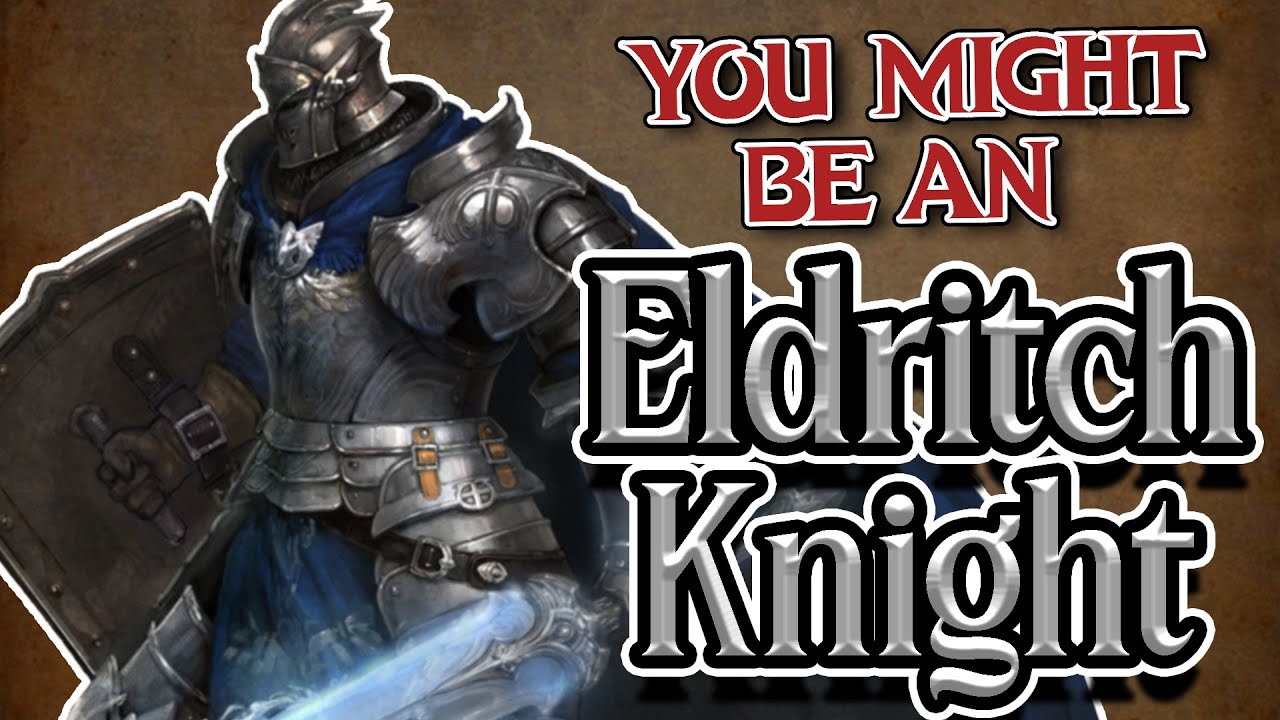
You Might Be an Eldritch Knight | Fighter Subclass Guide for DND 5e (2014)
Cantrips
You begin with 2 cantrips and gain a 3rd at Fighter level 10. These are your reliable, at-will magical options, shaping your consistent magical output.
1. Acid Splash (Conjuration, PHB)
- Mechanics: 60 ft., Dexterity save, 1d6 acid damage (scales: 2d6 at 5th, 3d6 at 11th, 4d6 at 17th) to two creatures within 5 ft.
- Rating: Situational. High Dexterity saves and adjacency requirement limit use. Outclassed by Green-Flame Bladefor multi-target damage.
- Best Use: Packed low-Dexterity enemies (e.g., zombies) when melee isn’t viable.
2. Blade Ward (Abjuration, PHB)
- Mechanics: Self, resist nonmagical bludgeoning/piercing/slashing until next turn.
- Rating: Situational. Full action cost competes with attacks or Shield.
- Best Use: Anticipating heavy nonmagical damage in a choke point.
3. Booming Blade (Evocation/Transmutation, SCAG/TCoE)
- Mechanics: Melee attack, normal damage + 1d8 thunder if target moves 5+ ft. (scales: 1d8 weapon + 2d8 at 5th, 2d8 + 3d8 at 11th, 3d8 + 4d8 at 17th).
- Rating: Stellar. War Magic synergy (bonus attack) and movement penalty control mobile foes.
- Best Use: Pinning single enemies (e.g., spellcasters) in melee.
4. Chill Touch (Necromancy, PHB)
- Mechanics: 120 ft., ranged spell attack, 1d8 necrotic (2d8 at 5th, 3d8 at 11th, 4d8 at 17th), blocks healing, undead get attack disadvantage.
- Rating: Great. Long range, no save, anti-healing. Niche undead debuff.
- Best Use: Ranged damage or countering regeneration (e.g., trolls).
5. Control Flames (Transmutation, EEPC)
- Mechanics: 60 ft., manipulate nonmagical flames (extinguish, expand, shape) for 1 hour.
- Rating: Situational. Non-combat utility, campaign-dependent.
- Best Use: Signaling or obscuring vision (e.g., extinguishing fires).
6. Create Bonfire (Conjuration, EEPC, Concentration)
- Mechanics: 60 ft., 5-ft. cube, Dexterity save, 1d8 fire (2d8 at 5th, 3d8 at 11th, 4d8 at 17th), 1 minute.
- Rating: Situational. Concentration and low damage limit use.
- Best Use: Chokepoints forcing enemies through fire.
7. Dancing Lights (Evocation, PHB)
- Mechanics: 120 ft., four torch-sized lights or humanoid shape, 1 minute.
- Rating: Situational. Outclassed by Lightdue to concentration.
- Best Use: Distractions or signaling in low light.
8. Encode Thoughts (Enchantment, Guildmaster’s Guide To Ravnica, UA)
- Mechanics: 60 ft., create thought strand from memory, 8 hours. DM approval needed.
- Rating: Situational. Non-combat, intrigue-specific.
- Best Use: Covert communication in espionage campaigns.
9. Fire Bolt (Evocation, PHB)
- Mechanics: 120 ft., ranged spell attack, 1d10 fire (2d10 at 5th, 3d10 at 11th, 4d10 at 17th), ignites objects.
- Rating: Great. High damage, long range, War Magic synergy. Fire resistance common.
- Best Use: Ranged combat when melee isn’t possible.
10. Friends (Enchantment, PHB, Concentration)
- Mechanics: Self, advantage on Charisma checks, target becomes hostile after 1 minute.
- Rating: Situational. Hostility drawback risks social encounters.
- Best Use: Short-term social manipulation with an exit plan.
11. Frostbite (Evocation, XGtE)
- Mechanics: 60 ft., Constitution save, 1d6 cold (2d6 at 5th, 3d6 at 11th, 4d6 at 17th), disadvantage on next weapon attack.
- Rating: Great. Debuff reduces enemy accuracy, reliable save target.
- Best Use: Debuffing high-damage melee foes.
12. Green-Flame Blade (Evocation/Transmutation, SCAG/TCoE)
- Mechanics: Melee attack, normal damage + fire to second target within 5 ft. equal to spellcasting modifier (1d8 + modifier at 5th, 2d8 at 11th, 3d8 at 17th).
- Rating: Stellar. War Magic synergy, consistent multi-target damage.
- Best Use: Clustered enemies (e.g., goblins).
13. Gust (Transmutation, EEPC)
- Mechanics: 30 ft., push creature 5 ft. or move small object.
- Rating: Situational. Weak combat impact, minor utility.
- Best Use: Environmental distractions or moving lightweight objects.
14. Infestation (Conjuration, XGtE)
- Mechanics: 30 ft., Constitution save, 1d6 poison (2d6 at 5th, 3d6 at 11th, 4d6 at 17th), random 5-ft. move.
- Rating: Situational. Random movement and poison resistance limit use.
- Best Use: Minor disruption in tight spaces.
15. Light (Evocation, PHB)
- Mechanics: Touch, 20-ft. bright/20-ft. dim light, 1 hour, no concentration.
- Rating: Great. Essential for dark environments, frees hands.
- Best Use: Dungeon exploration or combat illumination.
16. Lightning Lure (Evocation, SCAG/TCoE)
- Mechanics: 15 ft., Strength save, 1d8 lightning (2d8 at 5th, 3d8 at 11th, 4d8 at 17th), pull 10 ft. closer.
- Rating: Great. Pulls enemies into melee or allied effects.
- Best Use: Repositioning ranged foes or spellcasters.
17. Mage Hand (Conjuration, PHB)
- Mechanics: 30 ft., spectral hand manipulates 10-lb. objects, 1 minute.
- Rating: Great. Versatile utility, often allowed as “any school.”
- Best Use: Trap disarming, retrieving items, exploration.
18. Mending (Transmutation, PHB)
- Mechanics: Touch, repair small breaks in objects.
- Rating: Situational. Non-combat, roleplay-focused.
- Best Use: Fixing gear during downtime.
19. Message (Transmutation, PHB)
- Mechanics: 120 ft., whispered message with reply, blocked by barriers.
- Rating: Situational. Useful for stealth but limited by line of sight.
- Best Use: Coordinating during stealth missions.
20. Mind Sliver (Enchantment, TCoE)
- Mechanics: 60 ft., Intelligence save, 1d6 psychic (2d6 at 5th, 3d6 at 11th, 4d6 at 17th), -1d4 to next save.
- Rating: Great. Save debuff sets up spells, psychic damage rarely resisted.
- Best Use: Preceding Hypnotic Patternor Banishment.
21. Minor Illusion (Illusion, PHB)
- Mechanics: 30 ft., sound or 5-ft. image, 1 minute.
- Rating: Great. Versatile for distractions or roleplay, often “any school.”
- Best Use: Creating cover or deceptive setups.
22. Mold Earth (Transmutation, EEPC)
- Mechanics: 30 ft., manipulate dirt/stone (move, shape, difficult terrain).
- Rating: Situational. Limited combat use, campaign-dependent.
- Best Use: Creating cover or obstacles.
23. On/Off (Technomagic, UA)
- Mechanics: 60 ft., toggle simple devices. DM approval needed.
- Rating: Situational. Niche for modern settings, no combat use.
- Best Use: Campaign-specific device interaction.
24. Poison Spray (Conjuration, PHB)
- Mechanics: 10 ft., Constitution save, 1d12 poison (2d12 at 5th, 3d12 at 11th, 4d12 at 17th).
- Rating: Situational. Short range, common poison resistance.
- Best Use: Low-Constitution, poison-vulnerable foes.
25. Prestidigitation (Transmutation, PHB)
- Mechanics: 10 ft., minor effects (clean, flavor, trinkets), 1 hour.
- Rating: Great. Endless roleplay utility (e.g., cleaning armor).
- Best Use: Social interactions or minor problem-solving.
26. Ray Of Frost (Evocation, PHB)
- Mechanics: 60 ft., ranged spell attack, 1d8 cold (2d8 at 5th, 3d8 at 11th, 4d8 at 17th), -10 ft. speed.
- Rating: Great. Ranged damage with slowdown, War Magic synergy.
- Best Use: Kiting melee enemies.
27. Sapping Sting (Necromancy, Explorer’s Guide To Wildemount)
- Mechanics: 30 ft., Constitution save, 1d4 necrotic (2d4 at 5th, 3d4 at 11th, 4d4 at 17th), prone on fail.
- Rating: Great. Prone grants melee advantage, tactical control.
- Best Use: Setting up melee attacks. Note that while this is a Necromancy spell, its utility for an Eldritch Knight is more about battlefield control than the typical themes associated with Dungeons and Dragons necromancy spells.
28. Shape Water (Transmutation, EEPC)
- Mechanics: 30 ft., manipulate water (move, shape, freeze), 1 hour.
- Rating: Situational. Minimal combat use, campaign-dependent.
- Best Use: Environmental manipulation in water-rich settings.
29. Shocking Grasp (Evocation, PHB)
- Mechanics: Melee spell attack, 1d8 lightning (2d8 at 5th, 3d8 at 11th, 4d8 at 17th), no reactions, advantage vs. metal armor.
- Rating: Great. Blocks opportunity attacks, ideal for disengaging.
- Best Use: Escaping grapples or melee foes.
30. Sword Burst (Conjuration, SCAG/TCoE)
- Mechanics: 5 ft. radius, Dexterity save, 1d6 force (2d6 at 5th, 3d6 at 11th, 4d6 at 17th).
- Rating: Situational. Low damage, small area, outclassed by Green-Flame Blade.
- Best Use: Surrounded by weak enemies.
31. Thunderclap (Evocation, XGtE)
- Mechanics: 5 ft. radius, Constitution save, 1d6 thunder (2d6 at 5th, 3d6 at 11th, 4d6 at 17th), audible 100 ft.
- Rating: Situational. Low damage, loud noise risks stealth.
- Best Use: Clearing weak foes, non-stealth scenarios.
32. Toll The Dead (Necromancy, XGtE)
- Mechanics: 60 ft., Wisdom save, 1d8/1d12 necrotic (2d8/2d12 at 5th, 3d8/3d12 at 11th, 4d8/4d12 at 17th if damaged).
- Rating: Great. High damage, reliable Wisdom save target.
- Best Use: Single-target damage, especially on wounded foes.

1st-Level Spell List
1. Absorb Elements (Abjuration, XGtE)
- Mechanics: Reaction, resist acid/cold/fire/lightning/thunder damage until next turn, add 1d6 of that type to next melee attack (scales: 2d6 at 5th, 3d6 at 11th, 4d6 at 17th).
- Rating: Stellar. Halves elemental damage (e.g., dragon breath), boosts melee damage. Reaction casting preserves action economy.
- Best Use: Against spellcasters or elemental hazards.
2. Acid Stream (Evocation, UA, Concentration)
- Mechanics: 30 ft. line, Dex save, 2d4 acid damage + 2d4/round for 1 min unless removed (scales: 3d4 at 5th, 4d4 at 11th, 5d4 at 17th). DM approval needed.
- Rating: Situational. Decent AoE, but concentration and high Dex saves limit it.
- Best Use: Clustered low-Dex enemies, if UA allowed.
3. Alarm (Abjuration, PHB, Ritual)
- Mechanics: 30 ft., 20-ft. cube alarm for 8 hours, alerts you if triggered. Ritual cast (10 min).
- Rating: Situational. Non-combat utility for securing camps.
- Best Use: Safe long rests or guarding locations.
4. Burning Hands (Evocation, PHB)
- Mechanics: 15 ft. cone, Dex save, 3d6 fire damage (half on save; scales: 4d6 at 5th, 5d6 at 11th, 6d6 at 17th).
- Rating: Good. Early AoE for clearing weak enemies. Fire resistance common.
- Best Use: Surrounded by low-HP foes.
5. Chromatic Orb (Evocation, PHB)
- Mechanics: 90 ft., ranged spell attack, 3d8 chosen damage (acid/cold/fire/lightning/poison/thunder; scales: 4d8 at 5th, 5d8 at 11th, 6d8 at 17th). Needs 50 gp diamond.
- Rating: Great. Versatile damage types, strong single-target option.
- Best Use: Distant or resistant enemies.
6. Earth Tremor (Evocation, XGtE)
- Best Use: Surrounded foes, setting up attacks.
- Rating: Situational. Low damage, but prone grants melee advantage.
- Mechanics: 10 ft. radius, Dex save, 1d6 bludgeoning + prone (scales: 2d6 at 5th, 3d6 at 11th, 4d6 at 17th), creates difficult terrain.
7. Find Familiar (Conjuration, PHB, Ritual)
- Mechanics: 10 ft., summon familiar (e.g., owl) for scouting, Help action, or touch spells. 1-hour cast, 10 gp cost. Ritual cast.
- Rating: Stellar. Best “any school” choice. Owl grants attack advantage, scouts, or delivers spells.
- Best Use: Combat support or exploration.
8. Frost Fingers (Evocation, IDRotF)
- Mechanics: 15 ft. cone, Con save, 2d8 cold damage (half on save; scales: 3d8 at 5th, 4d8 at 11th, 5d8 at 17th). DM approval needed.
- Rating: Good. Decent AoE, reliable Con save.
- Best Use: Clustered enemies in IDRotF campaigns.
9. Jim’s Magic Missile (Evocation, Acq Inc)
- Mechanics: 120 ft., three unerring darts, 1d4+1 chosen damage (force/piercing/slashing/bludgeoning; scales: 4 darts at 5th, 5 at 11th, 6 at 17th). DM approval needed.
- Rating: Great. Flexible, guaranteed damage for finishing foes or breaking concentration.
- Best Use: Elusive or concentrating targets.
10. Mage Armor (Abjuration, PHB)
- Mechanics: Touch, AC 13 + Dex Mod for 8 hours.
- Rating: Situational. Useless for armored Eldritch Knights.
- Best Use: Buffing unarmored allies.
11. Magic Missile (Evocation, PHB)
- Mechanics: 120 ft., three unerring darts, 1d4+1 force damage each (scales: 4 darts at 5th, 5 at 11th, 6 at 17th).
- Rating: Great. Guaranteed damage, disrupts concentration, force rarely resisted.
- Best Use: Finishing low-HP or elusive foes.
12. Protection From Evil And Good (Abjuration, PHB, Concentration)
- Mechanics: Touch, 10 min, disadvantage on attacks from aberrations/celestials/elementals/fey/fiends/undead, advantage on saves vs. their effects.
- Rating: Great. Strong defense against supernatural foes. Concentration limits use.
- Best Use: Fiend/undead-heavy encounters.
13. Shield (Abjuration - Reaction)
- Mechanics: Reaction, +5 AC until next turn, immune to Magic Missile.
- Rating: Stellar. Turns hits into misses, preserves action economy, scales well.
- Best Use: Countering high-damage attacks.
14. Snare (Abjuration, XGtE)
- Mechanics: 1-min cast, 20 ft., 5-ft. radius trap, Dex save or restrained for 1 hour or 150 damage.
- Rating: Situational. Setup-heavy, non-combat.
- Best Use: Ambushes or guarding retreats.
15. Tasha’s Caustic Brew (Evocation, TCoE, Concentration)
- Mechanics: 30 ft. line, Dex save, 2d4 acid/round for 1 min unless removed (scales: 3d4 at 5th, 4d4 at 11th, 5d4 at 17th).
- Rating: Good. Ongoing AoE, but concentration and Dex saves limit it.
- Best Use: Low-Dex enemy groups.
16. Thunderwave (Evocation, PHB)
- Mechanics: 15 ft. cube, Con save, 2d8 thunder + 10-ft. push (half damage on save; scales: 3d8 at 5th, 4d8 at 11th, 5d8 at 17th).
- Rating: Great. Crowd control, reliable Con save, thunder rarely resisted.
- Best Use: Escaping or repositioning enemies.
17. Witch Bolt (Evocation, PHB, Concentration)
- Mechanics: 30 ft., ranged spell attack, 1d12 lightning, 1d12/turn if in range (scales: 2d12 at 5th, 3d12 at 11th, 4d12 at 17th).
- Rating: Situational. High initial damage, but ongoing effect is weak and easily disrupted.
- Best Use: Stationary targets, low cover.

2nd-Level Spell List
1. Aganazzar’s Scorcher (Evocation, XGtE)
- Mechanics: 30 ft. line, Dex save, 3d8 fire damage (half on save; scales: 4d8 at 9th, 5d8 at 13th, 6d8 at 17th).
- Rating: Good. Strong ranged AoE for linear enemy groups. Fire resistance common.
- Best Use: Clearing enemies in tight spaces (e.g., hallways).
2. Arcane Lock (Abjuration, PHB)
- Mechanics: Touch, lock door/container, +10 DC to break/pick, 25 gp cost, unlimited duration.
- Rating: Situational. Non-combat utility, costly for limited slots.
- Best Use: Securing strongholds or escape routes.
3. Blur (Illusion, PHB, Concentration)
- Mechanics: Self, 1 min, attacks against you have disadvantage unless sight-independent.
- Rating: Great. Top “any school” choice, pairs with Shieldfor tanking. Concentration limits buffs.
- Best Use: Facing hordes or strong melee foes.
4. Continual Flame (Evocation, PHB)
- Mechanics: Touch, permanent 20-ft. bright/20-ft. dim light, 50 gp cost.
- Rating: Situational. Outclassed by Lightcantrip, no combat use.
- Best Use: Permanent campaign base lighting.
5. Darkness (Evocation, PHB, Concentration)
- Mechanics: 60 ft., 15-ft. radius magical darkness, 10 min.
- Rating: Situational. Useful with Blind Fighting/darkvision, but risks ally disruption.
- Best Use: Escaping or blocking spellcaster sight.
6. Digital Phantom (Abjuration, UA, Concentration)
- Mechanics: UA, defends against tech/magic surveillance. DM approval needed.
- Rating: Situational. Niche, campaign-specific.
- Best Use: Tech-heavy campaigns, if approved.
7. Gust Of Wind (Evocation, PHB, Concentration)
- Mechanics: 60 ft. line, 1 min, Str save or pushed 15 ft., slows movement, disperses gases.
- Rating: Good. Controls battlefield, clears hazards. Concentration limits use.
- Best Use: Repositioning foes or dispelling fog.
8. Icingdeath’s Frost (Evocation, UA)
- Mechanics: UA, cold-based AoE, unspecified. DM approval needed.
- Rating: Situational. Likely outclassed by Rime’s Binding Ice.
- Best Use: Cold-themed encounters, if approved.
9. Melf’s Acid Arrow (Evocation, PHB)
- Mechanics: 90 ft., ranged spell attack, 4d4 acid + 2d4 next turn (half on miss; scales: 5d4+3d4 at 9th, 6d4+3d4 at 13th, 7d4+4d4 at 17th).
- Rating: Good. Reliable ranged damage, even on miss. Acid resistance common.
- Best Use: Targeting distant high-priority foes.
10. Mental Barrier (Abjuration, UA, Reaction)
- Mechanics: UA, defends against mental effects. DM approval needed.
- Rating: Situational. Niche, outclassed by Protection from Evil and Good.
- Best Use: Psychic-heavy campaigns, if approved.
11. Misty Step (Conjuration, PHB, Bonus Action)
- Mechanics: 30 ft., teleport to visible space, bonus action.
- Rating: Stellar. Best “any school” choice, unmatched mobility, preserves attacks.
- Best Use: Escaping, repositioning, or chasing foes.
12. Mirror Image (Illusion, PHB)
- Mechanics: 1 min, three duplicates (AC 10 + Dex Mod), non-concentration.
- Rating: Great. Non-concentration defense, pairs with Shield.
- Best Use: Surviving high-accuracy or multi-attack foes.
13. Rime’s Binding Ice (Evocation, EGtW)
- Mechanics: 30 ft. cone, Con save, 3d8 cold, restrained 1 min on fail (scales: 4d8 at 9th, 5d8 at 13th, 6d8 at 17th).
- Rating: Great. AoE damage + crowd control, synergizes with melee.
- Best Use: Locking down enemy groups.
14. Scorching Ray (Evocation, PHB)
- Mechanics: 120 ft., three rays, 2d6 fire each (scales: 4 rays at 9th, 5 at 13th, 6 at 17th).
- Rating: Great. Versatile ranged damage, breaks concentration.
- Best Use: Distant or multiple targets.
15. Shadow Blade (Illusion, XGtE, Concentration)
- Mechanics: 1 min, 2d8 psychic blade, finesse/light/thrown, advantage in dim light/darkness (scales: 3d8 at 9th, 4d8 at 13th, 5d8 at 17th).
- Rating: Great. “Any school” choice, boosts melee in low light.
- Best Use: Low-light melee or ranged attacks.
16. Shatter (Evocation, PHB)
- Mechanics: 60 ft., 10 ft. radius, Con save, 3d8 thunder (scales: 4d8 at 9th, 5d8 at 13th, 6d8 at 17th), damages objects.
- Rating: Great. Strong AoE, thunder rarely resisted, breaks obstacles.
- Best Use: Clearing groups or environmental barriers.
17. Snilloc’s Snowball Swarm (Evocation, XGtE)
- Mechanics: 90 ft., 5 ft. radius, Dex save, 3d6 cold (scales: 4d6 at 9th, 5d6 at 13th, 6d6 at 17th).
- Rating: Situational. Weaker than Shatteror Rime’s Binding Ice.
- Best Use: Minor cold-based AoE.
18. Thought Shield (Abjuration, UA)
- Mechanics: UA, protects vs. psychic/mental effects. DM approval needed.
- Rating: Situational. Niche, outclassed by 1st-level options.
- Best Use: Psychic campaigns, if approved.
19. Warding Wind (Evocation, XGtE, Concentration)
- Mechanics: Self, 10 ft. radius, 10 min, difficult terrain, ranged attack disadvantage, disperses gases.
- Rating: Good. Defensive control, counters ranged or environmental hazards.
- Best Use: Protecting against archers or gas effects.
20. Web (Conjuration, PHB, Concentration)
- Mechanics: 60 ft., 20 ft. cube, Dex save, restrained + difficult terrain for 1 hour.
- Rating: Stellar. Top “any school” choice, restrains foes for melee advantage.
- Best Use: Controlling chokepoints or protecting allies.

3rd-Level Spell List
1. Counterspell (Abjuration, PHB, Reaction)
- Mechanics:60 ft. range, reaction to interrupt a creature casting a spell. Automatically succeeds if the target’s spell is 3rd level or lower; otherwise, make an ability check (DC 10 + spell level) using Intelligence.
- Why It’s Stellar:A must-have for high-level play. Shutting down enemy spells (e.g., Fireball, Hold Person, Dominate Person) can prevent catastrophic effects, protecting your party and controlling the battlefield. Its reaction casting preserves your action economy.
- Best Use:Neutralizing spellcasters in critical moments, especially against AoE or control spells.
2. Dispel Magic (Abjuration, PHB)
- Mechanics:120 ft. range, end one spell on a creature, object, or area. Automatically ends spells of 3rd level or lower; higher-level spells require an Intelligence check (DC 10 + spell level).
- Why It’s Great: Versatile utility for removing enemy buffs (e.g., Haste, Invisibility), ally debuffs (e.g., Slow, Bestow Curse), or magical traps. Essential for countering persistent magical effects.
- Best Use: Disrupting enemy spellcasters or freeing allies from debilitating effects.
3. Fireball (Evocation, PHB)
- Mechanics: 150 ft. range, 20 ft. radius, forces a Dexterity saving throw, deals 8d6 fire damage (half on a successful save; scales to 9d6 at 15th, 10d6 at 17th, 11d6 at 19th).
- Why It’s Stellar: The iconic AoE spell, delivering massive damage to clear hordes of enemies. Fire resistance is common, but the large radius and high damage make it a game-changer in multi-enemy encounters.
- Best Use:Wiping out clustered weak enemies or softening tougher groups.
4. Glyph Of Warding (Abjuration, PHB, Ritual)
- Mechanics:1-hour casting time, 200 gp material components, create a 10 ft. radius ward that triggers a stored spell (3rd level or lower) when conditions are met (e.g., creature enters). Lasts until triggered or dispelled.
- Why It’s Situational: Powerful for traps or ambushes but requires significant preparation and cost. Not viable in spontaneous combat, making it a poor choice for limited spell slots.
- Best Use:Fortifying a base or setting traps during downtime.
5. Haste (Transmutation, PHB, Concentration)
- Mechanics:Touch, lasts up to 1 minute. Target gains +2 AC, doubled speed, advantage on Dexterity saves, and an additional action (Attack [one weapon attack], Dash, Disengage, Hide, or Use an Object). Requires concentration.
- Why It’s Stellar:A top-tier “any school” choice. Casting on yourself boosts damage (extra attack) and mobility, enhancing your martial role. The AC and save bonuses improve durability. Concentration and the risk of losing a turn if the spell ends are drawbacks.
- Best Use:Maximizing damage output or mobility in high-stakes fights.
6. Hypnotic Pattern (Illusion, PHB, Concentration)
- Mechanics:120 ft. range, 30 ft. cube, forces a Wisdom saving throw. Creatures failing are charmed and incapacitated, with speed reduced to 0 for up to 1 minute (repeatable save if damaged or shaken). Requires concentration.
- Why It’s Stellar:One of the best crowd-control spells, often taken as the “any school” choice. Disabling multiple enemies can shift the battle’s momentum, allowing you to focus on key targets. Wisdom saves are often weak for martial foes.
- Best Use: Neutralizing groups of enemies in large encounters.
7. Intellect Fortress (Abjuration, TCoE, Concentration)
- Mechanics:Touch, lasts up to 1 hour. Target gains resistance to psychic damage and advantage on Intelligence, Wisdom, and Charisma saving throws. Requires concentration.
- Why It’s Good:Strong defense against psychic damage and mental effects (e.g., mind flayers, charm spells). Useful in specific campaigns but competes with Counterspell or Dispel Magic for spell slots.
- Best Use:Countering psychic-heavy enemies or spellcasters with mental effects.
8. Leomund’s Tiny Hut (Evocation, PHB, Ritual)
- Mechanics:1-minute casting time, create a 10 ft. radius dome for 8 hours. Provides a safe resting space, blocking creatures and spells unless allowed. Can be cast as a ritual.
- Why It’s Situational:Excellent for safe long rests but has no combat utility. Not worth a spell known slot for most Eldritch Knights.
- Best Use:Securing rest in dangerous environments during downtime.
9. Lightning Bolt (Evocation, PHB)
- Mechanics:100 ft. line, 5 ft. wide, forces a Dexterity saving throw, deals 8d6 lightning damage (half on a successful save; scales to 9d6 at 15th, 10d6 at 17th, 11d6 at 19th).
- Why It’s Great:Comparable to Fireball but with a line shape, ideal for narrow corridors or aligned enemies. Lightning resistance is less common than fire.
- Best Use:Targeting enemies in a straight line, such as in dungeons or chokepoints.
10. Magic Circle (Abjuration, PHB, Ritual)
- Mechanics:1-minute casting time, create a 10 ft. radius cylinder that protects against or traps aberrations, celestials, elementals, fey, fiends, or undead for 1 hour. Affected creatures have disadvantage on attacks and can’t charm or possess protected targets.
- Why It’s Situational:Useful for specific encounters but requires setup and is campaign-dependent. Not ideal for spontaneous combat.
- Best Use:Preparing for battles against supernatural creatures or ritual scenarios.
11. Melf’s Minute Meteors (Evocation, XGtE, Concentration)
- Mechanics:Self-target, conjure six tiny meteors for up to 10 minutes. As a bonus action, launch two meteors (60 ft. range), each dealing 2d6 fire damage in a 5 ft. radius (Dexterity save for half; scales to 3d6 at 15th, 4d6 at 17th, 5d6 at 19th). Requires concentration.
- Why It’s Good:Consistent bonus action damage synergizes with your attack actions, providing sustained AoE damage over multiple rounds. Fire resistance is a drawback.
- Best Use:Dealing incremental damage to clustered enemies in prolonged fights.
12. Nondetection (Abjuration, PHB)
- Mechanics:Touch, hide a creature or object from divination magic and scrying for 8 hours. Requires 25 gp material components.
- Why It’s Situational:Pure utility for avoiding magical detection, useful in intrigue-heavy campaigns but irrelevant in combat.
- Best Use:Stealth missions or evading enemy scrying.
13. Protection From Ballistics (Abjuration, UA, Concentration)
- Mechanics: UA content; typically grants resistance to nonmagical ranged weapon attacks. Requires DM approval.
- Why It’s Situational: Niche defense for specific modern or steampunk campaigns. Concentration and UA status limit its reliability.
- Best Use:Countering ranged-heavy enemies, if approved by the DM.
14. Protection From Energy (Abjuration, PHB, Concentration)
- Mechanics:Touch, grant resistance to one damage type (acid, cold, fire, lightning, or thunder) for up to 1 hour. Requires concentration.
- Why It’s Good:Similar to Absorb Elements (1st-level) but provides ongoing resistance, ideal for enemies with consistent elemental damage (e.g., dragons). Concentration competes with stronger spells like Haste.
- Best Use:Preparing for battles against elemental-focused enemies.
15. Psionic Blast (Evocation, UA)
- Mechanics:UA content; typically an AoE psychic damage spell with a push or stun effect. Requires DM approval.
- Why It’s Situational: Psychic damage is rarely resisted, but vague mechanics and UA status make it unreliable. Likely outclassed by Hypnotic Pattern or Slow.
- Best Use:Campaign-specific psychic-themed encounters, if approved.
16. Pulse Wave (Evocation, EGtW, Dunamancy)
- Mechanics: 30 ft. cone, forces a Constitution saving throw, deals 6d6 force damage (half on a successful save; scales to 7d6 at 15th, 8d6 at 17th, 9d6 at 19th) and pushes or pulls creatures 15 ft. Requires DM approval (Dunamancy).
- Why It’s Good: Strong AoE with force damage (rarely resisted) and versatile positioning (push or pull). Constitution saves are reliable against many foes.
- Best Use:Repositioning enemies or dealing damage in tight spaces.
17. Remove Curse (Abjuration, PHB)
- Mechanics:Touch, end one curse on a creature or object.
- Why It’s Great: Essential utility for removing debilitating curses (e.g., from magic items or enemy spells). Not a combat spell but invaluable in campaigns with curses.
- Best Use:Countering cursed items or effects in exploration-heavy adventures.
18. Sending (Evocation, PHB)
- Mechanics:Unlimited range (same plane), send a 25-word message to a creature you’re familiar with, who can reply.
- Why It’s Good:Excellent for long-distance communication, especially for coordinating with allies or NPCs. No combat utility.
- Best Use:Strategic planning or intel-gathering in large-scale campaigns.
19. Slow (Transmutation, PHB, Concentration)
- Mechanics:120 ft. range, 40 ft. cube, up to six creatures, forces a Wisdom saving throw. Affected creatures have halved speed, -2 AC and Dexterity saves, no reactions, and are limited to one attack or spell per turn for up to 1 minute (repeatable save). Requires concentration.
- Why It’s Stellar:A top-tier “any school” crowd-control spell. Debilitates multiple enemies, reducing their mobility, defense, and offense. Synergizes with your melee focus by making enemies easier to hit and limiting their counterattacks.
- Best Use:Crippling martial enemies or spellcasters in group encounters.
20. Wall Of Sand (Evocation, XGtE, Concentration)
- Mechanics:90 ft. range, create a 30 ft. long, 10 ft. high, 10 ft. thick wall of swirling sand for up to 10 minutes. Obscures vision, creates difficult terrain, and blocks ranged attacks through it. Requires concentration.
- Why It’s Good:Strong area denial, hindering enemy movement and protecting against ranged attacks. Useful for controlling battlefield layout.
- Best Use: Blocking enemy archers or creating barriers in open terrain.
21. Wall Of Water (Evocation, XGtE, Concentration)
- Mechanics:60 ft. range, create a 30 ft. long, 10 ft. high, 1 ft. thick wall of water for up to 10 minutes. Halves fire damage through it, creates difficult terrain, and imposes disadvantage on ranged attacks passing through. Can be frozen for added durability. Requires concentration.
- Why It’s Good: Similar to Wall of Sand, provides area denial and tactical cover. Fire damage reduction is situational but useful against fire-heavy enemies.
- Best Use:Controlling movement or protecting against ranged and fire-based attacks.

4th-Level Spell List
1. Banishment (Abjuration, PHB, Concentration)
- Mechanics: 60 ft., Charisma save, banish target for 1 min (repeatable save; permanent for extraplanar).
- Rating: Great. Top-tier single-target control, removes key threats. Charisma saves often weak.
- Best Use: Neutralizing bosses or spellcasters.
2. Dimension Door (Conjuration, PHB)
- Mechanics: 500 ft., teleport self + 1 creature to seen/described space.
- Rating: Stellar. Best “any school” choice, instant mobility, preserves action economy.
- Best Use: Escaping traps, repositioning, or rescuing allies.
3. Fire Shield (Evocation, PHB)
- Mechanics: Self, 10 min, no concentration, resist cold/fire, 2d8 fire/cold to melee attackers.
- Rating: Great. Non-concentration, boosts durability, punishes melee foes.
- Best Use: Melee-heavy fights for retaliatory damage.
4. Gate Seal (Abjuration, UA)
- Mechanics: UA, blocks planar travel/teleportation. DM approval needed.
- Rating: Situational. Niche, unreliable due to UA status.
- Best Use: Countering teleporting enemies, if approved.
5. Gravity Sinkhole (Evocation, EGtW, Dunamancy)
- Mechanics: 120 ft., 20 ft. radius, Con save, 5d10 force + pull 10 ft. (scales: 6d10 at 20th). DM approval needed.
- Rating: Great. Strong AoE, force damage, repositions enemies.
- Best Use: Clustering foes for spells/melee.
6. Greater Invisibility (Illusion, PHB, Concentration)
- Mechanics: Touch, 1 min, invisibility, advantage on attacks, disadvantage on attacks against.
- Rating: Stellar. Top “any school” choice, boosts offense/defense.
- Best Use: Surprise attacks or surviving multi-enemy fights.
7. Ice Storm (Evocation, PHB)
- Mechanics: 300 ft., 20 ft. radius, Dex save, 2d8 bludgeoning + 4d6 cold, difficult terrain (scales: 3d8 + 5d6 at 20th).
- Rating: Good. AoE with control, versatile despite cold resistance.
- Best Use: Slowing and damaging groups in open areas.
8. Mordenkainen’s Private Sanctum (Abjuration, PHB, Ritual)
- Mechanics: 120 ft., 100 ft. cube, 24 hours, blocks divination/teleportation. Ritual cast.
- Rating: Situational. Non-combat, not worth spell slot.
- Best Use: Securing a base from scrying.
9. Otiluke’s Resilient Sphere (Evocation, PHB, Concentration)
- Best Use: Isolating enemies or shielding allies.
- Rating: Great. Versatile control or ally protection.
- Mechanics: 30 ft., Dex save, trap/protect creature in sphere for 1 min.
10. Sickening Radiance (Evocation, XGtE, Concentration)
- Mechanics: 120 ft., 30 ft. radius, 10 min, Con save, 4d10 radiant + exhaustion.
- Rating: Good. Area denial, exhaustion debuffs, radiant rarely resisted.
- Best Use: Wearing down groups in prolonged fights.
11. Stones Skin (Abjuration, PHB, Concentration)
- Mechanics: Touch, 1 hour, resist nonmagical bludgeoning/piercing/slashing, 100 gp cost.
- Rating: Stellar. Doubles HP vs. mundane attacks, ideal for tanking.
- Best Use: Weapon-heavy enemy fights.
12. Storm Sphere (Evocation, XGtE, Concentration)
- Mechanics: 150 ft., 20 ft. radius, 1 min, 2d6 bludgeoning (Str save), bonus action 4d6 lightning.
- Rating: Good. Sustained AoE, bonus action synergy, minor control.
- Best Use: Battlefield control, consistent damage.
13. Vitriolic Sphere (Evocation, XGtE)
- Mechanics: 150 ft., 20 ft. radius, Dex save, 10d4 acid + 5d4 next turn (scales: 12d4 + 6d4 at 20th).
- Rating: Good. Strong AoE with ongoing damage.
- Best Use: Damaging clustered enemies.
14. Wall Of Fire (Evocation, PHB, Concentration)
- Mechanics: 120 ft., 60 ft. wall/20 ft. ring, 1 min, Dex save, 5d8 fire (scales: 6d8 at 20th).
- Rating: Great. Area denial, high damage despite fire resistance.
- Best Use: Segmenting battlefield or trapping foes.
Maximizing Your Eldritch Knight's Potential: Strategic Spellcasting
The strength of an Eldritch Knight isn't just in swinging a sword—it's in howthey blend steel with spellcraft. These hybrid warriors shine when their martial and magical tactics are carefully aligned. Here's how to optimize every aspect of your spellcasting toolkit:
Mastering The Action Economy
Starting at level 7, War Magiclets you cast a cantrip and make a bonus action weapon attack. This synergizes perfectly with cantrips like Booming Bladeand Green-Flame Blade.
By level 10, Eldritch Strikeimposes disadvantageon a creature’s next saving throw after you hit them with a weapon-making setup spells like Mind Sliver, Hold Person, or Sloweven more devastating.
Pro Tip:Use Mind Sliverbefore a save-based spell to double down on the debuff for brutal effect.
Prioritize Concentration Wisely
The best Eldritch Knight spells often require concentration. Your goal: sustain one powerful effect while staying in the fight.
Top picks:
- Bluror Mirror Image(survivability)
- Web, Hold Person, Hypnotic Pattern(battlefield control)
- Haste(burst mobility + extra attacks)
To maintain these spells, consider:
- War Caster feat(advantage on concentration saves + spellcasting during opportunity attacks)
- Resilient (Constitution)(boosts your key saving throw stat)
The Power Of “Any School” Spell Slots
At levels 3, 8, 14, and 20, you can choose non-Evocation or Abjuration spells-use these carefully.
Top options:
- Misty Step(bonus action escape)
- Hypnotic Pattern(mass crowd control)
- Find Familiar(scouting, Help action advantage, utility)
- Shadow Blade(melee synergy in dim light)
Avoid picking niche or redundant spells that don’t complement your melee role or battlefield control niche.
Defense Before Offense
You’re a frontliner first, spellcaster second. That means staying alive is your top priority.
Key defensive spells:
- Shield(reaction-based +5 AC)
- Absorb Elements(cut elemental damage)
- Bluror Mirror Image(enemy miss chance)
Once your defenses are solid, focus on spells that amplify damage or control space(Thunderwave, Web, Burning Handsin tight quarters).
Play Off Your Party’s Needs
Eldritch Knights thrive when they plug holesin a party composition.
- Lack of AOE control? Choose Webor Burning Hands.
- Missing support magic? Take Shield, Misty Step, or Find Familiar.
- Need stealth or deception? Use Minor Illusionor Disguise Self(if taken).
Don’t build in a vacuum-adapt to your group’s strengths and weaknesses.
Out-of-Combat Spell Utility
Even in downtime, your magic matters. Versatility sets apart great Eldritch Knights.
Great picks:
- Find Familiar(scouting, Help in combat)
- Minor Illusion(distraction, infiltration)
- Prestidigitation(creative utility, social flair)
These tools offer narrative depth, puzzle-solving options, and non-lethal solutions that smart players use to avoid unnecessary combat.
Optional: Multiclassing For Experts
For min-maxers, a 2-level dip into Wizard (War Magic)grants:
- Arcane Deflection(boost saves or AC as a reaction)
- Tactical Wit(add Int to initiative rolls)
However, this delays Extra Attack (2)and Indomitable, making it a trade-off. A pure Eldritch Knightis strong enough in most campaigns-only multiclass if your table runs long-term or you're aiming for niche optimization.
Adapting For Baldur's Gate 3
While this guide focuses on the D&D 5th Edition tabletop experience, many of these Eldritch Knight spells in BG3 translate seamlessly.
Baldur's Gate 3often simplifies or tweaks certain mechanics (e.g., no material components for most spells, or some spells having different action costs), and generally provides a well-balanced experience for Eldritch Knights, making many of the discussed strategies viable.
For players specifically looking to optimize their Eldritch Knight in Baldur's Gate 3, this detailed build guide provides further insights:

THE BEST Eldritch Knight Build for Baldur's Gate 3
Always check the specific implementation in BG3, as some spells might function slightly differently, but the principles of strong defense, tactical mobility, and synergistic damage hold true for the best Eldritch Knight builds.
FAQs
How Do You Build A Strong Eldritch Knight In D&D 5e?
Maximize your melee (Strength) or ranged (Dexterity) attack stat, and boost Constitution for durability. Intelligence fuels your spellcasting, so raise it moderately.
Focus your spells on defense (Shield, Absorb Elements), mobility (Misty Step), and control (Web, Slow). Use War Magicand Eldritch Striketo weave spells between weapon strikes for optimal efficiency.
What's The Best Race For An Eldritch Knight?
- Strength builds: Half-Orc (brutal crits), Mountain Dwarf (Con & armor proficiencies)
- Dexterity builds: High Elf (free cantrip), Stout Halfling (resilience)
- Flexible picks: Variant Human or Custom Lineage (free feat like War Caster or Resilient)
- Prioritize races that boost Strength/Dexterity, Constitution, or Intelligence-or grant useful feats.
Which Spell List Does The Eldritch Knight Use?
Eldritch Knights pull from the Wizard spell list, mostly limited to Abjurationand Evocationspells. At levels 3, 8, 14, and 20, they can pick one spell from any school, opening access to powerful control or utility spells like Mirror Imageor Misty Step.
What Ability Score Powers Eldritch Knight Spells?
Intelligencedetermines your spell save DC, spell attack bonus, and the number of known spells. While not a primary stat, a decent Intelligence score boosts spell reliability and synergy with class features.
Can An Eldritch Knight Use Eldritch Blast?
No-Eldritch Blastis a Warlock-onlycantrip. Eldritch Knights can't access it without multiclassing or using Magic Initiate (Warlock), which is rarely optimal. Despite the name similarity, Eldritch Knights and Warlocks have no mechanical overlap.
How Do Eldritch Knight Spells Interact With Attacks?
At level 7, War Magiclets you make a weapon attack as a bonus action after casting a cantrip (Booming Blade, Green-Flame Bladeshine here). At level 10, Eldritch Strikeimposes disadvantage on a foe’s next saving throw after you hit them, making your follow-up spells (Slow, Hypnotic Pattern) more effective.
A Quick Recap
Successfully wielding an Eldritch Knight isn't just about picking powerful spells; it's about understanding how those spells empower your martial capabilities.
By prioritizing defensive options like Shieldand Absorb Elements, leveraging movement and control with spells like Misty Stepand Web, and maximizing your damage through blade cantrips, you'll create a D&D 5e character that's truly greater than the sum of its parts.
This guide provides the framework, but the true artistry lies in your ability to adapt these principles to the unique challenges and opportunities of your own adventures. If you found this guide helpful, consider sharing it with your fellow adventurers!
Also Check Out: Top MMORPGs On Google Play
Jump to
Ultimate Eldritch Knight Spell Guide For D&D 5e
The Arcane Arsenal: Optimizing Spell Choices For Your Eldritch Knight
Cantrips
1st-Level Spell List
2nd-Level Spell List
3rd-Level Spell List
4th-Level Spell List
Maximizing Your Eldritch Knight's Potential: Strategic Spellcasting
Adapting For Baldur's Gate 3
FAQs
A Quick Recap
Latest Articles
Popular Articles