Top Benefits Of Easy Map Puzzles For Children
Discover how easy map puzzles for children enhance memory, fine motor skills, and global awareness through engaging, hands-on learning.
Mar 28, 20254.4K Shares221.7K Views
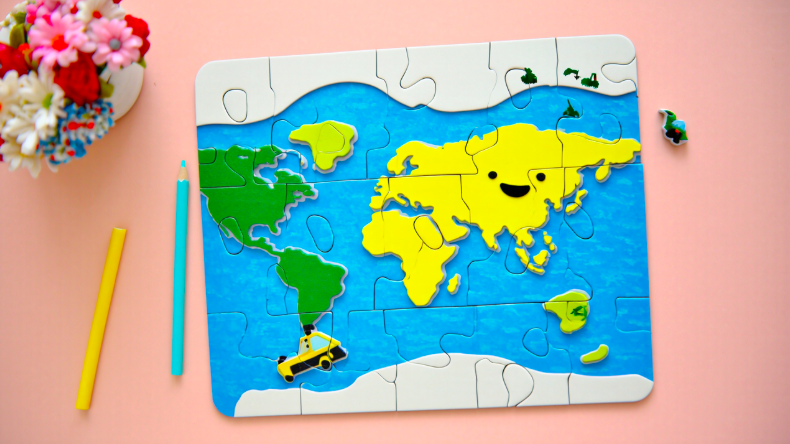
Puzzles are more than just a fun pastime for children—they play a key role in developing essential skills. Research shows that spatial play, such as puzzles and blocks, helps children build spatial reasoning abilities, which are critical for everyday tasks like navigating spaces and understanding directions. Map puzzles designed for kidsare a fantastic way to further engage children in learning while having fun.
Map puzzles take this learning a step further by combining fun with geography. They allow children to explore scaled representations of the world, helping them grasp concepts like distance, location, and spatial scaling. Studies confirm that activities involving maps improve cognitive skills and problem-solving abilities in young learners.
This article will guide you through the benefits of map puzzles designed for kids, the types available for different age groups, creative activities to enhance learning, and tips for selecting the right puzzle for your child.
Benefits Of Map Puzzles For Children
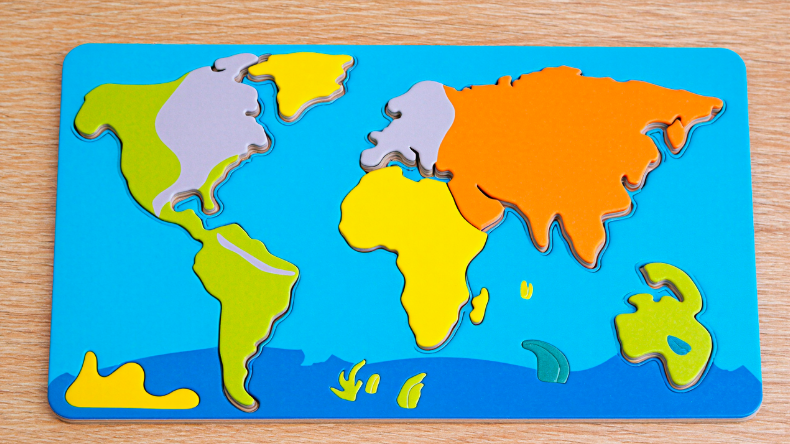
Cognitive And Educational Benefits
- Enhances MemoryMap puzzles require children to remember the shapes, locations, and patterns of different regions or countries. This strengthens both short-term and long-term memory as they repeatedly recall information to complete the puzzle.
- Improves Geography KnowledgeBy interacting with map puzzles, children learn about continents, countries, and their locations. This hands-on activity helps them visualize the world and understand spatial relationships between regions, fostering a deeper appreciation for geography.
- Develops Fine Motor SkillsHandling small puzzle pieces improves hand-eye coordination and fine motor skills. These skills are essential for writing, drawing, and other daily tasks.
- Boosts Problem-Solving AbilitiesChildren must analyze shapes, patterns, and positions to determine where each piece fits. This process enhances critical thinking and logical reasoning.
Emotional Benefits
- Fosters PatienceSolving a map puzzle requires persistence and patience. Children learn to stay focused on a task despite challenges, which helps them develop resilience.
- Encourages FocusThe concentration needed to complete a puzzle helps children improve their attention span. This skill is transferable to other areas of learning and daily life.
- Builds ConfidenceCompleting a map puzzle gives children a sense of achievement. This boosts their self-esteem and motivates them to tackle more complex tasks in the future.
Social And Cultural Awareness
- Promotes Global UnderstandingMap puzzles introduce children to different countries and cultures. They help kids appreciate diversity by showing how regions are interconnected.
- Encourages TeamworkWhen solved in groups, map puzzles teach collaboration and communication. Children learn to work together, share ideas, and solve problems collectively.
Practical Applications
- Prepares for Real-Life Skills Understanding maps through puzzles enhances spatial awareness, which is useful for navigation, geometry, and planning activities in daily life.
By integrating map puzzles into playtime or classroom activities, parents and educators can provide a fun yet educational tool that nurtures cognitive growth, emotional development, and global awareness in children.
Types Of Easy Map Puzzles For Different Age Groups
For Toddlers (Ages 1-3)
- Chunky Wooden PuzzlesThese puzzles are made of sturdy wood with large, easy-to-handle pieces. They often feature knobs or pegs for tiny hands to grip. Examples include basic world maps with bright colors and simple shapes. These puzzles help toddlers develop hand-eye coordination and basic spatial awareness.
- Magnetic Map PuzzlesMagnetic puzzles, like QUOKKA map sets, are lightweight and durable. They allow toddlers to attach pieces to a board easily. These puzzles are travel-friendly and often include themes like the USA or world maps, making them engaging and educational.
- 2-Piece and 4-Piece Jigsaw PuzzlesSimple jigsaw puzzles with just a few pieces are ideal for toddlers beginning to understand how shapes fit together. These puzzles often come with a background board to guide placement.
For Preschoolers (Ages 3-5)
- Floor Map PuzzlesLarge floor puzzles, such as world or U.S. map puzzles, are perfect for preschoolers. These puzzles have bigger pieces that are easy to handle and often feature colorful illustrations of animals or landmarks to make learning fun. For example, a 33-piece world map floor puzzle introduces continents and oceans while improving shape recognition.
- Self-Correcting Map PuzzlesThese puzzles allow children to match pieces that fit only in specific slots, such as state or country outlines. This feature helps preschoolers develop problem-solving skills while learning geography.
- Magnetic Map BooksCompact magnetic books with map themes are excellent for travel. They include multiple puzzles in one set, such as maps of the USA, the world, or even space. These are designed to enhance attention span and logical thinking in preschoolers.
For Older Children (Ages 6+)
- Interlocking World Map PuzzlesThese traditional jigsaw puzzles come with more pieces (50+), offering a moderate challenge. They often include detailed illustrations of countries, capitals, and landmarks, making them ideal for older kids learning geography in depth.
- Montessori Puzzle MapsMontessori-inspired map puzzles use wooden boards where each piece represents a country or continent. They are durable and promote hands-on learning by allowing children to trace the shapes of regions before placing them back on the board.
- Thematic Map PuzzlesThese include specialized maps like historical maps, wildlife regions, or space exploration maps. They offer both fun and educational value by combining geography with other subjects like history or science.
Fun Activities To Enhance Learning With Map Puzzles
Treasure Hunt Using Map Puzzles
- How to PlayCreate a treasure hunt by marking locations on a map puzzle where "treasures" (small prizes or clues) are hidden. Children must solve the puzzle and use the completed map to find these spots. For older kids, you can add challenges like using cardinal directions or coordinates to locate treasures.
- BenefitsThis activity makes geography exciting and interactive. It encourages problem-solving, teamwork, and map-reading skills while keeping children engaged in learning.
Create Custom Maps From Cardboard
- How to MakeProvide children with cardboard, markers, scissors, and glue. Let them design their own maps of their neighborhood, school, or even imaginary worlds. They can cut out pieces to make their maps into puzzles.
- BenefitsThis hands-on activity helps children understand spatial relationships and geography creatively. It also boosts fine motor skills and artistic expression.
Scavenger Hunt With Map Puzzles
- How to PlayChoose a completed map puzzle and create a list of landmarks or features for children to find on the map. For example, ask them to locate specific countries, oceans, or states. For younger kids, use simpler maps with fewer details.
- BenefitsThis activity improves observation skills and reinforces geography knowledge in a fun way. It also builds focus and attention to detail.
Map Puzzle Race
- How to PlayDivide children into teams and give each team the same map puzzle. Set a timer and see which team can complete the puzzle first. Add bonus points for identifying key features like capitals or landmarks.
- BenefitsThis competitive activity promotes teamwork, quick thinking, and geographical awareness while making learning lively.
Interactive Geography Games
- Use apps like Google Earth or geocaching tools alongside physical map puzzles. Children can explore real-world locations virtually after completing their puzzles.
Why These Activities Work
These activities combine fun with learning by making geography hands-on and engaging. They help children develop critical thinking, creativity, and a love for exploring maps while fostering teamwork and patience. Parents can easily adapt these activities based on age and skill level for maximum enjoyment and educational value.
6 Tips For Choosing The Perfect Map Puzzle
1. Consider Age Appropriateness
Select a map puzzle that matches your child's age and skill level. For toddlers, choose puzzles with large, easy-to-handle pieces. Preschoolers can handle puzzles with more pieces and smaller sizes, while older children may enjoy detailed and complex puzzles.
2. Match Interests and Themes
Choose a puzzle theme that aligns with your child’s interests, such as animals, landmarks, or continents. This will keep them engaged and motivated to complete the puzzle.
3. Focus on Educational Value
Look for puzzles that include country names, capitals, or geographical features. These help children learn geography while having fun.
4. Check Durability and Material
Opt for puzzles made of sturdy materials like wood or thick cardboard. Ensure the pieces are durable enough to withstand repeated use.
5. Prioritize Safety Standards
For younger kids, avoid puzzles with small parts that could pose a choking hazard. Always check for non-toxic materials to ensure safety.
6. Evaluate Puzzle Size and Complexity
Choose a puzzle with an appropriate number of pieces based on your child’s skill level. Larger puzzles with fewer pieces are ideal for beginners, while older children can handle more intricate designs.
FAQs For "Easy Map Puzzles For Children"
1. What Are The Key Benefits Of Introducing Map Puzzles To Kids?
Map puzzles improve spatial awareness, fine motor skills, and problem-solving abilities. They also teach geography in an engaging way and encourage teamwork when done in groups.
2. At what age can children start using map puzzles?
Children as young as 2-3 years old can start with simple map puzzles featuring large pieces. As they grow older, they can progress to more detailed puzzles.
3. How do I choose the right map puzzle for my child?
Consider your child’s age, interests, skill level, and the educational value of the puzzle. Ensure it is made of safe and durable materials.
4. Can map puzzles help children learn geography?
Yes, map puzzles introduce kids to countries, continents, oceans, and landmarks in a fun way that enhances their understanding of geography.
5. What are some creative activities parents can do with map puzzles?
Parents can turn puzzle time into learning sessions by discussing each country or landmark as the child places the pieces. They can also use the completed puzzle as a base for storytelling or trivia games about geography.
Latest Articles
Popular Articles