Grand Summoners Tier List - Best Global Units By Role
Use this Grand Summoners tier list to compare top Global units, avoid weak pulls, and build a stronger roster with smarter priorities.
Apr 18, 20268K Shares182.3K Views

Grand Summoners Tier List: Best Units By Role And Game Mode
This is a Global-first editorial tier list built for players who want better pull and build decisions, not just a giant wall of names. It is informed by the current Grand SummonersDatabase Global tierlist, Pocket Tactics’ update, and Altema’s JP rankings, but the placements below prioritize Global roster value, arts economy, survivability, and role compression over raw hype alone.
The strongest Global accounts usually get there the same way: they secure reliable arts support, patch survival, then add damage that actually has a shell behind it. That pattern shows up across current community and media tierlists even when the exact letter grades differ.
Key Takeaways
- Global-first beats JP-copying for real summon decisions.
- Support usually beats a second DPS when your account feels weak.
- Top-tier units solve multiple problems at once: Arts flow, survival, utility, or role compression.
- Lower-tier units can still clear content, but they are usually weaker long-term investments.
- The smartest way to use a tier list is by roster need, not by chasing the highest letter grade.
Which Units Deserve Your Crystals Right Now?
If your roster lacks arts generation, mitigation, or a stable way to survive boss pressure, those gaps matter more than adding another selfish attacker. That is why the highest-value names in the current meta keep clustering around support-heavy hybrids and premium defensive enablers, not just pure carries.
For most Global players, the best crystals go into units that either stabilize the team or make the entire team hit its rotations faster. Everything else gets easier once that part is solved.
How This Grand Summoners Tier List Is Built
These placements favor units that improve arts flow, team survival, fight control, and long-term flexibility.
The Grand Summoners Databaseexplicitly scopes its tierlist to Global units only, while Altema is ranking a separate JP environment. Pocket Tactics’ current list also shows how quickly the visible “best units” conversation can move around collabs and banner cycles. That is why this list is not a mirror of any single source; it is an editorial Global-first ranking designed to be more useful for actual account decisions.
The Six Ranking Factors
Arts Generation And Rotation Speed
If a unit makes your team rotate sooner and more consistently, its value rises fast.
Survivability And Mitigation
Barrier, resistance, healing, and control still decide more clears than players like to admit.
Break Value And Boss Control
Some units climb because certain bosses reward structure more than damage.
Role Compression
A unit becomes premium when one slot covers two or three jobs at once.
Gear Dependence
A strong unit that needs a perfect shell is less valuable than one that works now.
Consistency Across Modes
The best long-term units stay relevant across progression, farming, and boss content.
Grand Summoners Tier List Snapshot
This is a high-signal Global snapshot, not a full alphabetical encyclopedia. The goal is to rank the units players most often compare when deciding who to pull, build, or bench, while also giving the page enough breadth to satisfy what users expect from a true tier list.
SS Tier Units Worth Building Around
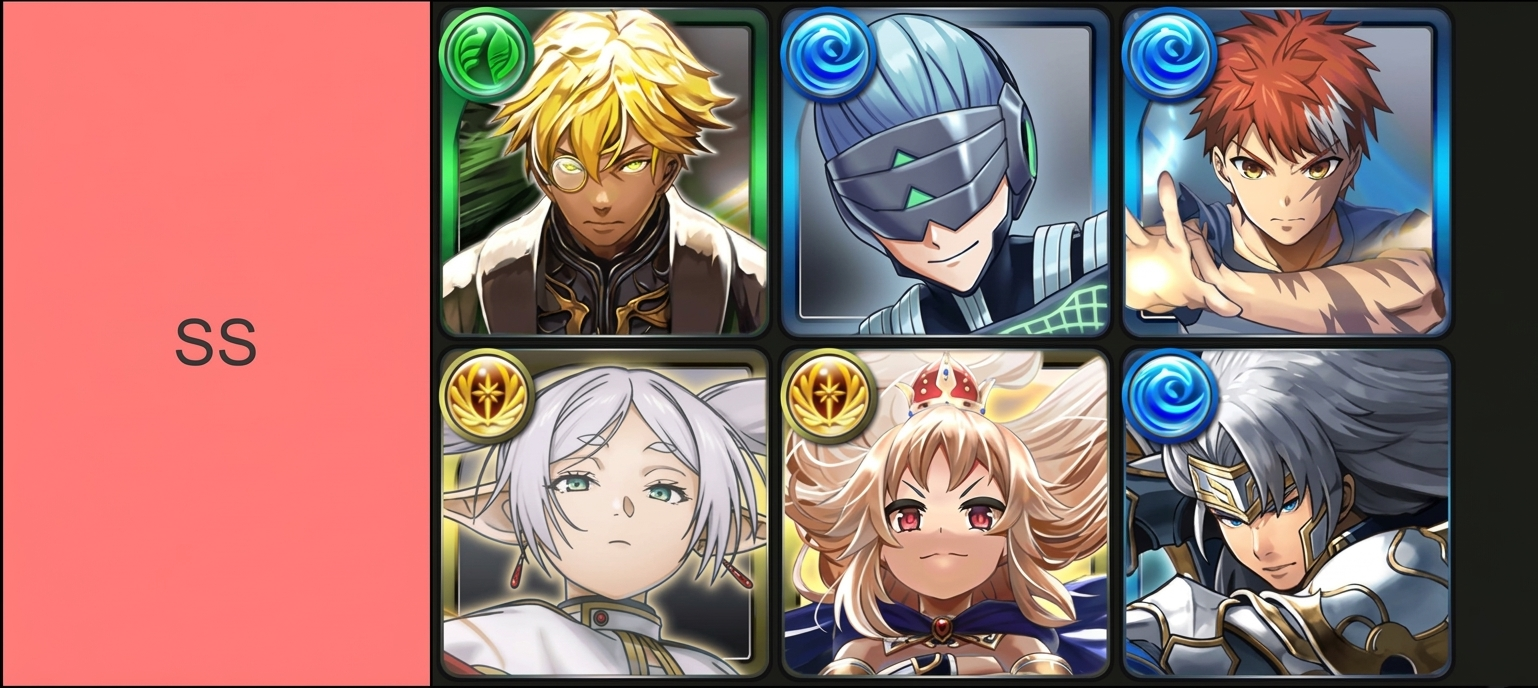
- War Hero Fen:One of the safest premium investments in Global. He raises the floor of weak rosters and the ceiling of strong ones because tempo, crit support, and team flow all arrive in one slot.
- Houka Inumuta:Houka feels like a modern meta blueprint: elite arts support, huge offensive upside, and the kind of role compression that makes good teams feel effortless.
- Shirou Emiya:Shirou earns SS because he stabilizes hard fights instead of merely surviving them. He is the sort of unit that lets the rest of your team actually play the game.
- Frieren:Frieren is a premium hybrid, not just a damage pick. She gives a roster both setup and payoff, which is why she keeps showing up near the top of current conversations.
- Sublime Supernova Liza:Liza stays elite because gear tempo, support utility, and high-end flexibility are worth more than many players realize until they hit harder content.
- Ultimate Paladin Roy:Roy belongs in the top band because he is repeatedly treated like a premier all-around piece in current live lists. He fits the kind of “high value almost anywhere” profile that earns SS respect.
S Tier Units With Near-Elite Value
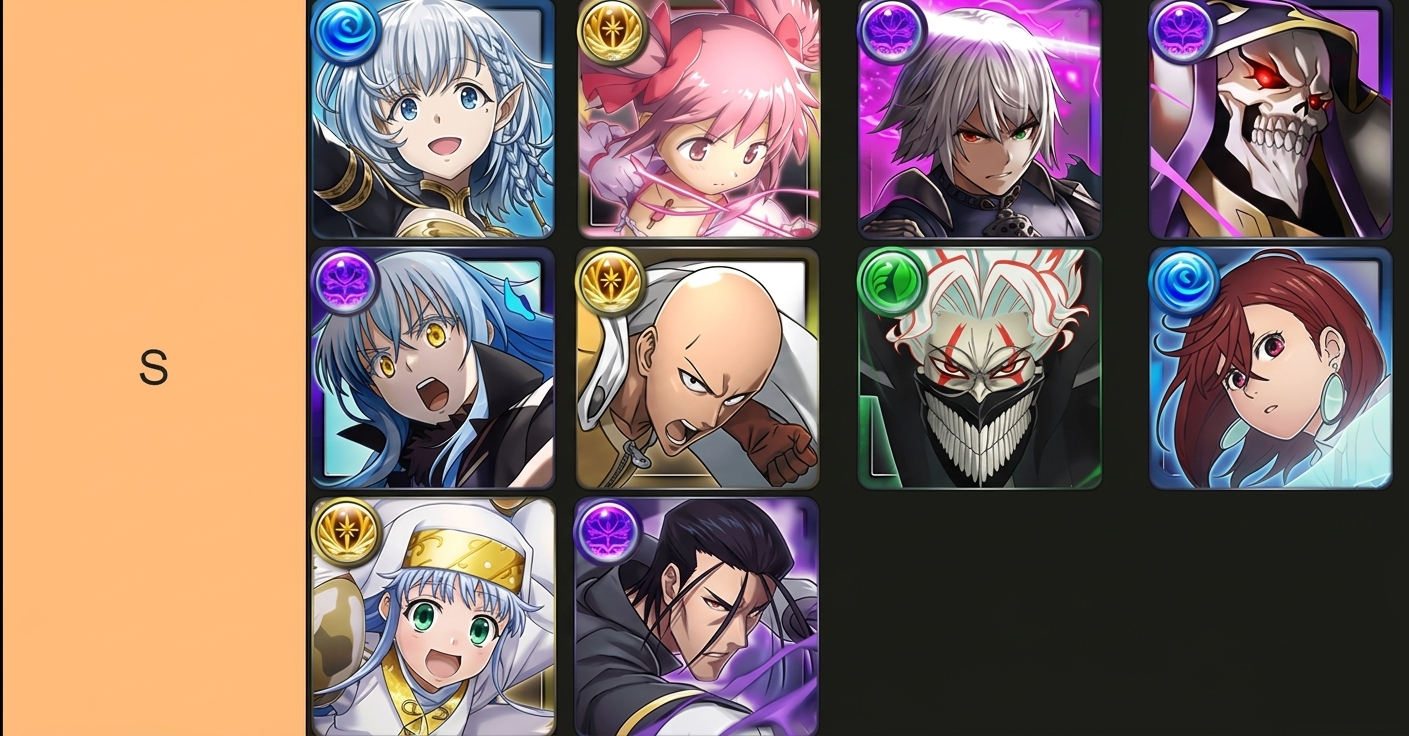
- Beta:Beta is the kind of unit that makes a roster safer without making it passive. Defensive value plus real offensive support keeps her near the top.
- Madoka Kaname:Madoka is exactly what you want from a limited support: broad utility, practical survival value, and real long-term account usefulness.
- Hart (Earth):Hart remains one of the cleanest sustain engines in the game. He is still the sort of unit that patches weak rosters immediately.
- Ainz:Ainz stays dangerous in the right shell. Dark-focused teams and demon-leaning builds still get excellent value from him.
- Demon Lord Rimuru:Rimuru brings more than damage. His value climbs when your roster can actually use the debuffs and dark-oriented payoff he supports.
- Hero Saitama:Saitama is too visible in the current SS/S discussion to ignore. Even if you rank him slightly lower for Global value than some lists do, he still belongs near the top.
- Okarun:Okarun is part of the current high-end conversation for a reason. When multiple fresh lists keep a newer name near the top, it deserves real placement, not a footnote.
- Momo:Momo is another unit whose current visibility matters. She is not always a first-build for every account, but she clearly belongs in the upper tier discussion right now.
- Priestess:Priestess is one of those units that keeps aging well because practical support stays practical. She may not be the flashiest name, but she remains roster-helpful.
- Saito Hajime:Saito sits in that valuable zone where strong current recognition meets real combat relevance. He is not filler in the current tier conversation.
A Tier Units That Are Strong But More Conditional
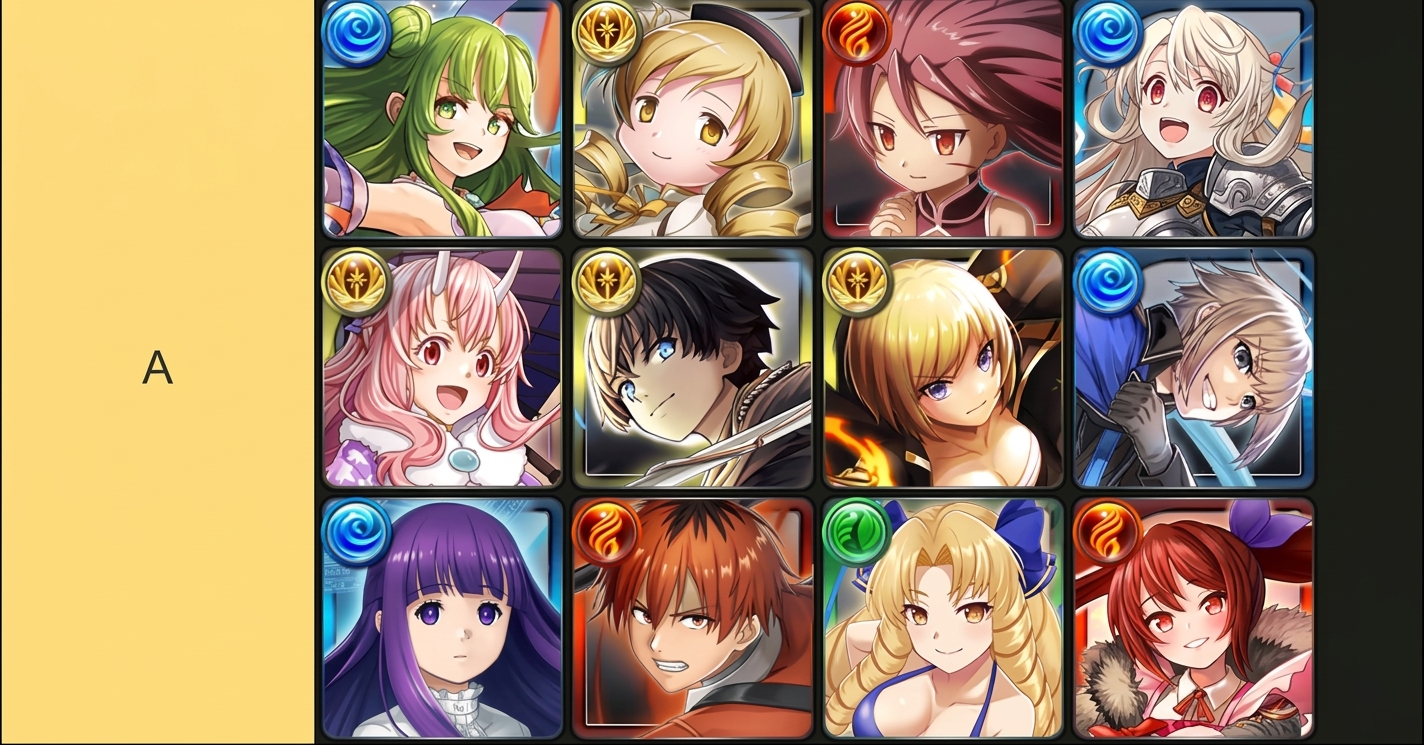
- Cestina (Earth):Stable, practical, and still very useful for accounts that need support value without extra complexity.
- Mami Tomoe:Mami rises when the fight rewards break structure. She is more specialized than a universal support-hybrid, but she can absolutely be the correct answer.
- Kyoko Sakura:Kyoko is a strong tempo pick when your team can cash in on the pressure she creates.
- Summer Illya:A sharp elemental option, especially when your roster already leans into Water and magic synergy.
- Shuna:Shuna is the type of utility pick players undervalue until cleanse, revive, and support value save an ugly run.
- Emperor Isliid:Isliid deserves inclusion because he keeps surfacing across current rankings, even when lists split on exactly how high he should go.
- Hazuki:Hazuki feels like a strong account piece rather than a vanity placement. She is not universal SS, but she absolutely belongs in the relevant mid-upper tier group.
- Jay:Jay is part of the current broader top-tier ecosystem and worth calling out for players who want better list coverage without bloating the page with every niche unit.
- Fern:Fern hits hard and stays relevant in the right shell, but her broad account value is usually lower than the very best support-hybrids.
- Stark:Stark is similar: useful, dangerous, and perfectly respectable, but usually not the first name that fixes a weak roster.
- Rin & Luvia:Strong enough to matter, conditional enough to stop short of the top band.
- Priscilla (Valentines):A good example of a unit who can be excellent in context without automatically becoming a must-build for every player.
B Tier Units For Niche Or Roster-Specific Use
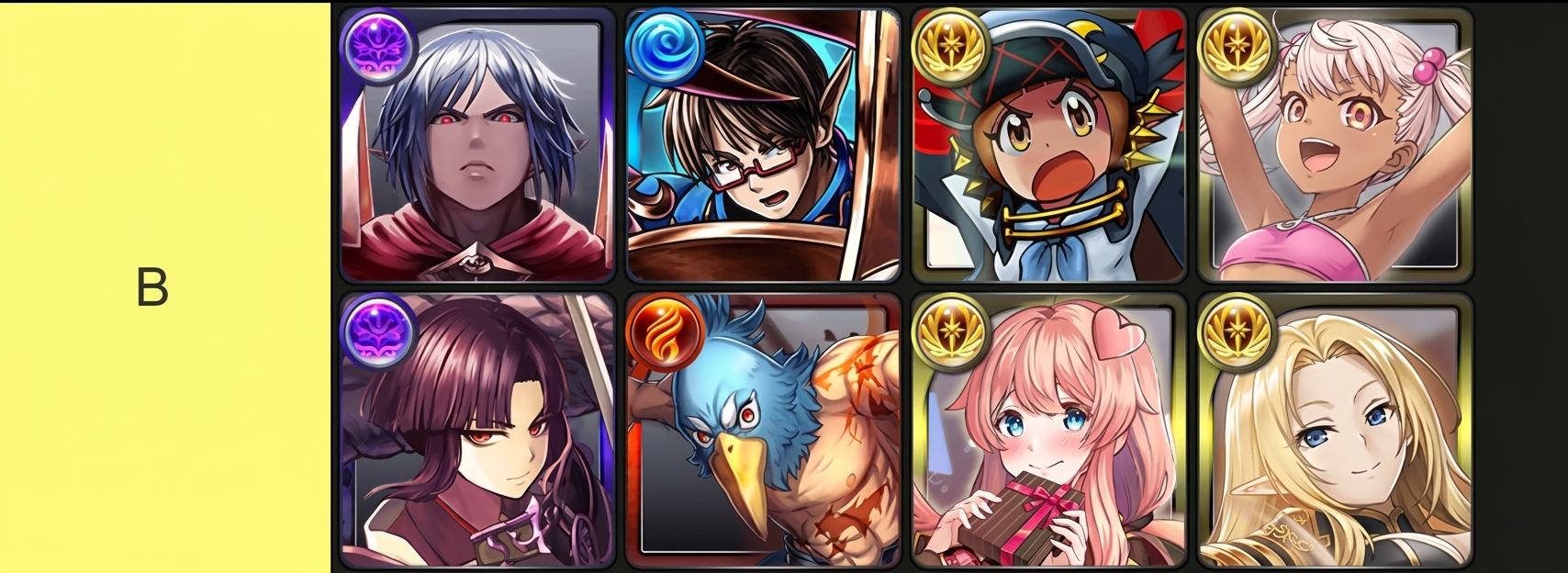
- Vox:Still good. Just not as universally valuable as he once felt. The modern meta asks for more utility than older carry-first units provide.
- Thetis:A real answer when taunt-tank play is the actual solution. Outside that lane, his value is narrower than the premium hybrids above him.
- Mako:Still a respectable support package, especially for rosters missing cleaner options. Usable is not the same as defining, though.
- Summer Chloe:A decent patch piece for the right light-leaning roster, but not the first premium build I would force.
- Luahn:Dangerous when supported properly, but more setup-sensitive than the cleaner S-tier options.
- Sunraku:Worth listing because he shows up in current broader rankings, but not high enough that I would put him near the premium all-purpose core.
- Miranda:Still useful in the right places, but more roster-specific now than the best universal options.
- Alpha:A legitimate name in the current wider field, but not one I would prioritize over the clearer upper-tier picks.
C Tier Units You Can Usually Deprioritize

- Chloe (GS):Serviceable if she is what you have, but her impact feels dated next to modern support and hybrid options.
- Genos:Playable, but too narrow to deserve serious priority in a current Global build plan.
- Vitz:A niche hold, not a progression target.
- Hatsune Miku:Still charming utility, but her current account value is lower than newer engines and cleaner support packages.
- Dark Fen:He can still help, but the current field has stronger and more efficient enablers competing for the same investment space.
- Older single-role carries with weak team utility:If a unit does little beyond personal output, it usually drops here unless your roster specifically needs that niche.
The pattern is the part worth remembering: the highest-value units either accelerate the whole teamor keep the whole team alive.
Best Units By Role, Not Just Letter Grade
Raw letters help you compare names. Roles help you fix rosters.
Best Support Units
- War Hero Fen- Pest blend of tempo, crit support, and broad account value.
- Houka Inumuta- Dlite arts engine with real offensive upside.
- Hart- Vtill one of the cleanest sustain supports in the game.
- Sublime Supernova Liza- Sremium support for gear-heavy and magic-focused teams.
- Madoka Kaname- Eefensive support that still gives a roster real momentum.
Best Attackers And Sub-Attackers
- Frieren- Fremium hybrid offense with genuine support value.
- Demon Lord Rimuru- Sangerous dark payoff unit when the shell is right.
- Hero Saitama- Eisible top-end carry with real current recognition.
- Kyoko Sakura- Strong tempo attacker for the right setup.
- Fern- excellent damage profile once your core is already stable.
Best Defenders
- Shirou Emiya- Birst recommendation when your team dies before it gets moving.
- Beta- Strong defensive value without becoming passive.
- Madoka Kaname- Sxcellent when barrier and support utility matter more than taunt.
- Thetis- still relevant when a true redirect tank is exactly what the fight demands.
Best Breakers
- Mami Tomoe- Sest headline pick when break matters.
- Specialist breaker slots from older rosters- Otill useful in content that specifically rewards them.
- Supports that improve break windows indirectly- Eometimes the best break support is the unit that keeps your entire script on time.
Best Healers And Utility Picks
- Hart- still elite for smooth sustain.
- Shuna- one of the better utility patches for awkward content.
- Madoka- excellent defensive utility, not just raw support.
- Summer Chloe- useful when her niche fits exactly.
Best Units By Account Stage
A beginner, a midgame player, and an endgame player should not read the same tier list the same way.
Best Units For Beginners
Start here if your account is young:
- War Hero Fen
- Hart
- Cestina
- Shirou Emiya
- Madoka Kaname
These units reduce friction. They make weak accounts feel less fragile and less gear-dependent.
Best Upgrades For Midgame Accounts
Once your team can function, these upgrades usually feel huge:
- Houka Inumuta
- Sublime Supernova Liza
- Beta
- Ainz
- Demon Lord Rimuru
- Frieren
- Ultimate Paladin Roy
These are the kinds of units that turn “good enough” teams into clean clears.
Best Endgame Problem-Solvers
When content gets tighter, these are the names I value most:
- Shirou Emiyafor fight stability
- Houka Inumutafor premium tempo
- Frierenfor scaling and flexibility
- Mami Tomoewhen break windows matter
- Lizawhen equipment timing wins the run
- Betawhen survival and pressure have to coexist
Build for the problem you actually have now, not the highlight reel you wish you had later.
How To Use This Tier List Without Wasting Crystals
A tier list should save crystals, not just rank units.
| If your roster problem is… | Prioritize this kind of unit |
| Team takes too long to start | Arts generation / opener support |
| Team dies before rotation starts | Barrier, mitigation, healer-support hybrid |
| Boss only feels vulnerable during break | Break specialist or break-enabling support |
| You already survive, but clears are slow | Resistance shred or scaling damage carry |
| Your team is good only in one element | Universal support before niche attacker |
If Your Team Feels Slow
Look first for arts engines like War Hero Fen, Houka, Hart, or Liza. If your team cannot rotate, damage rankings will lie to you.
If Your Team Keeps Dying
Build Shirou, Madoka, Beta, or Thetisbefore chasing another attacker. Survival is progression.
If Bosses Ignore Your Damage Until Break
Push Mamihigher. In break-sensitive content, specialized control can be worth more than generic offense.
If You Need Farming And Utility Value
Favor flexible supports over luxury damage. Units like Hart, Cestina, and War Hero Fenusually age better on most accounts than narrow carries.
A common mistake is pulling for a top attacker while the real problem is that the team never reaches a stable True Arts loop. Fix the loop first. The damage usually looks much better after that.
Limited Units, Collabs, And Banner Volatility
The right way to judge a limited unit is simple:
- Does it solve a problem your roster already has?
- Does it stay useful outside one specific shell?
- Does it compress more than one job?
That is why units like Madokaoften feel stronger in practice than flashier limited attackers. They improve the account, not just the screenshot.
The same logic applies to highly searched crossover names like Frieren, Hero Saitama, and Okarun. A great collab unit is still only worth the crystals if it improves your current Global roster.
Global Vs JP Tier List Differences That Actually Change Decisions
JP rankings are useful. Blind JP imitation is expensive.
Altema’s March 23, 2026 rankings keep names like Houka Inumuta, Shirou Emiya, Ultimate Paladin Roy, and War God Fenat the very top, while Pocket Tactics’ March 12, 2026 list currently puts Hero Saitama, Houka Inumuta, Okarun, and Ultimate Paladin Royin SS. That difference is exactly why Global players should use outside lists as signals, not commandments.
What Altema Is Useful For
- spotting who JP respects right now
- seeing which mechanics are aging well
- anticipating future trendlines
What Not To Copy From JP
- exact pull order
- value tied to unreleased or delayed Global content
- assumptions about banners you cannot actually access right now
For actual Global roster decisions, the Global database remains the cleaner baseline because it explicitly scopes itself to Global units.
Pull, Build, Or Bench? A Simple Roster Decision Framework
Pull If…
- the unit fixes a missing role immediately
- the unit adds value across multiple modes
- the unit improves your team even without a perfect shell
Build Next If…
- you already own the unit
- it solves your current bottleneck
- it works with the gear and supports you already have
Bench For Now If…
- it is strong but team-locked
- it overlaps too heavily with something better you already use
- it mostly improves screenshot damage, not clear rate
Quick checklist before you spend crystals:
- Identify your weakest role.
- Check whether the banner unit fixes it.
- Check whether that fix matters on Global now.
- Check whether your current roster can actually unlock the unit’s value.
- If the answer is “not really,” save.
The players who progress cleanly are rarely the luckiest. They are usually the strictest with role priority.
Common Grand Summoners Tier List Mistakes
Chasing Damage Clips Over Account Value
A giant Super Arts number looks amazing. A support that makes your whole team function is usually worth more.
Ignoring Arts-gen Stacking And Team Fit
This is where many rosters quietly go wrong. Current rankings keep rewarding support ecosystems and role synergy over random “best unit” piles.
Overvaluing Rare Units Without Support Or Gear
A premium attacker without the right shell is often weaker in practice than a lower-ranked unit on a functional team.
Treating All Modes Like They Reward The Same Kits
Boss control, burst windows, farming speed, and survivability do not reward the same unit profile.
The most useful tier lists do not just rank units. They tell you who should actually build them.
Grand Summoners Tier List FAQ
Who Is The Best Unit Right Now?
There is no single best unit for every roster, but War Hero Fen, Houka Inumuta, Shirou Emiya, Frieren, Sublime Supernova Liza, and Ultimate Paladin Royare among the safest top-end Global investments in this snapshot.
Should Beginners Reroll For Support?
Usually, yes. Support and support-hybrids improve every future team you build, while a pure attacker often needs more help to feel complete.
Are Lower-tier Units Still Usable?
Yes. Lower-tier units can still clear content when the matchup, team, and gear all line up. They are just worse long-term priorities for most accounts.
Can You Use JP Rankings For Global?
Yes, but only as a trend signal. Start with Global references for real summon decisions, then use JP rankings to spot where the broader meta may be heading.
Which Role Should I Prioritize First?
In most cases, prioritize support, arts generation, or defensive stabilitybefore adding another attacker.
Are Collab Units Always Worth Pulling?
No. A collab unit is worth more when it fixes a real roster problem and stays useful after the event ends.
Final Thoughts
The cleanest way to use any Grand Summoners tier list is to stop asking, “Who is strongest?”and start asking, “What is my roster missing?” Once you make that switch, the rankings stop feeling noisy. They start becoming practical.
If you enjoy roster-based gachas, you can also check our Blue Archive tier listfor another character-ranking guide.
Jump to
Grand Summoners Tier List: Best Units By Role And Game Mode
Which Units Deserve Your Crystals Right Now?
How This Grand Summoners Tier List Is Built
Grand Summoners Tier List Snapshot
Best Units By Role, Not Just Letter Grade
Best Units By Account Stage
How To Use This Tier List Without Wasting Crystals
Limited Units, Collabs, And Banner Volatility
Global Vs JP Tier List Differences That Actually Change Decisions
Pull, Build, Or Bench? A Simple Roster Decision Framework
Common Grand Summoners Tier List Mistakes
Grand Summoners Tier List FAQ
Final Thoughts
Latest Articles
Popular Articles