Marathon Weapon Tier List - Best Guns By Run Value (2026)
Complete Marathon weapon tier list ranking the best guns in the alpha meta. Find top loadouts, counters, and weapons to win more fights.
Jun 15, 202651.6K Shares738.2K Views
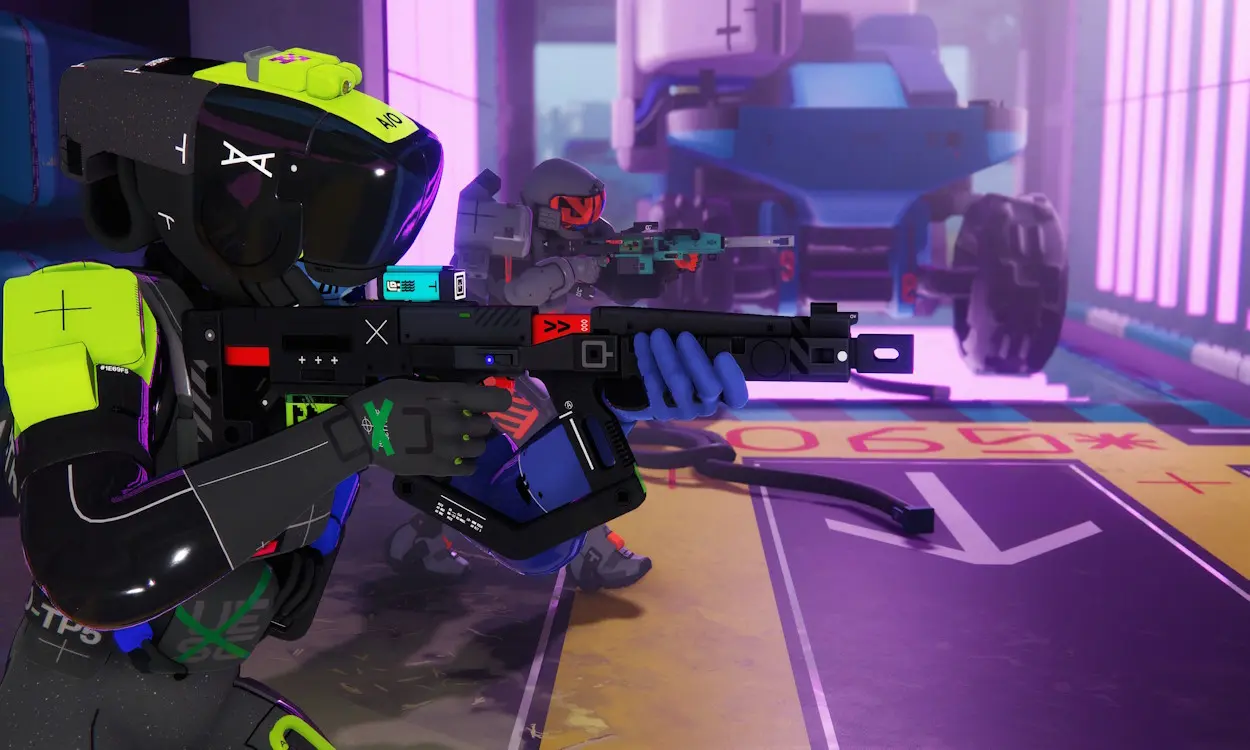
Marathon Weapon Tier List - Best Guns Ranked
The best Marathon weapons right now are BR33 Volley Rifle, WSTR Combat Shotgun, V85 Circuit Breaker, Longshot, Bully SMG, V99 Channel Rifle, Misriah 2442, and M77 Assault Rifle because they give the strongest mix of fight-winning power, range control, and practical run value.
If you only copy the loudest S-tier pick, you can still lose the run. Marathonis not just a damage chart with a sci-fi skin; it is a PvPvE extraction shooter where every weapon choice carries risk, ammo pressure, and exfil consequences.
This tier list ranks weapons by real run value, not just raw DPS. That means each pick is judged by how useful it is in actual PvP, PvE, solo, squad, and extraction situations.
Key Takeaways
- Best overall S-tier weapons:BR33 Volley Rifle, WSTR Combat Shotgun, Longshot, Bully SMG, V99 Channel Rifle, and Misriah 2442.
- Best beginner-friendly picks:M77 Assault Rifle, Hardline PR, Repeater HPR, and Twin Tap HBR.
- Best PvP weapon types:shotguns, SMGs, precision rifles, and snipers because they control the most important fight ranges.
- Best PvE weapon traits:stable recoil, safe reload windows, strong ammo economy, and reliable AI clear.
- Lower-tier weapons are still worth usingwhen they are cheap, common, or good enough to protect a low-risk run.
- Patch volatility matters:Bungie has already adjusted combat, equipment, weapon mods, map access, and item economy across recent updates.
Best Marathon Weapons At A Glance
| Tier | Weapons |
| S-Tier | BR33 Volley Rifle, WSTR Combat Shotgun, V85 Circuit Breaker, Longshot, Bully SMG, V99 Channel Rifle, Misriah 2442, M77 Assault Rifle |
| A-Tier | Outland, Magnum MC, Demolition HMG, Twin Tap HBR, V66 Lookout, V11 Punch |
| B-Tier | Impact HAR, Stryder M1T, Hardline PR, V00 Zeus RG, V22 Volt Thrower, Repeater HPR, Overrun AR, Retaliator LMG, V75 Scar, Conquest LMG, Copperhead RF, BRRT SMG |
| C-Tier | Ares RG, CE Tactical Sidearm, low-mod Overrun AR, low-mod Copperhead RF, emergency sidearm-only setups |
| D-Tier | Underbuilt CE Tactical Sidearm main builds, ammo-starved Ares RG builds, role-confused loadouts with no close-range or mid-range answer |
Scope note:current sources do not rank every weapon the same way. MarathonMetaranks weapons by base feel without Prestige mods, PC Gamer emphasizes practical use and mods, and MarathonDBlists 34 weapons with stats, mods, categories, and comparison tools. This article uses those differences to build a practical run-value ranking instead of copying one source directly.
Best Pick By Situation
| Situation | Best Pick |
| Best overall weapon to prioritize | BR33 Volley Rifle for flexible mid-range control |
| Best close-range PvP pick | WSTR Combat Shotgun for burst pressure |
| Best beginner weapon | M77 Assault Rifle for stable, forgiving fights |
| Best long-range control pick | Longshot for sightline pressure |
| Best aggressive PvP pick | Bully SMG for close-to-mid pressure |
| Best high-skill pick weapon | V99 Channel Rifle for coordinated, timing-based damage |
| Best budget fallback | Hardline PR or CE Tactical Sidearm as backup only |
| Best squad pressure pick | Demolition HMG when your team can support slower, sustained fire |
| Best low-risk run pick | M77 Assault Rifle because it is useful without risking a specialized weapon |
Latest Patch Impact
| Patch / Source | What It Means For This Tier List |
| Bungie Update 1.0.6.2, Apr. 28, 2026 | WSTR Combat Shotgun moved higher in practical value because Bungie increased its base damage from 78 to 85, reduced damage falloff, and added a 75% AI damage bonus. |
| MIPS Slug Converter change | Old long-range WSTR advice should be rechecked because Bungie changed the slug mod’s behavior, including projectile velocity, bullet drop, aim assist, and critical multiplier. |
| Bungie Update 1.0.6.3, May 2026 | Stryder M1T deserves a fresh look because Bungie fixed its Prestige Precision Optic Mod so it now distinguishes between UESC and enemy Runners. |
| Cryo Archive and exfil changes | Weapon rankings can shift when map flow changes, because safer vents, fixed exfils, or changed loot access can affect how valuable close-range, long-range, and extraction-defense weapons feel. |
How This Marathon Weapon Tier List Was Ranked
This tier list prioritizes practical run valueover perfect stat-sheet numbers. Rankings are based on official patch notes, public weapon data, current meta lists, weapon roles, ammo pressure, mod dependency, PvP value, PvE value, and beginner usability.
These are editorial rankings, not official Bungie rankings. They do not claim every weapon was personally tested unless a real hands-on testing note is added by the publisher.
The Run-Value Framework
Each weapon was judged by five questions:
- Can it win common fights?
- Does it stay reliable under pressure?
- Is the ammo sustainable?
- Is it worth risking in an extraction run?
- Is it stable after recent patches?
A weapon moves up if it stays useful after imperfect aim, bad positioning, third-party pressure, or delayed exfil. It moves down if it only looks strong in a clean spreadsheet scenario.
Why DPS And TTK Do Not Tell The Whole Story
DPS and TTK are useful, but they are not final answers. A weapon with great theoretical damage can still underperform if it has poor range, awkward handling, scarce ammo, or a risky reload.
Takeaway:The best tier list explains what to risk, what to keep, and what to replace after the next patch.
Also Check Out: Genshin Impact Tier List
Marathon Weapon Tier List
S-Tier: Best Weapons To Prioritize
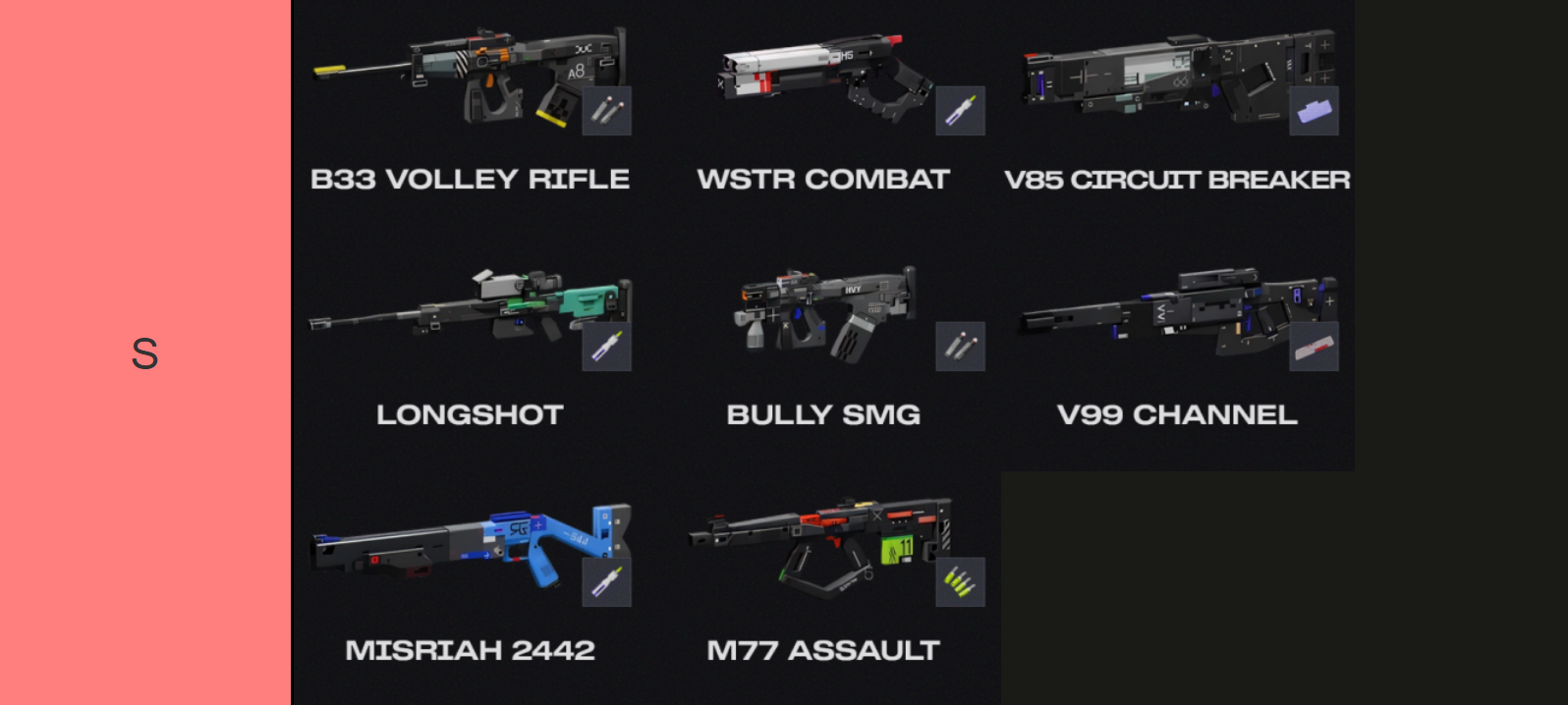
S-tier weapons should make you feel equipped for the most common danger points: close-range collapses, mid-range peeks, long sightlines, heavy pressure, and exfil chaos.
BR33 Volley Rifleearns top-tier consideration because it fits the “reliable pressure” profile. It gives you a strong answer in mid-range fights without forcing you into shotgun distance or sniper-only pacing.
WSTR Combat Shotgunremains one of the scariest close-range picks in Marathon. Bungie has adjusted its damage, falloff, crit behavior, AI damage bonus, and slug-related performance, so old long-range shotgun advice should be treated carefully, but its close-range threat is still strong.
V85 Circuit Breakeris a powerful shotgun-style pick for players who can manage timing and pressure. It is not as simple as a basic close-range weapon, but it can swing fights when you control the engagement.
Longshotbelongs near the top for players who can convert first-shot pressure into control. It is not a beginner crutch, but it changes how enemies move when they know a sightline is being watched.
Bully SMGis the kind of close-to-mid weapon that fits extraction fights well. It pressures shields, punishes hesitation, and gives aggressive players a way to take space.
V99 Channel Rifleis a high-skill, high-payoff pick. It rewards timing and positioning more than panic firing, which makes it strong in the right hands and less forgiving in the wrong ones.
Misriah 2442is a premium close-range answer when you can force the fight. Its value drops when you are stuck outside its preferred range, so pair it with something that solves distance.
M77 Assault Rifleis the safest all-round S-tier pick for most players. It may not feel as flashy as a shotgun, sniper, or high-skill precision weapon, but its stability, range coverage, and beginner-friendly handling make it valuable in more run types.
A-Tier: Strong Picks Worth Keeping
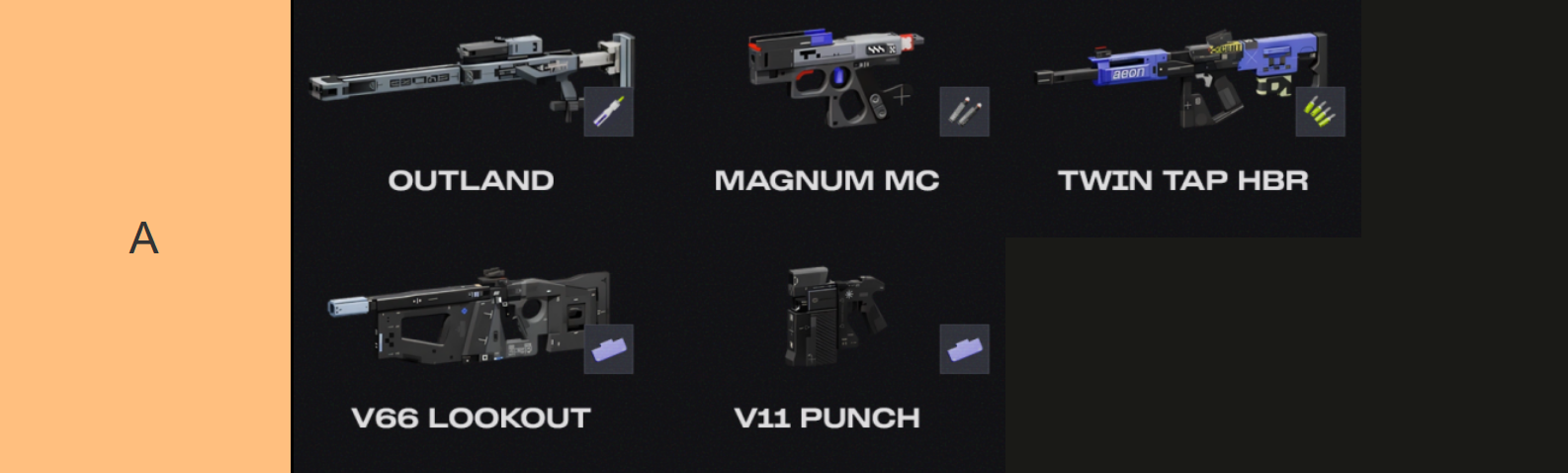
A-tier weapons are not consolation prizes. They are the weapons you keep because they are strong, flexible, or easier to justify risking than an S-tier stash piece.
Outlandis valuable when you want long-range control without building your entire plan around one perfect sniper angle. It rewards patient positioning, but it is less forgiving if enemies collapse distance.
Magnum MCis a strong pistol-class option when you need heavy backup damage. It should support a real primary rather than replace one, but it can punish weakened enemies and bad pushes.
Demolition HMGgives strong sustained pressure, especially in squad fights or PvE-heavy routes. Its main tradeoff is that heavy weapons can feel slower or more expensive to risk when mobility matters.
Twin Tap HBRcan work as a controlled burst option, especially for players who prefer rhythm over spray. Its ceiling depends on how consistently you land follow-up damage.
V66 Lookoutfits players who like precision weapons but do not want to commit to the full sniper playstyle. It can feel great in clean sightlines and awkward when pressured.
V11 Punchis better than a throwaway sidearm when used in the right role. It can solve emergencies and finish weak targets, but it should not be treated as your main plan for high-value runs.
B-Tier: Usable Weapons With Clear Tradeoffs
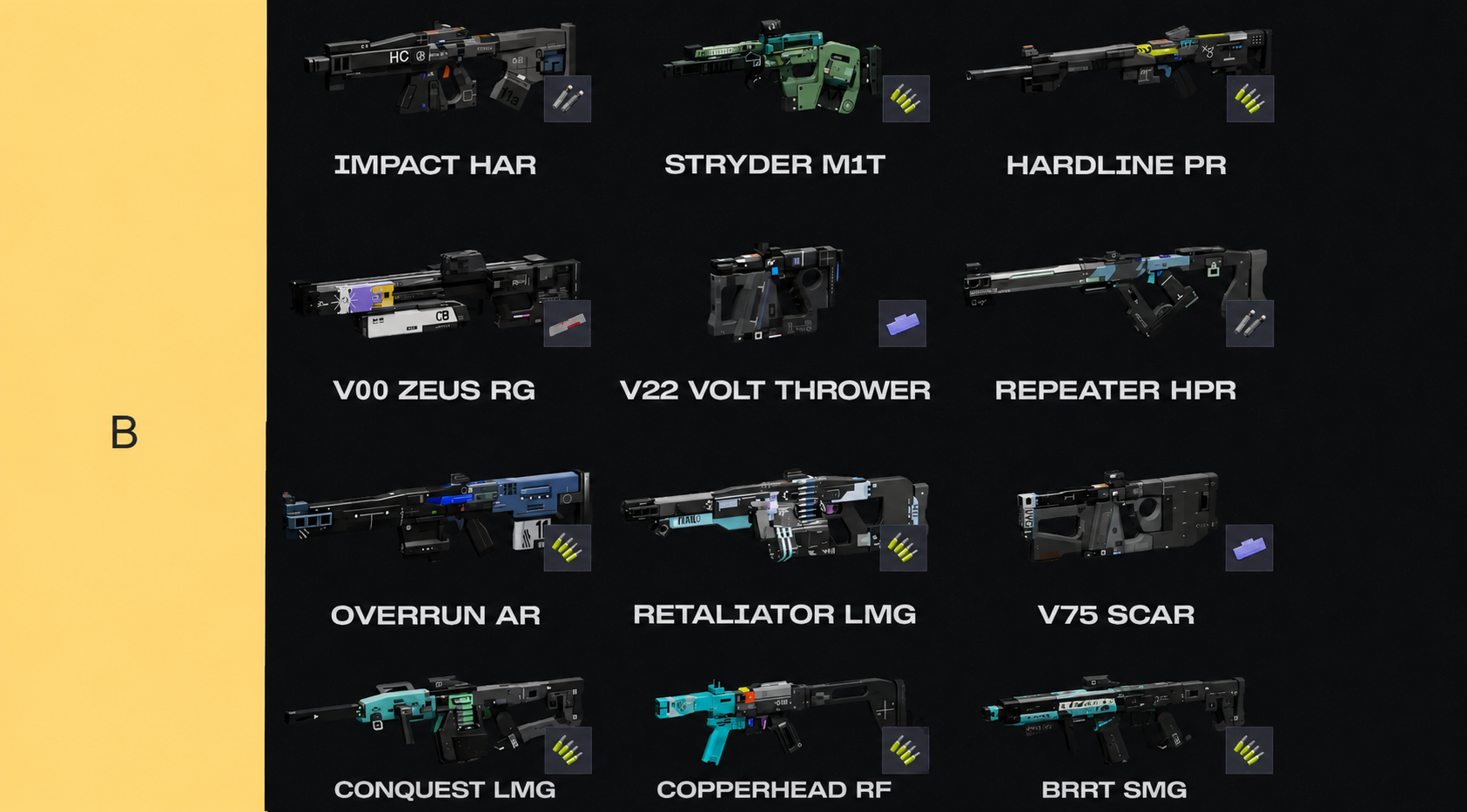
B-tier weapons are not bad. They are the “know what you are signing up for” category.
Impact HARhas the familiar assault-rifle value proposition: dependable enough, but not always dominant. It can carry ordinary fights, but it does not offer the same broad trust as the M77 Assault Rifle or BR33 Volley Rifle.
Stryder M1Tdeserves attention because Bungie fixed its Prestige Precision Optic Mod so it distinguishes between UESC and enemy Runners. That kind of mod-specific correction can shift how a weapon feels in real runs, but it still depends on clean aim and setup.
Hardline PRfits the disciplined mid-range player. It rewards steady aim, good peeking, and thoughtful positioning, but it is not always explosive enough to outrank stronger precision options.
V00 Zeus RGhas burst potential as a railgun-style weapon, but it can feel situational if your timing, ammo plan, or positioning is not clean.
V22 Volt Throwercan create close-range pressure, but its role overlaps with stronger SMGs and shotguns. It is usable when your build supports it, but not always the safest recommendation.
Repeater HPRrewards disciplined precision play. It can hit hard in the right hands, but reload rhythm and handling keep it from being a universal pick.
Overrun ARis a usable assault rifle that improves with the right setup. At base value, though, it can feel outclassed by safer and more reliable rifle options.
Retaliator LMGis useful when sustained pressure matters, especially in squad or PvE situations. Its weakness is that slower handling can punish you in fast PvP rotations.
V75 Scarcan work as a Volt assault rifle option, but it is more setup-dependent than the safest general-use rifles.
Conquest LMGis a divisive machine-gun pick. Some meta rankings value it highly, but for most players it needs the right positioning, ammo plan, and squad role to feel worth the risk.
Copperhead RFand BRRT SMGcan still earn a slot for close-range pressure, especially if your better SMG options are too expensive to risk. They are useful fallback weapons, not first-choice meta picks.
C-Tier: Niche Or Early-Run Options
C-tier weapons should be judged by cost, availability, and backup value. They are not automatic trash, but they need a clear reason to stay in your loadout.
Ares RGis a niche railgun-style option. It can be worth using if you specifically need burst pressure and have the ammo plan for it, but most players will get more consistent value from a stronger sniper, rifle, or precision weapon.
CE Tactical Sidearmis acceptable as a cheap backup, starter pistol, or emergency finisher. It can help protect a low-risk run, but it should not be treated as a serious main weapon for high-value objectives.
Low-mod Overrun ARcan work while you are building stash value or learning routes, but it needs the right setup before it competes with better rifles.
Low-mod Copperhead RFis usable when you need a cheap close-range fallback, but it loses value quickly if fights happen outside its comfort range.
Emergency sidearm-only setupsbelong in C-tier because they can protect your stash during low-risk runs, but they are too limited for serious PvP pressure.
D-Tier: Replace Quickly When Possible
D-tier weapons and setups have one or more major problems: weak practical damage, poor role clarity, bad ammo pressure, or too little value for the slot they occupy.
CE Tactical Sidearm as your main weaponbelongs in D-tier because it is a backup tool, not a serious centerpiece. It can finish weak targets, but relying on it as your main fight option is risky.
Ammo-starved Ares RG buildsshould be replaced quickly. Railgun-style weapons lose value when you cannot afford to fire them confidently or finish fights reliably.
Role-confused double-long-range loadoutsare dangerous because they leave you exposed when a team collapses distance. A sniper or railgun needs a close-range partner.
Role-confused double-close-range loadoutsare also risky because they make open rotations and sightline fights harder than they need to be.
Any low-tier weapon you are afraid to fire because the ammo is too scarceshould be treated as D-tier in practice. If a weapon cannot protect the run when it matters, it is not really doing its job.
Best Marathon Weapons By Role
A single tier list cannot answer every situation. This section translates the rankings into role-based choices so you can build around your actual objective.
The strongest weapon for a squad push may be the wrong weapon for a cautious solo run.
Before choosing a weapon, it also helps to think about the Runner you are using. Some weapons feel much stronger with the right mobility, scouting, or survivability tools, so pair this guide with our marathon runner tier listif you want to match the best guns with the best Runner playstyles.
Best PvP Weapons
For PvP, prioritize weapons that create immediate pressure. Most Runner fights punish slow setup, bad reloads, and weapons that need too much space before they matter.
Best PvP picks:
- WSTR Combat Shotgunfor close-range burst.
- Bully SMGfor aggressive pressure.
- BR33 Volley Riflefor mid-range control.
- Longshotfor sightline punishment.
- V99 Channel Riflefor high-skill pick potential.
Best PvP logic: choose one weapon that wins the first two seconds of a fight and one weapon that prevents enemies from resetting safely.
Best PvE Weapons
PvE asks for a different kind of strength. You need enough damage to clear threats, but not so much resource burn that every AI encounter becomes expensive.
Best PvE picks:
- M77 Assault Riflefor steady, controlled clearing.
- BR33 Volley Riflefor reliable mid-range pressure.
- Repeater HPRfor disciplined damage.
- V85 Circuit Breakerwhen charge timing and target control matter.
- Bully SMGwhen you expect close-range AI pressure.
- WSTR Combat Shotgun when you want close-range AI burst, especially after its 75% AI damage bonus in Update 1.0.6.2.
PvE weapons should make the run cleaner, not louder. If a gun burns premium ammo just to solve ordinary AI, it may be overqualified for the job.
Best Beginner Weapons
Beginner weapons should be forgiving. A new player needs stability, readable recoil, reasonable ammo access, and enough range to avoid panic rushing every fight.
Best beginner picks:
- M77 Assault Rifle
- Hardline PR
- Repeater HPR
- Twin Tap HBR
- CE Tactical Sidearmas a backup only
Beginner rule: pick weapons that teach positioning and reload timing before picking weapons that demand perfect aim.
Best Weapons For Solo Runs
Solo runs reward independence. You need a weapon that helps you survive unexpected contact without relying on a teammate to finish the fight.
Strong solo choices:
- BR33 Volley Rifle
- M77 Assault Rifle
- Bully SMG
- Longshot
- Hardline PR
Solo players should avoid overly narrow pairings. If one weapon is long-range, the second weapon should protect your close-range panic moments.
Best Weapons For Squad Runs
Squads can specialize more aggressively. One player can pressure close range while another holds sightlines.
Strong squad choices:
- WSTR Combat Shotgunfor entry pressure.
- Longshotfor overwatch.
- BR33 Volley Riflefor flexible mid-range fights.
- Bully SMGfor cleanup and chase pressure.
- V99 Channel Riflefor coordinated picks.
Squad rule: do not make every teammate carry the same “best” gun. A squad with overlapping weaknesses is easier to punish than a squad with balanced ranges.
Best High-Risk / High-Reward Weapons
High-risk weapons demand skill, positioning, or expensive gear commitment. They can swing fights, but they punish sloppy runs.
High-risk picks:
- V99 Channel Rifle
- Longshot
- WSTR Combat Shotgun
- V85 Circuit Breaker
- Stryder M1T
Bring these when your route, objective, and squad plan justify the risk. If the goal is a basic stash-building run, a safer rifle is usually smarter.
Takeaway:Role-based ranking matters because Marathon rewards matching the weapon to the run, not blindly carrying the rarest gun in your vault.
Best Weapon By Player Type
| Player Type | Best Weapon Choice |
| New player | M77 Assault Rifle because it is stable and forgiving. |
| Solo player | BR33 Volley Rifle because it covers common mid-range fights. |
| Aggressive PvP player | Bully SMG because it pressures close-to-mid fights. |
| Squad anchor | Longshot because it controls sightlines and rotations. |
| Budget runner | Hardline PR because it teaches discipline without over-risking gear. |
| High-skill player | V99 Channel Rifle because timing and positioning raise its ceiling. |
Best Weapons By Class
Weapon classes matter because they define your fight plan. This section shows which class to lean on for each range, role, and pressure point.
Use these class notes when your inventory gives you several “good enough” options and you need to pick the most useful one.
Best Assault Rifles
Best picks:M77 Assault Rifle, Impact H-AR
Assault rifles are the practical middle ground. They are not always the most explosive weapons, but they are easy to justify because they cover so many ordinary fights.
Choose an assault rifle when you want:
- mid-range stability;
- beginner-friendly handling;
- flexible PvE clearing;
- a lower-risk primary for routine runs.
Best assault rifle verdict:M77 Assault Rifle is the safest recommendation because it is stable, readable, and easier to justify in more run types than the more setup-dependent ARs.
Best SMGs
Best picks:Bully SMG, Copperhead RF, BRRT SMG
SMGs are about pressure. They help you punish players who get too close, chase weakened targets, and protect tight spaces during exfil.
Choose an SMG when you want:
- close-range shield pressure;
- fast cleanup potential;
- aggressive movement fights;
- a backup for a longer-range primary.
Best SMG verdict:Bully SMG is the standout because it gives close-range confidence without feeling like a one-note panic weapon.
Best Shotguns
Best picks:WSTR Combat Shotgun, Misriah 2442, V85 Circuit Breaker
Shotguns are fight-shapers. If you can force the enemy into your range, you control the engagement.
Choose a shotgun when you want:
- room-clearing power;
- exfil circle pressure;
- punish potential against rushed pushes;
- a strong answer to close-range ambushes.
Best shotgun verdict:WSTR Combat Shotgun has the strongest practical close-range identity, but V85 Circuit Breaker and Misriah 2442 deserve serious attention depending on your ammo plan and timing comfort.
Best Snipers
Best picks:Longshot, Outland
Snipers create fear. They slow enemy movement, punish predictable rotations, and make open space dangerous.
Choose a sniper when you want:
- long-range control;
- first-shot pressure;
- scouting value;
- squad overwatch.
Best sniper verdict:Longshot is the safer general recommendation, while V99 Channel Rifle and Outland reward players who can handle more demanding timing or shot discipline.
Best Precision Rifles
Best picks:Hardline PR, Stryder M1T, Repeater HPR, V66 Lookout
Precision rifles reward clean fundamentals. They are excellent for players who prefer controlled fights over spray-heavy trades.
Choose a precision rifle when you want:
- disciplined mid-range damage;
- cleaner ammo usage;
- predictable recoil;
- strong peek-and-reset play.
Best precision rifle verdict:BR33 Volley Rifle is the top practical pick because it combines mid-range pressure with low drama. Hardline PR is better for safer learning, while Repeater HPR and Twin Tap HBR reward better timing.
Best Railguns
Best picks:V99 Channel Rifle, V85 Circuit Breaker
Railgun-style weapons are high-agency tools. They often ask for charge timing, prediction, or cleaner setup than standard guns.
Choose them when you want:
- burst threat;
- high-skill pressure;
- controlled pick potential;
- a weapon that rewards preparation.
Best railgun verdict:railguns are more niche than snipers for most players. Use them when your build supports them, not because a raw damage number looks tempting.
Best Pistols And Sidearms
Best picks:V11 Punch, CE Tactical Sidearm
Sidearms are backup tools first. They help finish weakened targets, survive bad reloads, or protect budget runs.
Choose a sidearm when you want:
- low-cost backup insurance;
- emergency close-range damage;
- stash flexibility;
- minimal gear risk.
Best pistol verdict:Magnum MC and V11 Punch have more real upside than CE Tactical Sidearm, but none of them should replace a strong primary in a serious run.
Best LMGs
LMGs are about sustained pressure, but they must justify their handling cost. If an LMG slows your reactions or burns too much ammo, it can become worse than a steadier rifle.
Choose an LMG-style option only when your plan benefits from:
- longer suppression windows;
- predictable PvE waves;
- squad support;
- controlled defensive positioning.
Best LMG verdict: Demolition HMG has the clearest high-pressure identity, while Retaliator and Conquest are more dependent on whether you can control positioning and ammo use.
Takeaway:Weapon class should tell you how the fight is supposed to happen; if your class does not match the run, even a strong weapon can underperform.
Related Reading: Grand Summoners Tier List
Why Marathon Tier Lists Disagree
If several tier listsrank the same weapon differently, that does not always mean one is wrong. It often means they are answering different versions of the question.
This section helps you read rankings without getting trapped by them.
Stat-Sheet Winners Vs Real-Run Winners
A stat-sheet winner performs well under controlled assumptions. A real-run winner performs when visibility, range, shields, ammo, third parties, AI, and extraction pressure all interfere.
Both perspectives matter. Problems start when a list pretends they are the same.
Use stat tools to identify candidates. Use run-value logic to decide what you should actually bring.
Patch Version Differences
Patch timing changes everything. A guide written before a weapon fix, mod adjustment, or item economy update may still rank on search but no longer reflect the current game.
Bungie’s May 5, 2026 update changed equipment stack sizes, barter limits, Stryder M1T mod behavior, Cryo Archive vents, and several item-economy details.
When two rankings disagree, check the update date before you check the author’s confidence.
PvP Bias Vs PvE Bias
PvP-heavy rankings usually favor burst pressure, peek control, and fast shield damage. PvE-heavy rankings care more about ammo economy, AI clear, and safe reloads.
A weapon can be S-tier in PvP and merely good in PvE. The reverse can also happen.
Do not ask “Is this weapon good?” Ask “Good for which fight?”
Beginner Usability Vs Expert Skill Ceiling
High-skill weapons often rank higher in expert-focused lists. Beginner-focused lists should value forgiveness more.
A weapon with a high ceiling but harsh execution demands can be a poor recommendation for a new player. A simple, stable weapon may produce better results because it lets the player make fewer mechanical mistakes.
Takeaway:Tier list disagreement is useful when it reveals the assumptions behind the ranking.
Best Marathon Loadout Pairings
The best loadout covers your weakness before the enemy finds it. This section gives practical pairings that turn individual weapon rankings into full-run decisions.
Think in pairs: one weapon creates pressure, the other prevents disaster.
Close-Range Pressure + Long-Range Control
Recommended pairing:WSTR Combat Shotgun or Bully SMG + Longshot or Outland
This pairing gives you two ways to win: punish pushes up close or control rotations from distance. It is strong for squads because teammates can coordinate around the range split.
The weakness is transition timing. If you are caught with the wrong weapon out, the loadout can feel clumsy.
Budget Beginner Pairing
Recommended pairing:M77 Assault Rifle + CE Tactical Sidearm
This is not glamorous, but it is sensible. The M77 handles most ordinary fights, while the sidearm gives you backup insurance.
Use this when your goal is learning maps, completing contracts, or extracting consistently without risking premium gear.
PvP Aggression Pairing
Recommended pairing:Bully SMG + BR33 Volley Rifle
The Bully pressures close fights, while the BR33 keeps you useful outside SMG range. This pairing gives aggressive players a way to take space without becoming helpless at mid range.
It works best when you rotate decisively. Hesitation turns pressure weapons into liabilities.
Safe Extraction Pairing
Recommended pairing:BR33 Volley Rifle + Hardline PR
This pairing favors controlled angles, readable recoil, and fewer desperate pushes. It is built for players who want to defend routes and avoid coin-flip fights.
It will not always overpower specialized close-range kits, so spacing matters.
High-Skill Precision Pairing
Recommended pairing:V99 Channel Rifle + Bully SMG
The V99 threatens picks, while the Bully covers the moments when enemies collapse distance. This is a demanding pairing because it asks you to manage timing, swaps, and positioning cleanly.
Use it when you are comfortable choosing fights rather than reacting late.
Takeaway:A smart pairing matters more than two individually strong weapons that leave the same weakness uncovered.
Marathon Weapon DPS, TTK, And Stats Explained
Stats help you ask better questions. They should not make the decision for you.
This section explains how to use DPS and TTK without overfitting your loadout to a spreadsheet.
What DPS Actually Measures
DPS measures how much damage a weapon can deal per second under defined conditions.
That sounds simple, but the conditions matter. Does the number include reloads? Does it assume perfect accuracy? Does it account for range falloff, armor, shields, or target movement?
Treat DPS as a ceiling indicator. It shows what a weapon can do when the scenario cooperates.
What TTK Actually Measures
TTK measures how quickly a weapon can defeat a target.
The problem is that many TTK comparisons assume clean hits, known health values, and predictable engagement range. Real Marathon fights include cover, shield states, ability pressure, bad angles, AI interference, and third-party crews.
A lower TTK is valuable, but only if you can realistically access it.
Why Shield Tier And Range Change Everything
Shield strength and engagement range can change weapon value dramatically.
A weapon that feels great against a lightly protected target may struggle when shields scale up. A weapon that wins close trades may lose value in open terrain.
That is why a tier list should separate:
- close-range burst;
- mid-range stability;
- long-range pick pressure;
- PvE efficiency;
- extraction defense.
No single stat captures all five.
How To Use Weapon Databases Without Overfitting
Weapon databases are useful when you use them to compare patterns.
Look for:
- damage consistency;
- magazine pressure;
- reload weakness;
- effective range;
- ammo type;
- mod dependence.
Do not copy the highest number and assume it is the best weapon. In extraction play, the best number can still be the wrong choice.
Takeaway:DPS and TTK should inform the ranking, but run value should decide it.
People Also Ask
What Is The Best Marathon Weapon For Beginners?
The best beginner weapon is stable, affordable, ammo-efficient, and forgiving at mid range. The M77 Assault Rifle is the safest beginner recommendation, with Hardline PR and Repeater HPR also worth practicing.
What Is The Best PvP Weapon?
PvP usually rewards fast shield pressure, close-range burst, or long-range first-shot control. WSTR Combat Shotgun, Bully SMG, BR33 Volley Rifle, Longshot, and V99 Channel Rifle are the strongest PvP-style picks.
Are Lower-tier Weapons Worth Using?
Yes. Lower-tier weapons can be useful as budget, backup, or early-run options. Keep them when they are cheap, ammo-efficient, or good enough for the risk level of the run.
How Often Does The Meta Change?
Expect the Marathon meta to shift after Bungie patches weapons, shields, equipment, map flow, ammo, item economy, or Runner Shell interactions.
Is DPS More Important Than TTK?
No. DPS and TTK are useful, but they do not replace practical reliability. Range, reload risk, shields, ammo economy, and accuracy demands can change the better weapon choice.
What Makes A Weapon S-tier?
An S-tier weapon wins common fights consistently without needing perfect conditions. It should offer reliable damage, manageable handling, useful range, and enough value to justify risking it.
Should I Always Bring My Best Weapon Into A Run?
No. Bring your best weapon when the reward justifies the risk. For low-value runs, a reliable A-tier or B-tier weapon can be the smarter choice.
Final Words
The best Marathon weapon is the one that solves your run’s most dangerous problem. Sometimes that is raw close-range power. Sometimes it is mid-range consistency. Sometimes it is a cheaper gun you can afford to lose.
Use S-tier weapons when you are pushing high-value objectives, defending serious loot, or coordinating with a squad. Use safer A-tier weapons when the goal is steady progress. Use lower-tier weapons when replacement cost matters more than maximum power.
Jump to
Marathon Weapon Tier List - Best Guns Ranked
Best Marathon Weapons At A Glance
Best Pick By Situation
Latest Patch Impact
How This Marathon Weapon Tier List Was Ranked
Marathon Weapon Tier List
Best Marathon Weapons By Role
Best Weapon By Player Type
Best Weapons By Class
Why Marathon Tier Lists Disagree
Best Marathon Loadout Pairings
Marathon Weapon DPS, TTK, And Stats Explained
People Also Ask
Final Words
Latest Articles
Popular Articles