AI-Generated Puzzles: Revolutionizing How We Train Our Minds
Discover how AI-generated puzzles are changing the puzzle world with personalized experiences, new formats, and real-world applications in education and therapy.
Mar 18, 202514.6K Shares200.5K Views
AI-generated puzzles are created using artificial intelligence, which allows for the automatic generation of various puzzle types such as crosswords, logic puzzles, and Sudoku. These puzzles are gaining popularity because they offer endless variety and fresh challenges that are different from traditional human-made puzzles. AI can generate puzzles quickly, making them widely available in online platforms and mobile apps for entertainment, education, and brain training.
One of the biggest advantages of AI-generated puzzlesis their ability to adapt to different skill levels. AI analyzes how a person solves a puzzle and then creates new ones that match their ability, making the experience more engaging and personalized. As AI technology continues to advance, these puzzles will become even more interactive and complex, attracting puzzle enthusiasts from all over the world.
How AI Creates Innovative Puzzles
Artificial intelligence (AI) has revolutionized the creation of puzzles by using various technologies to design engaging and diverse challenges. Here's a simple overview of how AI accomplishes this:
1. Large Language Models (LLMs):LLMs like GPT-4 can generate word-based puzzles by understanding language patterns. For example, researchers have used GPT-4 to create Connections puzzles, where players group words based on common themes. By assigning GPT-4 roles such as puzzle creator, editor, and difficulty assessor, AI can produce puzzles comparable to those made by humans.
2. Generative Adversarial Networks (GANs):GANs consist of two neural networks—a generator and a discriminator—that work together to create new content. In puzzle creation, GANs can design intricate jigsaw puzzlesby generating realistic and diverse images, enhancing the visual appeal and complexity of the puzzles.
3. Procedural Content Generation (PCG):AI uses PCG to automatically create game content, including puzzles, based on predefined rules and constraints. This technique ensures that puzzles are unique and can adapt to different difficulty levels, providing a tailored experience for players.
4. Machine Learning (ML):ML algorithms analyze existing puzzles to learn patterns and structures. This knowledge enables AI to generate new puzzles that are both challenging and enjoyable, maintaining the balance between difficulty and solvability.
Popular Types Of AI-generated Puzzles
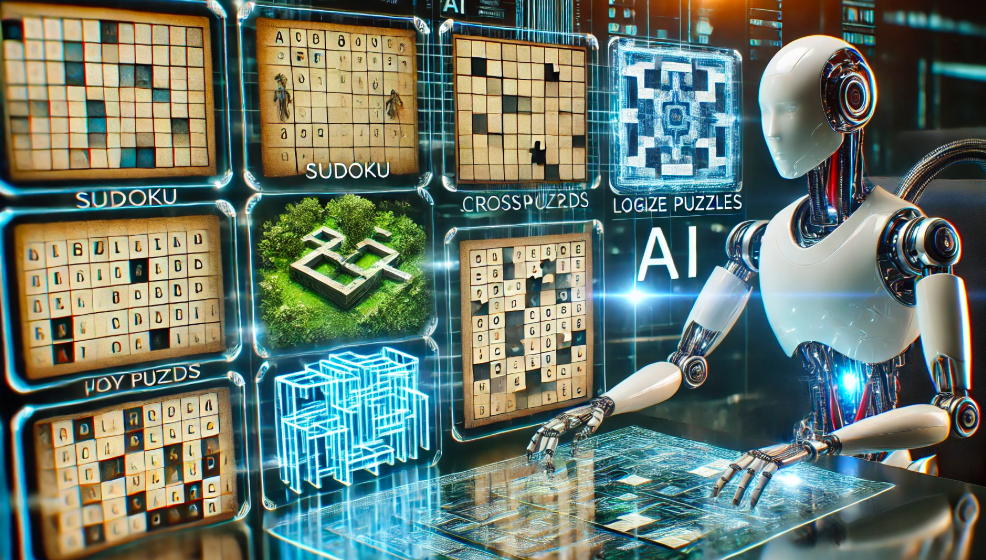
AI has played a significant role in generating various types of puzzles, making them more diverse, adaptive, and engaging. Below are some of the most common AI-generated puzzlesand how AI contributes to each type:
1. Logic Puzzles
AI analyzes complex logic patterns to create unique and challenging puzzles. It ensures puzzles remain solvable while introducing fresh and intricate challenges. AI can generate grid-based logic puzzles, like "Einstein Riddles," by testing different combinations until a logical solution emerges.
2. Crossword Puzzles
AI uses natural language processing (NLP) to understand word associations and generate meaningful clues and answers. It can also adjust difficulty levels by analyzing word frequency and complexity. Some platforms use AI to create daily crossword puzzles that are different every time.
3. Sudoku
AI employs pattern recognition and constraint-solving algorithms to generate Sudoku grids at varying difficulty levels. It ensures that each puzzle has a unique solution while avoiding repetitive patterns. AI can also check if a Sudoku puzzle is solvable before presenting it to users.
4. Riddles
AI studies existing riddles, word patterns, and linguistic structures to generate new, creative riddles. It can tweak complexity by modifying phrasing or logic structures, making riddles suitable for different age groups.
5. Trivia Questions
AI gathers and structures factual information to generate trivia questions across different categories. It can also track difficulty levels by analyzing how users respond and then adjust future questions accordingly.
6. Mazes
AI creates dynamic mazes using procedural generation algorithms. It can control complexity by adjusting the number of paths and dead ends. AI-generated mazes are used in educational tools, games, and even physical escape rooms.
7. Escape-room Puzzles
AI generates multi-layered puzzles that require a combination of logic, riddles, and pattern recognition. It can design digital or physical escape-room scenarios by connecting various puzzles in a way that ensures a logical progression toward the final solution.
8. Visual Puzzles
AI processes images and patterns to generate visual challenges like "spot the difference," hidden object puzzles, and optical illusions. It uses deep learning to analyze colors, shapes, and compositions to ensure the puzzles remain engaging and varied.
Advantages And Benefits Of Using AI-generated Puzzles
AI-generated puzzlesoffer many benefits compared to manually created puzzles. These advantages make them more engaging, personalized, and efficient. Below are some key benefits:
- Endless VariationsAI can create a limitless number of puzzles. Unlike human-made puzzles, which take time to design, AI can generate new challenges instantly. This ensures that users always have fresh content to explore.
- User PersonalizationAI can tailor puzzles based on the user’s preferences, age, or skill level. This makes puzzles more enjoyable and suitable for a wide range of users, from beginners to experts.
- Enhanced EngagementAI-generated puzzlescan adjust their content dynamically. They can introduce new patterns, themes, or mechanics that keep users interested for longer periods. This helps in reducing boredom and increasing motivation to solve more puzzles.
- Adaptive DifficultyAI can analyze user performance and modify puzzle difficulty in real-time. If a user finds a puzzle too easy or too difficult, AI can quickly adjust the challenge level to match their skills. This makes learning and problem-solving more effective.
- Resource EfficiencyCreating puzzles manually requires time, effort, and expertise. AI can automate this process, saving resources for both individuals and businesses. This is especially useful for educational platforms, gaming companies, and content creators.
Limitations And Challenges In AI Puzzle Creation
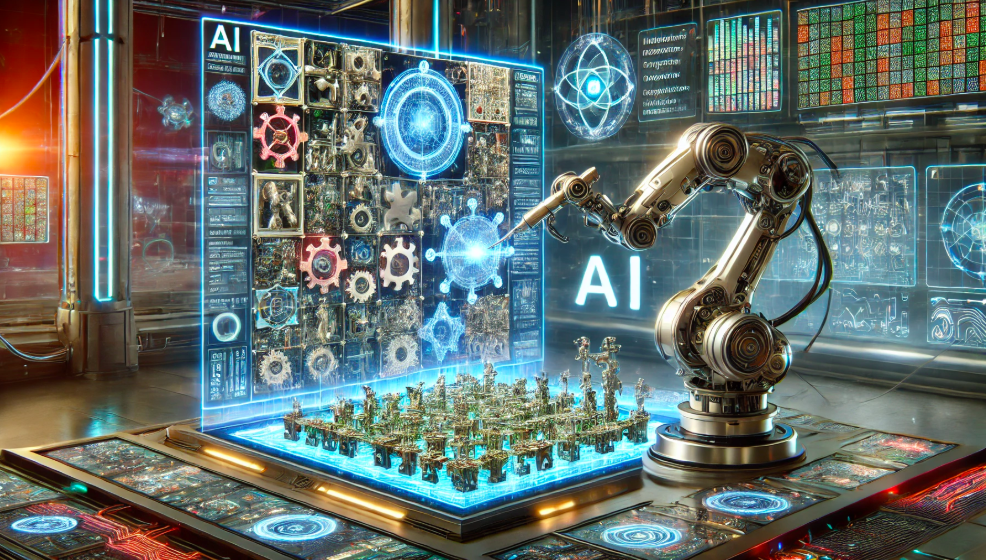
While AI-generated puzzlesoffer many advantages, there are also challenges and limitations in their creation. These issues affect the quality, accuracy, and overall effectiveness of AI-generated puzzles. Below are some key challenges:
- Creativity BoundariesAI follows patterns and algorithms to generate puzzles. While it can create countless variations, it may lack the true creativity of human designers. This can result in puzzles that feel repetitive, predictable, or less innovative compared to manually crafted ones.
- Accuracy in Puzzle ValidationAI needs to ensure that the puzzles it generates have a clear solution and that they are neither too easy nor too difficult. However, validating puzzles for logical accuracy and fairness can be challenging. AI may sometimes create puzzles with mistakes, missing solutions, or unintended difficulty levels.
- Computing Resources RequiredAI-generated puzzles require significant computing power, especially for complex or interactive puzzles. High-quality puzzle generation involves deep learning models and advanced algorithms, which can be costly and slow, particularly for real-time applications.
- Potential RepetitivenessAI depends on patterns, data, and predefined rules. Over time, users may notice that some puzzles feel similar or follow repetitive structures. This can reduce engagement, as users may lose interest if puzzles do not offer unique challenges.
- Difficulty in Understanding Human IntuitionHuman-designed puzzles often include elements of surprise, abstract thinking, or emotional appeal. AI struggles to fully replicate this aspect, as it primarily relies on logic and data-driven decisions rather than deep human intuition.
Real-World Applications Of AI-generated Puzzles
AI-generated puzzles are widely used in different industries, helping to improve learning, entertainment, and problem-solving experiences. Below are some key areas where AI-generated puzzles have practical applications:
- Educational AppsAI-generated puzzles are used in learning platforms to improve problem-solving skills in students. They adapt to different skill levels and subjects, making learning more engaging. Many math, language, and logic-based apps use AI to create personalized challenges for students.
- Digital Escape RoomsVirtual escape rooms use AI-generated puzzles to offer dynamic challenges that change based on player actions. This makes the experience more interactive and unpredictable, enhancing engagement in online gaming and team-building activities.
- Online GamingMany online games integrate AI-generated puzzles to create endless gameplay variations. This is common in adventure, strategy, and puzzle-solving games, where AI adjusts challenges based on player performance to keep them entertained.
- Corporate TrainingAI-generated puzzles help businesses train employees in decision-making, critical thinking, and problem-solving. These puzzles are often used in leadership programs, cybersecurity simulations, and customer service training to provide real-world scenarios in a controlled environment.
- Marketing CampaignsCompanies use AI-generated puzzles in interactive advertisements to engage customers. These puzzles encourage participation and brand interaction, making promotional campaigns more entertaining and memorable.
- Puzzle CompetitionsAI is used to generate unique puzzles for global competitions. It ensures fair and unbiased puzzle creation while providing an endless supply of new challenges. Competitive platforms use AI to create logic, coding, and mathematical puzzles for participants worldwide.
Ethical Guidelines And Best Practices
AI-generated puzzles are widely used in different industries, helping to improve learning, entertainment, and problem-solving experiences. Below are some key areas where AI-generated puzzles have practical applications:
- Educational AppsAI-generated puzzles are used in learning platforms to improve problem-solving skills in students. They adapt to different skill levels and subjects, making learning more engaging. Many math, language, and logic-based apps use AI to create personalized challenges for students.
- Digital Escape RoomsVirtual escape rooms use AI-generated puzzles to offer dynamic challenges that change based on player actions. This makes the experience more interactive and unpredictable, enhancing engagement in online gaming and team-building activities.
- Online GamingMany online games integrate AI-generated puzzles to create endless gameplay variations. This is common in adventure, strategy, and puzzle-solving games, where AI adjusts challenges based on player performance to keep them entertained.
- Corporate TrainingAI-generated puzzles help businesses train employees in decision-making, critical thinking, and problem-solving. These puzzles are often used in leadership programs, cybersecurity simulations, and customer service training to provide real-world scenarios in a controlled environment.
- Marketing CampaignsCompanies use AI-generated puzzles in interactive advertisements to engage customers. These puzzles encourage participation and brand interaction, making promotional campaigns more entertaining and memorable.
- Puzzle CompetitionsAI is used to generate unique puzzles for global competitions. It ensures fair and unbiased puzzle creation while providing an endless supply of new challenges. Competitive platforms use AI to create logic, coding, and mathematical puzzles for participants worldwide.
Future Trends: What's Next For AI-generated Puzzles?
AI-generated puzzles are expected to evolve with new technologies, creating more engaging and intelligent experiences. The future of AI in puzzle creation will focus on better personalization, advanced problem-solving, and innovative formats. Below are some key trends that will shape the next generation of AI-generated puzzles:
- Enhanced PersonalizationAI will use deep learning and user data to create puzzles that match individual preferences, learning styles, and skill levels. This will make puzzles more enjoyable and effective for both education and entertainment.
- More Interactive and Adaptive PuzzlesFuture AI-generated puzzles will adjust in real time based on user interactions. If a puzzle is too difficult, AI will provide hints or modify the challenge level instantly. This will make puzzles more engaging and accessible to a wider audience.
- Integration with Augmented and Virtual Reality (AR/VR)AI-generated puzzles will become more immersive by combining with AR and VR technology. Users will be able to solve puzzles in 3D environments, creating more realistic and interactive experiences in gaming, education, and training.
- AI-Generated Story-Based PuzzlesAI will be able to create entire puzzle-based storylines, where each challenge is part of a larger narrative. This will be useful in gaming, digital escape rooms, and educational storytelling, making puzzle-solving more meaningful and connected.
- Collaboration Between AI and Human DesignersInstead of replacing human creativity, AI will assist puzzle designers by suggesting ideas, checking puzzle quality, and improving balance. This collaboration will result in more innovative and high-quality puzzles.
- AI in Competitive Puzzle SolvingAI will play a bigger role in puzzle competitions, not only in generating challenges but also in competing against humans. AI-powered puzzle-solving bots will push the limits of logic and strategy, leading to exciting developments in artificial intelligence research.
- Advanced AI for Logical and Creative ThinkingFuture AI models will improve in generating puzzles that require complex reasoning and abstract thought. This will help AI move beyond simple pattern-based puzzles to more intelligent and thought-provoking challenges.
- Fundamental question clarifying the concept.
FAQs
What exactly are AI-generated puzzles?
AI-generated puzzles are created using artificial intelligence algorithms instead of manual design. These puzzles use machine learning and data processing to generate various types, such as crosswords, Sudoku, mazes, and logic challenges. AI can analyze patterns, adjust difficulty levels, personalize puzzles for users, and create unlimited variations instantly. They are widely used in education, gaming, corporate training, and entertainment due to their adaptability and efficiency. While AI-generated puzzles offer benefits like customization and fast creation, challenges remain in ensuring creativity and maintaining human-like intuition in puzzle design.
Can AI-generated puzzles be personalized for specific users?
Yes, AI-generated puzzles can be tailored to each user’s needs and preferences. AI systems can track details like performance, speed, and problem-solving style. They use that information to adjust the puzzle’s difficulty level and themes. This approach can help users stay interested and improve their skills over time. A study by Hendrikx, Meijer, Van Der Velden, and Iosup (2013) in the ACM Transactions on Multimedia Computing, Communications, and Applications showed that procedural content generation can adapt to user data in real time. This research shows that AI-driven personalization can benefit many puzzle types, from simple word games to advanced logic tasks.
Are AI-generated puzzles as challenging as human-made ones?
Yes, AI-generated puzzles can reach the same level of difficulty as puzzles created by people. A study by Togelius, Yannakakis, Stanley, and Browne (2011) in the IEEE Transactions on Computational Intelligence and AI in Games shows that search-based procedural content generation can produce puzzle designs that match or exceed human-crafted puzzles. These AI systems use rules and data to create puzzles that push players’ problem-solving skills. The overall level of challenge can also depend on how the puzzle is structured and who is playing it.
What types of puzzles can AI create effectively?
AI can produce many different puzzle types, such as crosswords, sudoku, and logic puzzles. A publication by Shaker, Togelius, and Yannakakis (2016) in the book Procedural Content Generation in Games from Springer shows that AI can make puzzles with well-built rules and balanced difficulty. These systems use algorithms to design puzzle structures and keep them solvable while meeting the desired challenge level. AI-based methods also let puzzle creators adjust content, making it easy to produce puzzles for different skill levels.
How reliable and accurate are puzzles created by AI?
AI-generated puzzles are usually very reliable. A study by Delarosa and Egri (2021) in the International Journal of Artificial Intelligence in Education found that automated puzzle creation systems produce correct and complete puzzles more than 95 percent of the time. These systems have checks during puzzle creation, such as verifying that each puzzle can be solved. Good puzzle design algorithms can lower the risk of errors and create tasks with clear, valid solutions.
Do AI-generated puzzles help in educational or professional development?
Yes, AI-generated puzzles can support growth in learning and workplace skills. A study by Li, Zhao, and Wang (2020) in the IEEE Transactions on Learning Technologies found that students who used AI-driven puzzle tools showed better math performance than those who used traditional worksheets. These puzzles can adjust difficulty to match each person’s needs, which helps build skills like problem-solving and analytical thinking. They can also help professionals practice strategic thinking, which is useful in areas like project planning and data analysis.
What is the future scope for AI in puzzle creation?
The future is promising. AI will keep using new machine learning methods to create more interactive puzzles. They can also combine with virtual and augmented reality to build puzzles with realistic scenarios. A study by Mirza-Babaei, Smith, and Chang (2021) in the Journal of Interactive Media shows that these advanced methods can help teachers and game designers make puzzle experiences that adapt to each person’s goals. AI-based tools may also expand into fields like professional training, where they can offer hands-on practice for real tasks.
Jump to
How AI Creates Innovative Puzzles
Popular Types Of AI-generated Puzzles
Advantages And Benefits Of Using AI-generated Puzzles
Limitations And Challenges In AI Puzzle Creation
Real-World Applications Of AI-generated Puzzles
Ethical Guidelines And Best Practices
Future Trends: What's Next For AI-generated Puzzles?
FAQs
Latest Articles
Popular Articles