Virtual Reality Puzzles: Enter Interactive 3D Challenges
Immerse yourself in VR puzzle fun. Explore lifelike 3D worlds. Solve tricky challenges, sharpen thinking, and enjoy a new kind of gaming thrill.
Mar 20, 202536.6K Shares601.3K Views
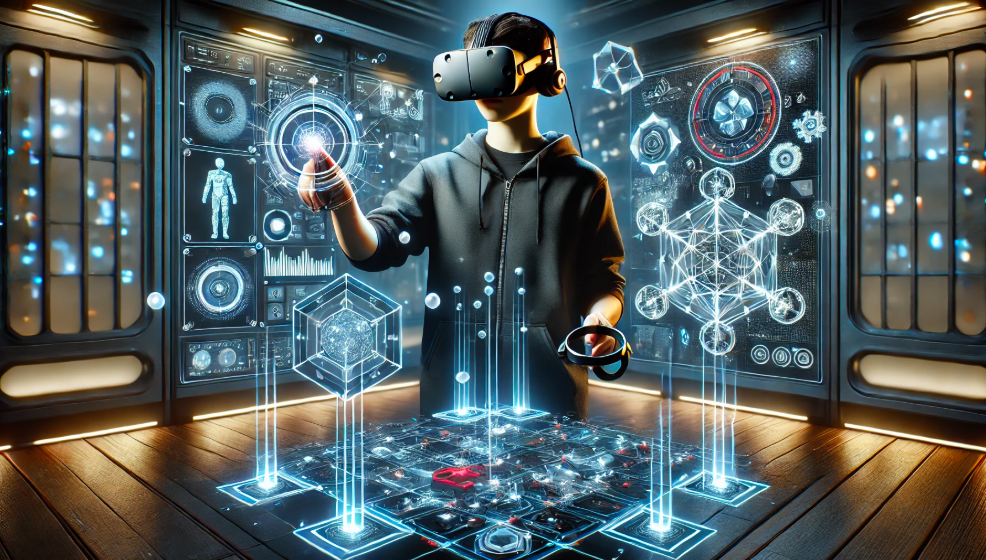
Virtual reality (VR) puzzles are interactive challenges set in a digital 3D environment, where users solve problems by engaging with virtual objects and scenarios. These puzzles have become popular in gaming, entertainment, and education because they offer an immersive and engaging experience. Using VR headsets and motion controllers, players interact with the virtual world in a way that feels real. Unlike traditional puzzles, VR puzzlesprovide depth, movement, and interaction, enhancing problem-solving skills and cognitive abilities.
Beyond entertainment, VR puzzles have practical applications in various fields. In education, they help students grasp complex subjects through interactive learning. Businesses use them for corporate training to improve teamwork and decision-making skills. In healthcare, VR puzzles assist with cognitive rehabilitation and therapy. As VR technology advances, these puzzles are becoming more realistic and widely accessible, making them an important part of modern digital experiences.
How Virtual Reality Enhances Puzzle Experiences
Virtual reality(VR) technology significantly enhances puzzle-solving experiences by introducing interactivity, immersion, 3D environments, and realistic sensory experiences. Through the use of VR headsets and motion-tracking controllers, players can directly manipulate virtual objects, leading to a more engaging and interactive experience compared to traditional screen-based puzzles.
The immersive nature of VR transports players into 3D environments where they feel physically present within the puzzle's world. This sense of presence is achieved through panoramic 3D displays and surround sound acoustics, which together create a convincing and absorbing atmosphere. Additionally, VR's capability to simulate realistic sensory experiences, such as haptic feedback, allows players to feel textures and forces, further deepening the immersion and making the puzzle-solving process more tangible and rewarding.
Popular Types Of Virtual Reality Puzzles
Virtual reality (VR) offers a variety of puzzle experiences, each designed to challenge players in different ways. Here are some of the most common types of VR puzzles:
- Spatial Puzzles– These puzzles require players to manipulate objects in a 3D space, such as rotating, assembling, or aligning pieces to fit a specific pattern. They test spatial awareness and problem-solving skills.
- Escape Room Challenges– Inspired by real-life escape rooms, these puzzles involve finding hidden clues, solving riddles, and interacting with the environment to unlock doors or solve mysteries before time runs out.
- Interactive Logic Puzzles– These puzzles involve pattern recognition, sequencing, and logical reasoning. Players may need to connect circuits, solve math-based problems, or arrange symbols in a specific order to progress.
- Adventure-Based Puzzle Games– In these games, puzzles are integrated into an interactive storyline. Players explore virtual worlds, uncover secrets, and solve challenges that are essential to advancing the narrative.
- Physics-Based Puzzles– These puzzles rely on real-world physics, requiring players to use gravity, momentum, and object interactions to solve challenges, such as building structures or guiding objects through obstacles.
- Memory and Pattern Recognition Puzzles– These puzzles test a player’s ability to recall sequences, recognize repeating patterns, or match objects in a limited time, improving cognitive function and attention to detail.
Best VR Puzzle Games Available Today
Virtual reality has transformed puzzle gaming, offering immersive experiences that challenge the mind. Here are some top-rated VR puzzle games:
- The Room VR: A Dark MatterThis game transports players to a world filled with intricate puzzles and mysterious environments. Designed to be comfortable for all players, it features teleportation and stationary puzzle-solving, ensuring an engaging experience without the need for extensive movement.
- CubismA deceptively simple game where players fit Tetris-like blocks into 3D wireframe shapes. As levels progress, puzzles become more complex, offering a slow and measured challenge that tests spatial reasoning.
- I Expect You to DiePlayers assume the role of a spy, solving escape-room-style puzzles in various high-stakes scenarios. Each level requires quick thinking and clever problem-solving to survive and advance.
- The Last ClockwinderIn this game, players use motion controls to record their actions and create automatons that repeat those actions. This mechanic allows for the automation of various tasks, leading to intricate and satisfying puzzle-solving experiences.
- Moss: Book IIFollowing the adventure of a young mouse named Quill, this game combines action-adventure elements with clever puzzles. Players interact with the environment to help Quill navigate through beautifully crafted levels, offering a rich narrative and engaging gameplay.
Essential VR Equipment Needed To Play Puzzle Games
To fully enjoy virtual reality (VR) puzzle games, you'll need specific equipment that provides an immersive and interactive experience. Here's a breakdown of the essential components:
- VR HeadsetThe core of any VR setup, a headset immerses you in the virtual world. Popular models include the Meta Quest 3, known for its affordability and advanced features, and the PlayStation VR2, designed for seamless integration with the PS5.
- Motion ControllersThese handheld devices allow you to interact naturally within the virtual environment, essential for manipulating objects and solving puzzles. For instance, the PlayStation VR2 utilizes the Sense controllers, which offer haptic feedback and adaptive triggers for a more immersive experience.
- Tracking SystemsAccurate tracking ensures your movements are precisely mirrored in the VR world. Some headsets, like the Meta Quest 3, feature inside-out tracking with built-in cameras, eliminating the need for external sensors.
- High-Quality HeadphonesImmersive audio enhances the gaming experience by providing spatial sound cues crucial for puzzle-solving. While some headsets have built-in speakers, using high-quality, VR-compatible headphones can offer superior sound quality and noise isolation.
- Comfort AccessoriesTo extend your gaming sessions comfortably, consider accessories like ergonomic face covers, adjustable head straps, and cable management systems. These additions can reduce fatigue and prevent cables from interfering with your movements.
Benefits Of Playing VR Puzzle Games
Virtual reality (VR) puzzle games offer a range of benefits beyond just entertainment. They help improve cognitive skills, support education, and provide emotional well-being. Below are some key benefits:
- Cognitive BenefitsPlaying VR puzzle games strengthens problem-solving abilities, memory, and critical thinking. Engaging with interactive challenges requires players to analyze patterns, recall details, and make quick decisions, improving mental agility over time.
- Entertainment and RelaxationVR puzzle games provide an immersive and enjoyable escape from daily stress. They offer interactive environments where players can relax, explore, and engage in fun problem-solving experiences. The variety of puzzle genres ensures that players always find something interesting.
- Educational ValueMany VR puzzles are designed to teach new skills, such as spatial reasoning, logical thinking, and even subjects like mathematics and physics. Some educational VR games use real-world applications, making learning more interactive and engaging for students.
- Emotional and Mental Well-beingSolving puzzles in a VR setting can reduce stress and enhance mood. The sense of achievement after completing challenges helps boost confidence and persistence. Additionally, VR puzzle games can improve focus and concentration, making them beneficial for mental health.
- Enhanced Hand-Eye CoordinationVR puzzle games require precise hand movements and coordination between vision and actions. This helps improve fine motor skills, which can be useful in everyday tasks and certain professional fields.
Tips For Getting Started With Virtual Reality Puzzle Games
Starting with virtual reality (VR) puzzle games can be an exciting experience. Here are some practical tips to help beginners get the most out of their gameplay:
- Choose Beginner-Friendly GamesStart with simple puzzle games that have easy controls and a gradual learning curve. Titles like Cubismand The Room VR: A Dark Matterare great for beginners as they offer engaging puzzles without overwhelming complexity.
- Adjust VR Settings for ComfortModify the VR headset settings to reduce strain on the eyes. Adjust brightness, field of view, and movement settings to ensure a smooth and enjoyable experience. Some games allow for teleportation movement, which can help prevent discomfort.
- Ensure a Comfortable Play AreaSet up a safe and clutter-free space to move freely while playing. Use a well-fitted head strap and take breaks to avoid fatigue. Playing while seated can also help maintain balance and comfort.
- Prevent Motion SicknessIf you are new to VR, start with stationary puzzle games before moving to ones with free movement. Keeping a fan nearby or focusing on stable points in the virtual environment can help reduce dizziness. Playing in short sessions initially will also allow your body to adjust.
- Use Headphones for ImmersionGood audio enhances the puzzle-solving experience. Wearing VR-compatible headphones can improve concentration and make the game more immersive by providing clear directional sound cues.
- Take Regular BreaksAvoid extended play sessions to prevent eye strain and physical discomfort. Short breaks help maintain focus and prevent fatigue, making gameplay more enjoyable.
Frequently Asked Questions (FAQs)
Are Virtual Reality puzzle games suitable for beginners?
Yes, they can be suitable for beginners. Many VR puzzle games include tutorials and simple starting levels. They are often designed to teach basic actions, such as picking up objects or moving around, in clear steps. A 2022 report by the Entertainment Software Association found that first-time VR players learned controls more quickly through puzzle games than through action or shooting titles. Many of these games also offer comfort settings, such as adjustable movement speed, which can help new users adapt to VR more easily. This gradual approach allows new players to learn at their own pace without feeling pressured.
What VR headset is best for playing puzzle games?
According to a 2023 review by VRFocus, the Meta Quest 2 is a top choice for puzzle games because it is easy to set up, has a wide library of titles, and offers good tracking. Another option is the Valve Index, which offers higher image quality, but it is more expensive and needs a powerful PC. The PlayStation VR2 also works well if you have a PlayStation 5. Puzzle games usually do not require the highest graphics, so you can choose a headset based on your budget and comfort needs.
Can VR puzzle games cause motion sickness or discomfort?
Yes, some people may feel motion sickness or discomfort. According to a 2023 study by the Virtual Reality Health Institute, about 25% of new VR users reported minor nausea or headaches during their first sessions. Puzzle games often have slower movement, which can lower the risk of sickness compared to fast-paced titles. Many puzzle games also have comfort settings, such as teleportation or reduced camera movement, which help lessen dizziness. It is helpful to take short breaks if you start to feel unwell.
Do Virtual Reality puzzles require large physical spaces to play?
Many VR puzzle games do not need a lot of physical space. According to a 2023 article by Road to VR, most titles can be enjoyed in room-scale setups, but some games also have seated or standing modes that only need a small clear area. Puzzle experiences usually involve slow or limited movement, so a space measuring around 6.5 by 6.5 feet is often enough, although some players use smaller areas with good room setup. It is still important to remove nearby objects to avoid bumps or collisions.
Are VR puzzle games beneficial for cognitive skills?
Yes, they can be helpful. A 2023 study by the VR Cognitive Research Group found that participants who played VR puzzle games for 20 minutes a day showed better problem-solving skills, improved memory, and greater focus. Interacting with 3D objects in VR can boost spatial awareness. Some games also let players adjust difficulty to match their skill level. Results may differ for each person, and rest is still important.
Jump to
Latest Articles
Popular Articles