Escape Room Puzzles At Home: Bring Extra Fun, Start Game Now
Create lively challenges with homemade riddles, locks, and clues. Save money, adjust difficulty, and let everyone enjoy a custom game in your own space at home.
Mar 20, 20256.3K Shares253.4K Views
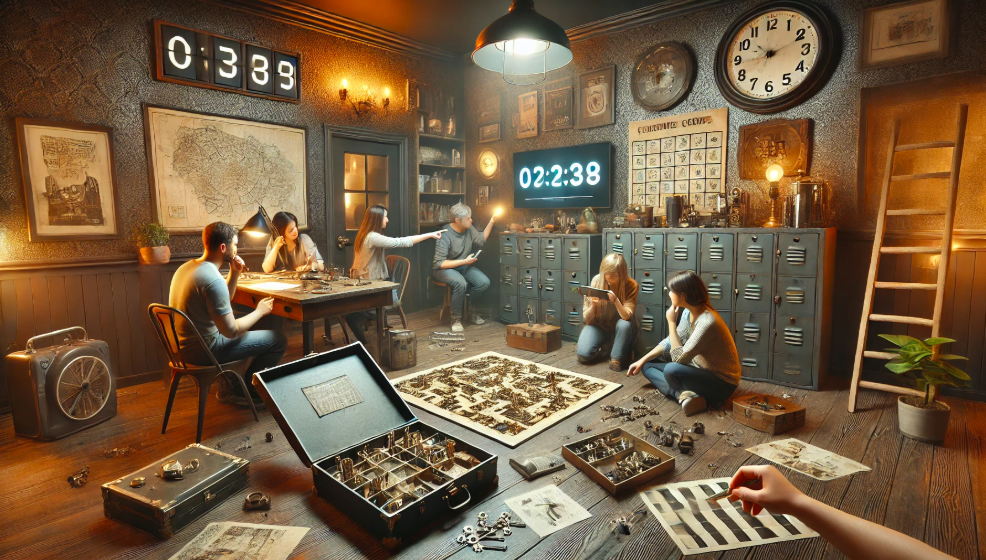
Escape room puzzles are interactive challenges that require players to solve clues, crack codes, and complete tasks to achieve a goal within a set time. Originally designed as live entertainment experiences in physical locations, they have grown in popularity worldwide.
Many people now bring this exciting adventure into their homes, creating DIY escape room puzzlesfor family and friends. These at-home versions maintain the thrill of problem-solving and teamwork while offering flexibility in design, difficulty, and themes. Whether using printable kits, online versions, or custom-made challenges, home escape room puzzles provide a fun and engaging way to test creativity, critical thinking, and collaboration.
Benefits Of Hosting Your Own Escape Room At Home
Setting up an escape room at home offers a unique and fun experience while providing several advantages. Here are some key benefits:
1. Affordability
Escape room venues can be expensive, especially for larger groups. Hosting your own escape room at home saves moneywhile still delivering an exciting challenge. Many DIY options require only basic materials like paper, locks, or household items.
2. Convenience
Bringing the escape room experience home allows you to play anytime without the need for reservations or travel. This makes it easier to fit into busy schedules and provides a comfortable setting for all players.
3. Creative Freedom
Designing your own escape room means you can customize puzzles, themes, and difficulty levels to match your preferences. Whether you enjoy mystery, adventure, or fantasy settings, you have complete control over the experience.
4. Team Building
Escape room puzzlesrequire teamwork, communication, and problem-solving. Hosting one at home encourages collaboration among friends, family, or colleagues, making it a great activity for strengthening relationships.
5. Family Bonding
Playing an escape room together is a great way for families to spend quality time without screens. It helps develop problem-solving skills in children and creates lasting memories for everyone involved.
6. Personalized Experiences
Unlike commercial escape rooms, at-home versions can be adjusted to fit any age group, skill level, or special occasion. Whether it’s a birthday party, a holiday event, or a casual game night, the experience can be tailored to make it more enjoyable.
Step-by-Step Guide To Setting Up An At-Home Escape Room
Creating an escape room at home is a fun and interactive way to challenge friends and family. Follow these steps to design an engaging experience:
1. Choose A Theme
Select a theme that fits the players’ interests. Popular choices include:
- Mystery (detective solving a case)
- Adventure (treasure hunt or lost artifact)
- Sci-Fi (space mission or time travel)
- Horror (haunted house or zombie outbreak)
2. Plan The Story And Goal
Create a short backstory to set the scene. Clearly define the goal—players may need to find a hidden object, unlock a door, or stop a countdown before time runs out.
3. Select The Room And Arrange The Space
Pick a room that allows movement and can be slightly rearranged. Remove fragile items and set up clues in a way that guides players naturally through the game.
4. Design The Puzzles
Mix different types of puzzles to keep the game engaging. Some effective puzzle ideas include:
- Locks and Keys– Hide keys or create number combinations for padlocks.
- Hidden Clues– Place written hints inside books, under furniture, or within objects.
- Pattern Recognition– Require players to connect symbols, colors, or images.
- Math or Word Puzzles– Include simple equations, riddles, or anagrams.
- Physical Challenges– Use objects that need arranging in a specific order.
5. Create A Game Flow
Structure the game so puzzles connect logically. Start with easy clues to build confidence, then gradually increase difficulty. Ensure a smooth flow where solving one puzzle leads to the next.
6. Set Up Instructions And Time Limit
Before starting, explain the rules clearly. Decide on a time limit (usually 30-60 minutes) and let players know if they can request hints during the game.
7. Test The Escape Room
Playtest the room with a small group to check if the puzzles work well and if any adjustments are needed.
8. Run The Game And Have Fun
Once everything is set, invite players and watch them solve the challenges. Keep an eye on their progress and provide hints if needed.
Easy DIY Escape Room Puzzle Ideas For Beginners
Creating an escape room at home does not require complex props or expensive tools. Here are simple puzzle ideas using common household materials:
1. Hidden Message With Lemon Juice
Materials Needed:Lemon juice, paper, cotton swab, candle or light bulb.How It Works:Write a secret message with lemon juice on paper using a cotton swab. Once dry, the paper will appear blank. To reveal the hidden message, players must hold it near a warm light source. The heat causes the lemon juice to darken, exposing the text.Example:The hidden message could be a number code to unlock a box or a clue directing players to the next puzzle.
2. Book Cipher
Materials Needed:A book, sticky notes, or a piece of paper.How It Works:Select a book and choose a few words from different pages. Write down the page number, line number, and word position for each word. Players must use these numbers to locate the correct words and form a sentence or code.Example:If the numbers given are (Page 10, Line 3, Word 5), (Page 22, Line 1, Word 2), and (Page 35, Line 4, Word 7), the words found could spell out “Look Under Table.”
3. Locked Box With A Simple Math Code
Materials Needed:A small box with a lock (or a box taped shut), a piece of paper with a math puzzle.How It Works:Write a simple equation where the answer forms the combination to unlock the box. The puzzle should be easy enough to solve but still require thinking.Example:"The sum of 12 and 8, minus 5" would lead to the number 15, which could be the lock combination.
4. Puzzle Pieces With A Clue
Materials Needed:A printed clue or message, scissors.How It Works:Write or print a short clue on paper, then cut it into puzzle-like pieces. Players must assemble the pieces to read the full clue.Example:The clue could say “Check inside the kitchen drawer,” leading players to their next puzzle.
5. Key Hidden In Ice
Materials Needed:A key, a small plastic container, water, and a freezer.How It Works:Freeze a key inside a block of ice. Players must find a way to melt or break the ice to retrieve the key, unlocking their next challenge.Example:Leave a note nearby saying, “The key to escape is frozen in time,” hinting that they need to melt the ice to proceed.
Challenging Escape Room Puzzle Ideas For Advanced Players
For players who enjoy a greater challenge, these complex escape room puzzles require logic, problem-solving, and creativity. Here are some advanced puzzle ideas with setup instructions.
1. Laser Maze Challenge
Materials Needed:String or yarn (red for effect), tape, and a narrow hallway or doorway.How It Works:Create a “laser maze” by taping strings across a hallway or doorway at different angles. Players must carefully move through without touching the strings. If they do, they must restart or solve an extra puzzle to continue.
Tip:Use glow-in-the-dark string or add a time limit to increase difficulty.
2. Blacklight Hidden Code
Materials Needed:UV pen, UV flashlight, paper.How It Works:Write a code or message using a UV pen on a piece of paper. Players must find a hidden UV flashlight to reveal the message. The message could be a number code, a clue, or the location of the next puzzle.
Tip:Hide the UV flashlight inside a locked box that requires solving another puzzle to open.
3. Layered Puzzle Locks
Materials Needed:Multiple locked boxes, different types of locks (combination, key, directional), hidden clues.How It Works:Players must solve multiple puzzles to find codes or keys that unlock a series of boxes. Each box contains another clue leading to the final goal.Example:The first lock requires a number code, the second a directional code, and the third a key hidden in a previous puzzle.
Tip:Use a mix of lock types to make it more challenging, like letter locks, padlocks, and word puzzles.
4. Morse Code Message
Materials Needed:A Morse code chart, a flashlight or buzzer.How It Works:Give players a message written in Morse code. They must decode it using a reference chart to find the next clue.Example:A sequence like “.... --- ..- ... .” translates to “HOUSE,” leading them to search inside the house for the next clue.
Tip:Increase difficulty by making players find the Morse code chart first or by hiding the message in sound beeps.
5. Magnet Key Retrieval
Materials Needed:A small key, a magnetic wand, and a clear plastic tube or bottle.How It Works:Place a key inside a plastic tube with small openings at both ends. Players must use a hidden magnet to pull the key through a narrow maze inside the tube.
Tip:Make it harder by adding small obstacles inside the tube that players must navigate with the magnet.
Creative Themes To Enhance Your Home Escape Room
Choosing a theme adds excitement and depth to a home escape room. Below are six creative themes with setup tips to make your escape room more immersive and engaging.
1. Treasure Hunt Adventure
Story:Players are explorers searching for a lost treasure hidden in an ancient temple. They must solve puzzles to find the final location of the treasure before time runs out.Setup Tips:
- Hide small clues around the room leading to a treasure chest (a locked box).
- Use maps, riddles, and coded messages to guide players.
- Include a sand timer or countdown clock to add urgency.
2. Detective Mystery
Story:A valuable item has been stolen, and players must uncover the thief’s identity by collecting evidence and solving clues.Setup Tips:
- Scatter fingerprint clues, torn notes, and suspect profiles.
- Use a blacklight pen to reveal secret messages.
- Introduce a fake suspect list, and players must eliminate suspects by solving each puzzle.
3. Time Travel Mission
Story:Players must restore the timeline after a scientist’s time machine malfunctions. They need to solve historical puzzles to fix time distortions.Setup Tips:
- Include puzzles related to different historical eras (Roman numerals, famous dates).
- Use a prop like a “time machine” (cardboard box with blinking lights) to make the story immersive.
- Hide clues inside “time capsules” (envelopes labeled by year).
4. Space Escape
Story:The spaceship’s systems are failing, and players must repair the control panel before the oxygen runs out.Setup Tips:
- Use glow-in-the-dark stickers to create a space atmosphere.
- Introduce a "control panel" with dials, switches, and locked compartments.
- Players solve color-coded wires or number puzzles to "repair" the ship.
5. Haunted House Escape
Story:Players are trapped in a haunted house and must solve ghostly riddles to break the curse before midnight.Setup Tips:
- Dim the lights and use eerie background music.
- Hide clues inside “haunted” objects like old books or under furniture.
- Use a mirror puzzle where players need to align reflections to reveal numbers.
6. Spy Mission
Story:Players are secret agents on a mission to stop a hacker from launching a cyber attack. They must break into the hacker’s system and disable the threat.Setup Tips:
- Use number locks and encrypted messages to create a hacking theme.
- Set up a fake "computer station" where players must enter a final passcode.
- Add laser maze obstacles (tape or red string) that players must navigate.
Essential Supplies And Materials For Home Escape Room Setups
Setting up a home escape room does not require expensive equipment. Many essential items are affordable and easy to find. Here is a practical list of supplies to create an engaging escape room experience.
1. Locks And Keys
- Combination locks (number or letter-based)
- Padlocks with hidden keys
- Directional locks (up, down, left, right sequences)
2. Puzzles And Clues
- Printed riddles or word puzzles
- Jigsaw puzzleswith hidden messages
- Coded messages using symbols or numbers
3. Writing Tools
- UV pen and UV flashlight for secret messages
- Dry erase markers for whiteboard puzzles
- Regular paper and pens for note-taking
4. Containers And Hiding Spots
- Small boxes or envelopes for hiding clues
- Books with hollowed-out sections
- Drawer or cabinet with a simple lock
5. Timers And Countdown Tools
- Smartphone timer or stopwatch
- Hourglass for a visual time limit
- Countdown sound effects for suspense
6. Invisible Clue Tools
- Lemon juice (for heat-revealed messages)
- Tape for hiding clues under furniture
- Mirrors for reflection-based puzzles
7. Physical Challenge Items
- Red string or tape for a DIY laser maze
- Puzzle pieces that fit together for a final clue
- Balloons with hidden notes inside
8. Thematic Decorations (Optional)
- Printed signs or props that match the theme
- Flashlights or dim lighting for mystery settings
- Background music for an immersive experience
Tips For Creating An Immersive Escape Room Atmosphere At Home
A well-designed escape room is more than just puzzles—it’s about creating an exciting atmosphere. Here are practical ways to make your home escape room feel realistic and engaging.
1. Use Themed Lighting
- Dim or colored lights set the mood (blue for sci-fi, red for mystery).
- Flashlights or lanterns add suspense in dark settings.
- Smart bulbs can change colors to signal progress in the game.
2. Add Background Music And Sound Effects
- Play suspenseful or theme-based music (spy missions, haunted houses, etc.).
- Use sound effects like door creaks, ticking clocks, or distant footsteps.
- Loop background sounds using apps or YouTube to maintain the atmosphere.
3. Incorporate Props For Realism
- Old books, maps, or locked boxes make the room look authentic.
- Fake scrolls, keys, and hidden notes make puzzles feel interactive.
- Simple household items like candles or vintage objects can enhance themes.
4. Create A Strong Storyline
- Write a short backstory and introduce it before the game starts.
- Give players “roles” (detective, explorer, hacker) for added engagement.
- Use written notes, recorded messages, or video clips to reveal the story.
5. Decorate According To The Theme
- Hang posters, print clues on aged paper, or use old-looking signs.
- Cover furniture with sheets for an abandoned-house effect.
- Use glow-in-the-dark markers for hidden messages on walls or objects.
6. Set Up Hidden Clues In Unexpected Places
- Tape messages under tables or behind picture frames.
- Use books with cut-out compartments to hide keys or notes.
- Create “false leads” to make players think critically.
Common Mistakes To Avoid When Designing Escape Room Puzzles At Home
Creating a home escape room can be exciting, but certain mistakes can make the game frustrating instead of fun. Here are common pitfalls and how to avoid them.
1. Making Puzzles Too Difficult
Mistake:If puzzles are too complex, players may get stuck and lose interest.Solution:Test puzzles beforehand and provide a hint system. Ensure each puzzle has a logical solution that fits the storyline.
2. Not Having A Clear Game Flow
Mistake:If clues are scattered randomly, players may struggle to understand the next step.Solution:Organize puzzles in a sequence where solving one leads to the next. Use numbers, symbols, or color codes to guide players smoothly through the game.
3. Overcomplicating Clue Placement
Mistake:Hiding clues in places that are too difficult to find can slow down the game.Solution:Keep hiding spots clever but reasonable. Avoid placing small clues in places that require excessive searching or physical effort to reach.
4. Ignoring Time Management
Mistake:If the game is too short, players finish too quickly. If it's too long, they may lose interest.Solution:Aim for a playtime of 30–60 minutes. Adjust the number and difficulty of puzzles to match the expected duration.
5. Lack Of Theme Consistency
Mistake:Puzzles and props that do not match the theme can break immersion.Solution:Choose puzzles that fit the storyline. For example, a detective theme should include logic-based clues, while a pirate theme can use maps and hidden messages.
6. Forgetting A Backup Plan For Broken Props
Mistake:Locks, keys, or tech-based clues may malfunction.Solution:Have a backup plan, such as an alternative puzzle or an extra key, to avoid delays in gameplay.
7. Not Playtesting The Game
Mistake:Skipping a test run can lead to overlooked errors or unclear clues.Solution:Have a friend or family member playtest the escape room. Adjust the difficulty and instructions based on their feedback.
Frequently Asked Questions (FAQs)
How Long Does It Take To Set Up An Escape Room At Home?
The time can vary based on the number of puzzles and how detailed you want them to be. It might take around 2 to 6 hours for a basic setup. If you include more difficult puzzles or special decorations, it may take a day or longer. According to a guide by The Real Escape (a well-known escape room resource), most people finish a simple setup in about 3 to 5 hours. You will need to plan puzzles, gather supplies, and test each puzzle before the game starts.
Can I Create An Escape Room At Home On A Tight Budget?
Yes, you can. According to a guide by Escape Room Tips, you can reuse common items such as boxes, locks, envelopes, and markers. You can also find free puzzle makers online for crossword clues or riddles. Spend more time planning the flow of your puzzle and less money on extra items. This approach helps you stay within a small budget while still creating a fun escape room. You may also borrow decorations from friends or family to keep costs low.
What Ages Are Suitable For Home Escape Room Activities?
People of many different ages can enjoy a home escape room. According to a guide by The Real Escape, children around eight years old can take part if they have older players nearby to help read clues. Teenagers often like more challenging puzzles, and adults can also enjoy these games by adding puzzles with extra steps. It is good to choose puzzles that match the skills of all players so everyone stays involved.
How Many People Can Participate In A Home Escape Room Game At Once?
According to Lock Paper Scissors, a known do-it-yourself escape room guide, most home escape rooms work best with groups of 2 to 8 people. The number can change based on your space and how many puzzles you have. If you have too many players, some of them might not have enough tasks to do. A typical group size of 3 to 6 people can help keep everyone involved.
Jump to
Benefits Of Hosting Your Own Escape Room At Home
Step-by-Step Guide To Setting Up An At-Home Escape Room
Easy DIY Escape Room Puzzle Ideas For Beginners
Challenging Escape Room Puzzle Ideas For Advanced Players
Creative Themes To Enhance Your Home Escape Room
Essential Supplies And Materials For Home Escape Room Setups
Tips For Creating An Immersive Escape Room Atmosphere At Home
Common Mistakes To Avoid When Designing Escape Room Puzzles At Home
Frequently Asked Questions (FAQs)
Latest Articles
Popular Articles