Puzzle Building Competitions: Tips To Win Fast
Get expert tips to win puzzle building competitions through sorting, teamwork, time tracking, and calm strategy during gameplay.
Mar 22, 2025856 Shares171.1K Views
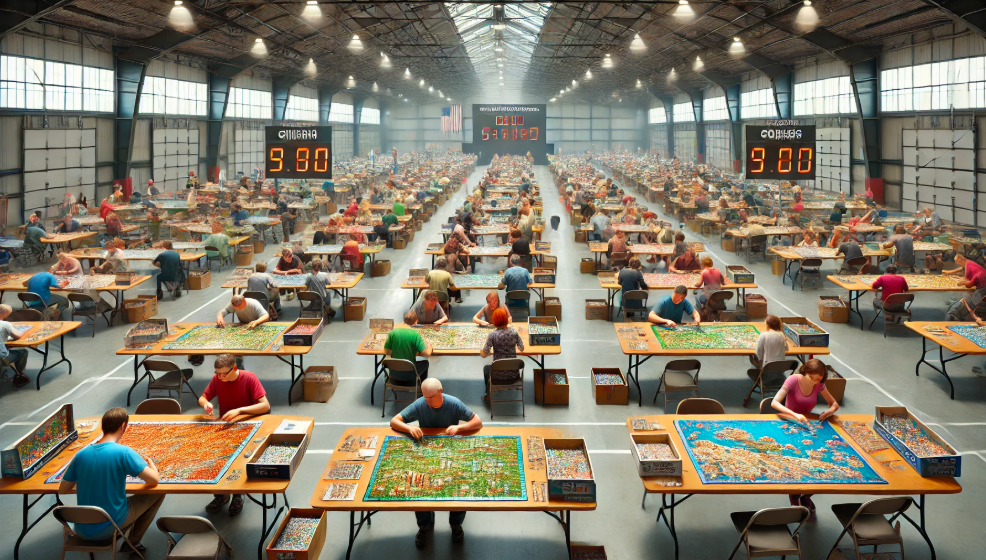
Puzzle building competitionsare timed events where individuals or teams work to complete puzzles as quickly and accurately as they can. These contests are held in different places like schools, libraries, homes, and community centers. Some are casual and fun, while others are more organized with timers, judges, and prizes. Teachers and event organizers often use them to promote focus, teamwork, and friendly competition among kids and adults.
People of all ages enjoy puzzle competitionsbecause they combine challenge and entertainment. They bring out problem-solving skills and offer a fun break from screens. Whether played at a school event or a weekend family gathering, these activities help build patience, teamwork, and mental sharpness in an enjoyable way.
How Puzzle Building Competitions Work
Building upon our previous discussion of puzzle-building competitions, let's delve deeper into their structure, rules, and notable examples, with insights from recent events and authoritative sources.
Detailed Structure and Rules
- Participants: Competitions can be individual or team-based. Teams typically consist of two or four members.
- Puzzle Sizes: The number of pieces varies by competition type:
- Time Limits: Each event has a set maximum time:
- Scoring and Judging:
Notable Examples
- World Jigsaw Puzzle Championship (WJPC): This annual event, organized by the World Jigsaw Puzzle Federation, features individual, pairs, and team categories. Participants from over 70 countries compete, with recent championships held in Valladolid, Spain. The competition has grown significantly, with 1,777 participants in 2024.
- UK Nationals: In 2025, the UK hosted its inaugural national speed puzzling event in Bradford. Hundreds of contestants raced to complete 500-piece (individuals) and 1,000-piece (pairs) puzzles. The event highlighted the growing popularity of competitive puzzling in the UK.
- Puzzle Wars Fundraiser: The Cass-Morgan Farm Bureau organized a fundraising event where 18 teams competed to complete identical 500-piece puzzles. The winning team finished in just over 50 minutes, showcasing the competitive spirit and community engagement fostered by such events.
Additional Considerations
- Preparation: Participants often practice extensively, developing strategies for sorting pieces and assembling sections efficiently.
- Community: These competitions foster a sense of community, bringing together individuals with a shared passion for puzzling.
- Accessibility: While competitive, many events welcome puzzlers of all skill levels, promoting inclusivity and enjoyment.
Benefits Of Participating In Puzzle Competitions
Participating in puzzle competitionsoffers numerous benefits that enhance mental, emotional, and social well-being. Here's how engaging in these events can be advantageous:
Mental Benefits
- Problem-Solving Skills: Engaging in puzzles requires identifying patterns and determining piece placements, which sharpens analytical abilities.
- Enhanced Focus: Concentrating on completing a puzzle demands sustained attention, improving one's ability to focus on tasks.
- Memory Improvement: Remembering shapes, colors, and piece locations exercises short-term memory, leading to cognitive enhancements.
Emotional Benefits
- Stress Relief: The immersive nature of puzzling can induce a meditative state, reducing stress and promoting relaxation.
- Sense of Achievement: Completing a puzzle provides a tangible sense of accomplishment, boosting self-esteem and satisfaction.
Social Benefits
- Teamwork and Collaboration: In team-based competitions, participants must communicate effectively and work together, enhancing collaborative skills.
- Community Engagement: These events bring together individuals with shared interests, fostering a sense of community and belonging.
- Networking Opportunities: Participants can connect with others, building relationships that extend beyond the competition.
Popular Puzzle Types Used In Competitions
Puzzle competitions include different types of puzzles to test a variety of skills such as logic, speed, and pattern recognition. Below are the most common types used in both national and international events:
- Format: Participants connect interlocking pieces to complete a full image.
- Piece Count: Typically ranges from 500 to 2,000 pieces.
- Used In: World Jigsaw Puzzle Championship, USA Jigsaw Nationals.
- Best For: All age groups. Young players often use smaller puzzles (100–300 pieces), while adults compete with 500 to 1,000-piece puzzles.
2. 3D PuzzlesThese puzzles involve building a physical object in three dimensions.
- Format: Pieces are placed to form models like buildings, globes, or vehicles.
- Challenge: Requires spatial thinking and precision.
- Used In: Specialty competitions and school STEM events.
- Best For: Teens and adults, especially in engineering or design-focused events.
3. Word PuzzlesThese include crosswords, word searches, and anagrams.
- Format: Players solve language-based challenges within a time limit.
- Skills Needed: Vocabulary, pattern recognition, and speed.
- Used In: School contests, literacy programs, and casual puzzle leagues.
- Best For: Students and language enthusiasts of all ages.
4. Logic PuzzlesThese focus on reasoning and problem-solving.
- Types: Sudoku, nonograms, riddles, grid puzzles.
- Used In: Logic puzzle tournaments and academic competitions.
- Best For: Teens and adults, especially in math and reasoning-based contests.
- Note: According to the World Puzzle Federation, logic puzzles are a key part of international puzzle competitions.
5. Speed-Based PuzzlesThese are puzzles designed to be solved as quickly as possible.
- Format: Can include simplified versions of jigsaw, Rubik’s cubes, or pattern-matching games.
- Used In: Speed-solving championships, such as Rubik’s Cube events or classroom contests.
- Best For: Children and teens, but also popular among adults who enjoy fast-paced challenges.
How To Organize A Puzzle Competition At Home Or School
Puzzle competitions are a great way to promote teamwork, critical thinking, and friendly competition. Whether it's for students, families, or a small group of friends, organizing the event carefully helps everything go smoothly and keeps participants engaged.
1. Planning The Event
Start by deciding the basics:
- Date and Time: Choose a time that works for most participants. For schools, after-school hours or weekends are ideal.
- Location: Use a classroom, living room, school hall, or community center with enough tables and chairs.
- Type of Competition: Choose between individual, pair (2 people), or team (4 people) formats.
- Age Groups: Create separate categories for kids, teens, or adults if needed.
- Budget: Consider the cost of puzzles, rewards, and materials. Keep some funds for printing score sheets or certificates.
📌 Tip from USA Jigsaw Puzzle Association: Always test your puzzles ahead of time to check for missing pieces or difficulty level.
2. Choosing The Right Puzzles
Puzzle choice plays a big role in how fun and fair the competition is:
- For Young Kids: Use 100–300 piece puzzles with clear images like animals or cartoons.
- For Teens and Adults: Use 500–1,000 piece puzzles. Make sure all participants in a category get the same puzzle.
- For Group Events: Use larger puzzles (like two 500-piece puzzles per team) or give a new puzzle after finishing the first one.
- Theme Ideas: You can pick puzzles with specific themes (nature, cities, art) to make it more exciting.
💡 Ravensburger recommends using puzzles with high-contrast colors and easy-to-recognize images for younger participants.
3. Setting Time Limits
Time limits help keep the event organized and competitive:
- 100–300 pieces: 30–45 minutes
- 500 pieces: 60–90 minutes
- 1,000 pieces: 2–3 hours
- Use a large visible clock, stopwatch, or timer app to track the countdown.
Make sure everyone knows how much time they have before starting the puzzle.
4. Forming Teams And Registering Players
- Allow people to register before the event day if possible.
- Let friends form their own teams, or assign teams randomly for fairness.
- Write team names or participant names on scorecards or table tags.
- Keep each group balanced in skill and age level if possible.
📝 Tip: Keep a registration list with contact info and age group for each participant.
5. Setting Up The Venue
Prepare your space ahead of time:
- Each team or person should have a large, flat table.
- Provide clean surfaces with enough lighting.
- Place the puzzle box upside down until the event starts (to avoid early viewing).
- Set up signs, rules, scoreboards, and any decoration if you have a theme.
🏷 Optional: Add background music to make the environment fun, but keep volume low to avoid distraction.
6. Creating And Explaining Rules
Clear rules are important so everyone understands how to compete fairly:
- No outside help or use of mobile phones.
- No looking at other tables or switching pieces.
- Participants must stay seated unless they need help from the judge.
- Time ends when all pieces are placed correctly and the team raises their hand.
🧩 Judges or volunteers can check puzzles at the end to confirm completion and apply any penalties for missing pieces.
7. Rewards And Certificates
Recognizing effort is just as important as winning:
- Give small prizes to winners (gift cards, new puzzles, medals, or books).
- Offer certificates for categories like “Fastest Team,” “Best Teamwork,” or “Most Creative Name.”
- Participation certificates help make everyone feel appreciated.
🎁 Tip: Use online templates to quickly design certificates and print them before the event.
8. Running The Competition
On event day:
- Welcome all participants and explain the rules clearly before starting.
- Give each team the same puzzle sealed or flipped upside down.
- Start the timer and give a clear signal like “Go!”
- Monitor progress and time.
- Keep energy high with cheering, countdowns for the last 5 minutes, and positive encouragement.
- Once finished, check the puzzle carefully and record each team's completion time.
📷 Optional: Take photos for fun memories or a school newsletter.
Creative Themes And Challenges To Make It More Fun
Adding creative themes and unique challenges to puzzle competitions can greatly enhance the fun and engagement for participants. Here are some ideas to consider:
Creative Themes
- Decade-Themed Puzzles: Choose puzzles that reflect different decades, such as the 1950s or 1960s, featuring iconic imagery from those times.
- Detective Mystery: Incorporate puzzles with hidden clues or "what's wrong with this picture" elements, adding a layer of mystery and problem-solving.
- Color-Focused Challenges: Select puzzles that emphasize specific vibrant colors, challenging participants' attention to detail and color differentiation.
- Everyday Life Scenes: Use puzzles depicting everyday life scenarios, encouraging participants to connect with familiar settings and objects.
- Famous Characters: Feature puzzles showcasing well-known real or fictional characters, adding a recognizable and enjoyable element to the challenge.
Fun Rule Twists
- No Looking at the Box: Participants complete the puzzle without referencing the box image, increasing difficulty and reliance on memory and intuition.
- Upside-Down Assembly: Challenge participants to assemble the puzzle with the image side facing down, focusing solely on piece shapes and connections.
- Timed Challenges: Introduce a countdown timer to see who can complete the puzzle the fastest, adding a competitive edge.
- Puzzle Swap: Each participant brings a favorite puzzle, and at a designated time, they swap puzzles with another participant, adding variety and surprise.
- Puzzle Relay Race: Teams work on different sections of the puzzle in relay fashion, promoting teamwork and strategic planning.
Tips For Winning A Puzzle Building Competition
1. Sort Pieces Efficiently Before Starting
Sorting is the foundation of speed puzzling.
- Edge vs. Inner Pieces: Separate all edge pieces from inner pieces as soon as you open the puzzle. This helps you build the frame quickly.
- Color Sorting: Group pieces by color shades or image elements (like sky, water, buildings, or text).
- Special Features: Set aside unique pieces—corners, text, or those with patterns that stand out. These are often easier to place early.
🔎 According to SpeedPuzzlingTips.com, most top competitors spend the first 10–15 minutes on sorting only. This may feel slow, but it saves a lot of time later.
2. Build The Frame First
Once you've sorted edge pieces:
- Assemble the full border before working on the inside.
- The frame gives structure and helps you understand where each group of pieces will go.
- If time is short and you’re stuck, build what you can and start on clear sections in the middle.
🧩 Edge-first strategies are used by almost every team in the World Jigsaw Puzzle Championship, according to the USAJPA.
3. Work In Clear Sections
Do not jump around the puzzle. Use sectioning:
- Focus on 1 part at a time: sky, characters, signs, etc.
- Use trays or boards to build small parts separately and move them into the frame.
- Keep difficult areas (like clouds, grass, or ocean) for later, unless you're very fast with those patterns.
🧠 This section-based approach helps reduce mistakes and builds confidence as you go.
4. Teamwork Is Key (For Group Events)
Good team coordination makes a big difference:
- Assign tasks: One person sorts, another builds the border, others focus on different puzzle sections.
- Avoid overlap: Don’t crowd the same area. Spread out around the table.
- Communicate clearly: Speak up when you find important pieces or complete a section.
🗣️ Top teams at the USA Nationalssay that practicing roles and team balance before competition day is essential for speed and efficiency.
5. Manage Time Wisely
Keep the clock in mind during the entire puzzle:
- Use a visible timer to track your pace.
- Set small goals: for example, finish the border in 20 minutes or complete one color section every 10 minutes.
- If stuck, skip that piece and return to it later. Do not waste time on a single difficult area.
⏰ Pro puzzlers recommend checking the puzzle progress every 15 minutes to stay on track and adjust team focus.
6. Stay Calm And Focused Under Pressure
Competitions can feel stressful, especially when time is running out. To stay sharp:
- Take deep breaths when you feel stuck.
- Don’t argue or panic—this only slows you down.
- Keep your workspace neat to avoid confusion.
- Drink water, and stretch briefly if allowed during long sessions.
🧘♀️ According to Cloudberries Puzzle Experts, calm puzzlers perform better. A quiet, focused approach leads to faster results than rushing.
7. Practice Before The Competition
Just like any sport or game, practice builds speed and confidence:
- Solve puzzles of different sizes at home with a timer.
- Use the same rules as real competitions to simulate pressure.
- Train your team together so everyone knows their role.
- Try solving puzzles without the box image to sharpen your memory and image-recognition skills.
🏆 Some competitive solvers practice with identical 500-piece puzzlesrepeatedly to find the best sorting and solving strategy.
What To Include In A Puzzle Competition Kit
A well-prepared puzzle competition kit helps the event run smoothly and keeps participants focused on the fun. Whether you're planning a small event at home or a larger one at school or a community center, here is a full list of items to include:
1. Identical Puzzle Sets
Use the same puzzle design for each team or participant to ensure fairness.
Puzzles should be new and sealed, with no missing pieces.
Choose the right size:
Kids: 100–300 pieces
Teens: 300–500 pieces
Adults/Advanced: 500–1000 pieces
📌 Source: Springbok Puzzles – How to Host a Puzzle Competition
2. Reliable Timers
Use stopwatches, digital clocks, or timer apps to track each round.
Display the countdown clearly so teams know how much time is left.
You may also use one central timer for the entire event if individual timing is not required.
🕒 Tip: For large events, place one visible timer near each group.
3. Tables and Chairs
Each team or individual needs a flat, clean, and spacious table.
Tables should be equal in size to maintain fairness.
Use comfortable chairs since some rounds may last up to 2–3 hours.
📏 Ensure enough room around each table for easy movement and judging.
4. Team Labels and Signage
Prepare team name cards to mark each table.
Include participant badges or stickers if the event has many players.
Labels help the audience, organizers, and judges keep track of who’s who.
🖊 Use colorful labels or printouts to make the event feel more official and fun.
5. Score Sheets and Pens
Create score sheets to record:
Start and finish times
Time taken to complete the puzzle
Number of missing pieces (if any)
Penalties (if your rules include them)
Assign a volunteer or judge to track and update the sheets.
📋 You can also use a printed scoreboard or whiteboard for display.
6. Prizes and Certificates
Offer small rewards to celebrate winners and participants:
Medals, trophies, puzzle sets, gift cards
Certificates for "Fastest Team", "Best Teamwork", etc.
Participation certificates encourage younger or first-time players to come back next time.
🎁 Tip: Use free online templates to print certificates in advance.
7. Optional (But Helpful) Tools
These extra items can make the event more organized and comfortable:
Puzzle Mats: Flexible mats that allow teams to move or store puzzles easily.
Sorting Trays or Plates: Help players separate pieces by color, shape, or section.
Lighting: Portable desk lamps or good overhead lights reduce eye strain.
Hand Sanitizer and Wipes: Keep puzzle pieces clean and shared spaces hygienic.
Trash Bags or Boxes: For puzzle box wrapping or packaging after the event.
💡 Some puzzle brands like Cloudberries and Ravensburger also sell sorting trays and mats designed for speed puzzling.
8. Refreshments (Optional)
Light snacks and water bottles keep energy levels up, especially for long rounds.
Avoid messy food near the puzzles. Offer clean snacks like crackers or fruit.
🍎 Set up a break area separate from the puzzle zone if space allows.
❓ FAQs: Puzzle Building Competitions
What Is A Puzzle Building Competition?
A puzzle building competition is a timed event where individuals or teams work to complete a puzzle, most commonly a jigsaw puzzle, as quickly as possible. All participants receive the same puzzle to make the contest fair. The goal is to finish the puzzle before the other players within a given time limit.
These competitions can be organized for solo players, pairs, or teams of up to four people. They are often used in community events, schools, or fundraisers. Time is tracked carefully, and judges make sure the puzzles are completed correctly. If no one finishes within the time limit, the team with the most connected pieces usually wins.
Puzzle competitions test skills like focus, speed, teamwork, and organization. They are becoming more popular around the world, with national and international events held each year.
How Long Does A Typical Puzzle Competition Last?
A typical puzzle competition lasts between 60 minutes to 3 hours, depending on the event type and puzzle size. In individual contests with 500-piece puzzles, participants are usually given up to 90 minutes to finish. Pair competitions may involve 500 or 1,000-piece puzzles and often allow between 75 to 120 minutes. In team events, where four members work together on two 1,000-piece puzzles, the time limit is usually set at 3 hours. Local and community-based competitions that use simpler 500-piece puzzles often set a maximum time of around 2 hours. These time frames help ensure a fair and organized experience for all participants.
What Type Of Puzzles Are Best For Competitions?
The best puzzles for competitions are high-quality jigsaw puzzles with clear and distinct images that make sorting and assembly easier. Puzzles with bold colors, clear shapes, and defined sections help players complete them more efficiently under time pressure. Traditional image designs are commonly used because they are easy to recognize, while abstract or geometric designs offer a tougher challenge for advanced players. The quality of the puzzle pieces also matters—puzzles with sturdy pieces and accurate cuts reduce frustration during the event. These features ensure a fair and smooth experience for all participants.
Can Children And Adults Compete Together?
Yes, children and adults can compete together in puzzle competitions. Many events are designed to be inclusive, allowing mixed-age teams to participate. For example, the Kellogg-Hubbard Library's Puzzle Raceoffers a "Multi-Age Teams" category, where teams consist of both children (12 years and under) and adults (16 years and up), working together on a 300-piece puzzle. Similarly, the Fundemonium Ravensburger Puzzle Competitionpermits teams comprising adults and children, with the stipulation that teams with members under 16 years old must include at least one adult. Additionally, the Fremont Library's Family Puzzle Competitionencourages family teams, recommending participation for families with children aged 6 and older, collaboratively solving a 300-piece puzzle. These formats promote teamwork across different age groups, making puzzle competitions enjoyable and accessible for both children and adults.
Jump to
How Puzzle Building Competitions Work
Benefits Of Participating In Puzzle Competitions
Popular Puzzle Types Used In Competitions
How To Organize A Puzzle Competition At Home Or School
Creative Themes And Challenges To Make It More Fun
Tips For Winning A Puzzle Building Competition
What To Include In A Puzzle Competition Kit
❓ FAQs: Puzzle Building Competitions
Latest Articles
Popular Articles