Gradient Difficulty Puzzles: A Calm Brain Workout
Gradient difficulty puzzles boost focus, memory, and patience. A perfect blend of relaxation and challenge for all ages.
Mar 21, 20259.6K Shares139.1K Views
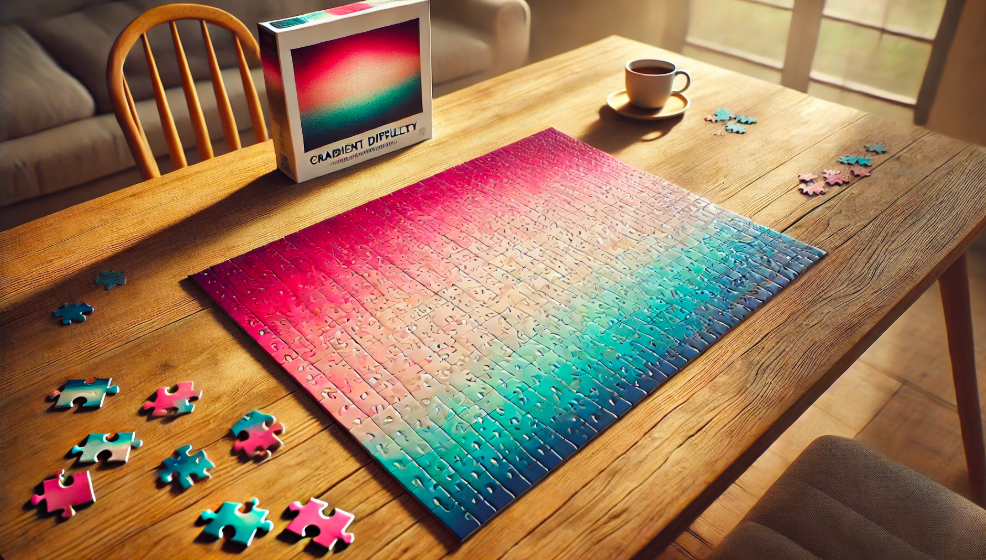
Gradient difficultypuzzles are a type of jigsaw puzzle where the challenge slowly increases from one part to another. These puzzles often feature smooth color transitions, like a rainbow or fading shades, which create different levels of difficulty across the puzzle. The easier sections usually have strong color differences, while the harder parts blend similar tones, making piece placement more challenging.
According to Ravensburger.com, this design allows puzzlers to start with the simpler areas and work toward the tougher sections. This balance makes the puzzle feel rewarding without being overwhelming. Gradient puzzles are becoming more popular among both new and experienced puzzlers because they offer a calm but engaging experience. The visual beauty and changing challenge keep people interested, which is why more puzzle brands are adding them to their collections.
How Gradient Puzzles Work: A Visual And Mental Challenge
Gradient puzzles are made using a slow and steady shift in color or tone across the puzzle image. Instead of showing a picture with clear shapes or objects, these puzzles focus on smooth color changes—like going from light blue to dark blue or blending from pink to yellow. This design changes the way people solve the puzzle, as they cannot rely on clear images or borders.
According to BetterCo.co, solving a gradient puzzle takes strong focus, careful observation, and color matching skills. Puzzlers look closely at slight changes in color and compare small differences between pieces. This trains the eyes and the brain to work together in a more focused way. These puzzles help improve patience and visual thinking, making them a favorite for those who enjoy a calm but thoughtful challenge.
Benefits Of Solving Gradient Difficulty Puzzles
Engaging in puzzles that gradually increase in difficulty offers numerous benefits across cognitive, emotional, and recreational domains.
Cognitive Benefits
- Enhanced Memory: Regularly solving puzzles can improve memory by reinforcing connections between brain cells and promoting the generation of new ones.
- Improved Problem-Solving Skills: Tackling puzzles requires critical and analytical thinking, enhancing one's ability to approach problems methodically.
- Better Visual-Spatial Reasoning: Working on puzzles, especially jigsaw puzzles, enhances visual-spatial reasoning skills, which are crucial for tasks like driving and using maps.
Emotional Benefits
- Elevated Mood: Solving puzzles increases the production of dopamine, a chemical that regulates mood, leading to feelings of happiness and optimism.
- Stress Reduction: Focusing on puzzles can serve as a form of meditation, helping to lower stress levels and promote relaxation.
Recreational Benefits
- Social Interaction: Puzzles can be a solo activity or a group endeavor, fostering collaboration and communication among participants.
- Sense of Achievement: Completing a challenging puzzleprovides a sense of accomplishment, boosting self-esteem and confidence.
Popular Gradient Puzzle Types And Styles
Gradient puzzles, characterized by their seamless color transitions, come in various types and styles that cater to different skill levels and preferences. Here's an overview of some popular gradient puzzle types:
1. Full-Color Gradient Puzzles
These puzzles feature a spectrum of colors blending smoothly from one hue to another, covering the entire color wheel. The continuous transition challenges puzzlers to differentiate subtle color variations. For example, Cloudberries offers a 1000-piece gradient puzzle that presents a swirl of rainbow colors, providing a relaxing yet engaging experience.
2. Monochrome Gradient Puzzles
Focusing on variations within a single color, these puzzles transition from light to dark shades. This style tests one's ability to discern subtle tonal differences. The Ravensburger Krypt series, for instance, offers puzzles in single colors like silver or gold, with unique spiral cuts adding to the challenge.
3. Shape-Based Difficulty Puzzles
Beyond color transitions, some gradient puzzles incorporate unique shapes or patterns to increase complexity. The Play Group's collection, such as the 1000 Colours Wheel, features circular designs with color gradients, requiring solvers to navigate both color shifts and unconventional shapes.
Variations Influencing Difficulty
- Piece Count: Higher piece counts generally increase difficulty. While standard puzzles have 500 to 1000 pieces, some gradient puzzles, like Clemens Habicht's 5000 Colours, offer 5000 pieces, providing a more demanding challenge.
- Cut Style: The shape and uniqueness of puzzle pieces affect difficulty. Ribbon-cut puzzles have uniform pieces that fit together in a grid, which can make assembly trickier due to potential false fits. Random-cut puzzles with unique piece shapes can be easier, as the distinct shapes provide more clues for placement.
- Art Design: The complexity of the image plays a significant role. Puzzles with clear patterns or distinct sections are easier to assemble. In contrast, designs with subtle gradients or repetitive patterns, like the Areaware Gradient Puzzle Collection, which transitions between two colors, can be more challenging due to fewer visual cues.
Best Brands And Designers Offering Gradient Puzzles
Several reputable brands and designers specialize in gradient-style puzzles, each offering unique features that cater to diverse preferences:
1. Cloudberries
Based in the UK, Cloudberries is known for its modern designs and commitment to quality. Their gradient puzzles, such as the 1000-piece "Gradient" puzzle, are crafted with extra-thick pieces and a linen finish to reduce glare. Additionally, Cloudberries plants a tree for every puzzle sold, emphasizing their dedication to environmental sustainability.
2. Areaware
Areaware, headquartered in the United States, collaborates with independent artists to create visually striking puzzles. Their Gradient Puzzle Collection features designs that transition smoothly between two colors, offering a minimalist yet challenging experience. The puzzles are available in various sizes, including 100, 500, and 1000 pieces, catering to different skill levels.
3. BetterCo
An American brand, BetterCo offers gradient puzzles that blend aesthetics with difficulty. Their puzzles transition from pink to blue with subtle white tones, creating a visually appealing challenge. BetterCo emphasizes eco-friendly practices by using 100% recycled materials and plant-based inks, reflecting their commitment to sustainability.
4. Clemens Habicht
Clemens Habicht, an Australian designer, introduced the 1000 Colors puzzle, where each piece is a unique color, forming a complete CMYK spectrum. This innovative approach offers a distinctive and rewarding challenge for puzzle enthusiasts.
5. Blue Kazoo
Blue Kazoo specializes in high-quality puzzles with vibrant designs. Their gradient puzzles are known for precision-cut pieces and vivid colors, providing both aesthetic appeal and a satisfying assembly experience.
Tips For Solving Gradient Puzzles Efficiently
Solving gradient puzzles can be both rewarding and challenging. Here are some practical tips to enhance your solving experience:
1. Sort by Tone
Begin by sorting the pieces based on their color tones. Grouping pieces into categories like warm colors, cool colors, and pastel shades can make the assembly process more manageable.
2. Assemble the Edge First
Constructing the border provides a clear framework and can make it easier to place interior pieces. This approach is often recommended for traditional jigsaw puzzles and can be beneficial for gradient puzzles as well.
3. Focus on Color Matching
Pay close attention to subtle color differences. Laying out pieces of a particular color can help you see slight variations, aiding in accurate placement.
4. Practice Patience
Gradient puzzles require careful observation and a methodical approach. Taking your time and enjoying the process can lead to a more satisfying experience.
Who Are Gradient Puzzles Best For?
Gradient puzzles, with their smooth color transitions, appeal to various individuals:
Casual Puzzlers
For those seeking a relaxing activity, gradient puzzles offer a fresh experience. The color shifts provide gentle guidance, making them accessible even to beginners. Brands like Cloudberries design gradient puzzles that are both challenging and enjoyable, suitable for all skill levels.
Mindfulness Seekers
Engaging with gradient puzzles can be a form of meditation, promoting focus and relaxation. The process of sorting and assembling based on color nuances encourages a calm, present-moment awareness. This mindful approach can help reduce stress and enhance mental well-being.
Seasoned Enthusiasts
Experienced puzzlers looking for a new challenge will appreciate the unique difficulty gradient puzzles present. The subtle color variations require keen observation and advanced problem-solving skills, offering a satisfying test of expertise. For instance, Ravensburger's "Krypt Gradient" puzzle is noted for its complexity, making it suitable for those seeking a tougher challenge.
Solo Solvers and Gift Givers
Whether enjoyed alone or given as a thoughtful present, gradient puzzles cater to diverse preferences. Their aesthetic appeal and varying difficulty levels make them suitable for different occasions and recipients. Products like the 500-piece gradient puzzle from Puzzleble, which includes puzzle saver sheets and a hanger, are perfect for family nights or as housewarming gifts.
Where To Buy Gradient Difficulty Puzzles
Gradient puzzles, known for their smooth color transitions, are available through various reputable platforms catering to both international and local buyers. Here's where you can find them:
International Online Retailers
- Cloudberries: This UK-based company offers a range of gradient puzzles, including the popular 1000-piece "Gradient" puzzle. They provide worldwide shipping, with free shipping on orders over US $63.75.
- Areaware: Known for their design-focused products, Areaware offers the 500-piece "Gradient Puzzle" by designer Bryce Wilner. This puzzle is available in multiple color variations and can be purchased through various online retailers.
- Ravensburger: A renowned puzzle manufacturer, Ravensburger offers the "Krypt Gradient" 631-piece puzzle, known for its unique challenge. Their products are available through their official website and various online retailers.
Local Options in Pakistan
- Toy Chest Pakistan: This local retailer offers a selection of jigsaw puzzles, including 1000-piece options. While specific gradient puzzles may not be listed, they provide various puzzle designs that might interest enthusiasts.
Price Range
The cost of gradient puzzles varies based on factors like piece count and brand reputation. For instance, Cloudberries' 1000-piece gradient puzzle is priced at US $29.99, while Areaware's 500-piece gradient puzzle is available for €30. Ravensburger's "Krypt Gradient" 631-piece puzzle is listed at $22.99. Local retailers in Pakistan, such as Toy Chest Pakistan, offer 1000-piece puzzles ranging from Rs.1,250 to Rs.1,500.
When purchasing, consider shipping costs and delivery times, especially for international orders. It's advisable to check the retailer's shipping policies to ensure they deliver to your location and to confirm any additional charges.
FAQs For “Gradient Difficulty Puzzles”
What Makes A Puzzle A 'gradient Difficulty' Puzzle?
A "gradient difficulty" puzzle features an image where colors transition smoothly from one hue to another, creating a gradient effect. This design challenges solvers to rely on subtle color differences rather than distinct patterns or lines, enhancing the puzzle's difficulty.
Are Gradient Puzzles Harder Than Regular Ones?
Gradient puzzles, which feature smooth color transitions without distinct images, can present unique challenges compared to regular puzzles. The difficulty largely depends on an individual's color perception and experience. Some puzzlers find gradient puzzles easier and meditative, as they can sort pieces by subtle color differences. Others may find them more challenging due to the lack of clear patterns or imagery.
What Size Gradient Puzzle Should A Beginner Start With?
For beginners interested in gradient puzzles, it's advisable to start with a manageable piece count to build confidence and develop puzzle-solving skills. Starting with a 300-piece puzzle is often recommended, as it provides a balance between challenge and accessibility. As you become more comfortable, you can progress to puzzles with higher piece counts, such as 500 or 1000 pieces, to further enhance your skills.
Can gradient puzzles be framed after completion?
Yes, gradient puzzles can be framed after completion. Many puzzlers choose to frame them because of their colorful and modern design. After finishing the puzzle, you can use puzzle glue to keep the pieces together. Once dried, it can be placed into a frame of the correct size. Brands like Cloudberries and Areaware offer puzzles that are made with high-quality materials and matte finishes, which look great when displayed on a wall. Framing a gradient puzzle is a popular way to turn your effort into a piece of art.
Are there gradient puzzles for kids?
Yes, there are gradient puzzles made especially for kids. These puzzles usually have fewer pieces, such as 100 or 200, and use bright, easy-to-follow color transitions. The large piece size and simple layout help young solvers stay focused and enjoy the process without feeling overwhelmed.
Some companies like BetterCo and Areaware have beginner-friendly gradient puzzles that are suitable for older children. While they are often marketed to all ages, kids can still benefit from the visual learning and focus-building that these puzzles provide.
Jump to
How Gradient Puzzles Work: A Visual And Mental Challenge
Benefits Of Solving Gradient Difficulty Puzzles
Popular Gradient Puzzle Types And Styles
Best Brands And Designers Offering Gradient Puzzles
Tips For Solving Gradient Puzzles Efficiently
Who Are Gradient Puzzles Best For?
Where To Buy Gradient Difficulty Puzzles
FAQs For “Gradient Difficulty Puzzles”
Latest Articles
Popular Articles