Top Smart Puzzle Games For All Ages And Skills
Explore smart puzzle games designed for kids, students, and adults that enhance logic, creativity, and learning through interactive challenges.
Mar 21, 202522.9K Shares499.1K Views
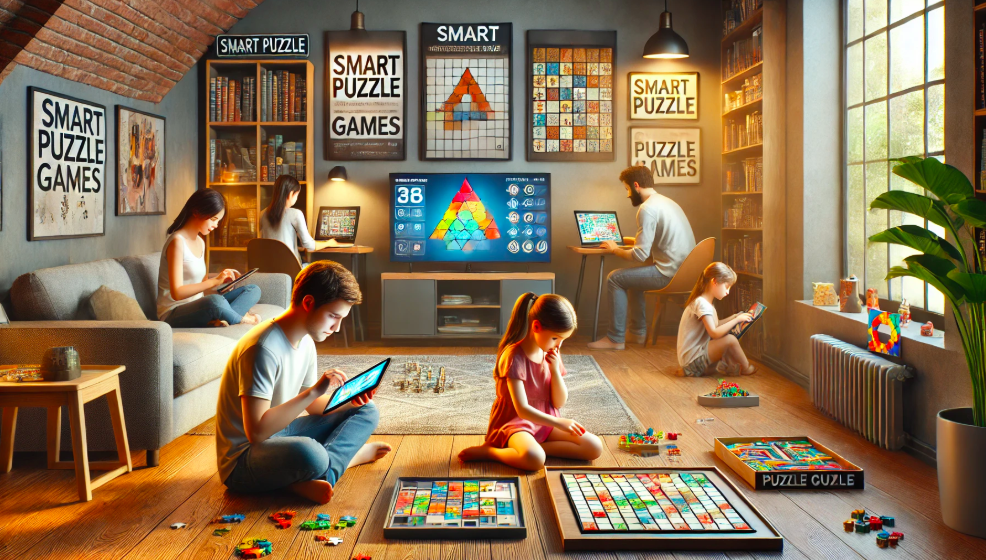
Smart puzzle gamesare a category of games that emphasize logic, strategy, and problem-solving skills. Unlike traditional puzzles that may focus on fitting pieces together or completing a picture, smart puzzle gamesoften require players to recognize patterns, complete sequences, or solve complex problems. These games can be both physical, like multi-level logic puzzles, and digital, incorporating interactive elements that enhance the gaming experience.
The popularity of smart puzzle games has been on the rise among both children and adults. For children, engaging in such games can enhance cognitive abilities, improve memory, and develop critical thinking skills. Adults, on the other hand, find these games beneficial for maintaining mental sharpness and reducing stress. The appeal lies in their ability to provide mental stimulation while offering entertainment, making them a preferred choice for many seeking both fun and intellectual engagement.
Benefits Of Playing Smart Puzzle Games
Engaging in smart puzzle gamesoffers numerous benefits across mental, emotional, and educational domains. Here's how these games can enhance various aspects of our lives:
Mental Benefits
- Enhanced Memory: Regularly playing puzzle games can improve memory by reinforcing connections between brain cells and promoting the generation of new ones.
- Improved Concentration: These games require sustained attention, helping players develop better focus and the ability to concentrate on tasks for extended periods.
- Advanced Logical Thinking: Solving puzzles often involves recognizing patterns and developing strategies, thereby enhancing logical reasoning skills.
- Better Decision-Making Skills: The strategic nature of many puzzle games encourages players to make decisions and consider the consequences, leading to improved decision-making abilities.
Emotional Benefits
- Elevated Mood: Completing puzzles triggers the release of dopamine, a neurotransmitter that regulates mood, leading to feelings of happiness and satisfaction.
- Stress Reduction: Focusing on puzzle-solving can serve as a form of meditation, helping to lower stress levels and promote relaxation.
Educational Benefits
- Skill Development: Smart puzzle games can enhance various skills, including problem-solving abilities, strategic thinking, memory capacity, and concentration.
- Increased IQ: Engaging in puzzles has been linked to raising intelligence levels by improving memory, concentration, and problem-solving skills.
Types Of Smart Puzzle Games You Can Try
Smart puzzle games come in many forms, and each type is designed to train specific mental skills. These games are fun, engaging, and great for people of all ages. Whether you enjoy solving problems with numbers, letters, or shapes—or using strategy and logic—there’s a smart puzzle game for you.
1. Logic PuzzlesThese puzzles focus on critical thinking and reasoning. Players must analyze clues, follow step-by-step processes, and often test different possibilities to reach a solution. They don’t rely on guessing but require a thoughtful approach.
- Example: Rush Hour– A sliding puzzle where the goal is to move cars around and free a blocked vehicle. It trains spatial awareness and planning.
- Example: Chocolate Fix by ThinkFun– Players use clues to arrange colored chocolates correctly. It strengthens deductive reasoning and memory.
2. Number PuzzlesNumber puzzles help sharpen math and logic skills. They involve patterns, counting, and placement, and often require careful attention to rules.
- Example: Sudoku– A grid-based puzzle where players fill in numbers without repeating them in rows, columns, or boxes. It improves focus and logic.
- Example: Kakuro– A mix of crossword and math puzzle where sums must match given clues. It trains mental arithmetic and problem-solving.
3. Word PuzzlesThese puzzles build vocabulary, spelling, and language recognition. They are helpful for language learners and anyone who enjoys playing with words.
- Example: Wordscapes– A mobile app combining word search and crossword elements. It encourages quick thinking and word formation.
- Example: Boggle– A tabletop word game where players try to make as many words as possible from a grid of letters within a time limit.
4. Physics-Based Puzzle GamesThese games rely on the laws of physics like gravity, balance, or momentum. They encourage players to think creatively and understand how objects interact in a space.
- Example: Cut the Rope– A game where players cut ropes to feed candy to a creature using physics-based motion.
- Example: World of Goo– A game where players build structures from balls of goo to solve challenges. It encourages creative thinking and structural planning.
5. Mobile Puzzle AppsSmartphones and tablets offer hundreds of puzzle games with rich graphics and unique challenges. These games are often designed for short play sessions, but some offer deep and complex levels.
- Example: Monument Valley– A beautiful puzzle game where players guide a character through stunning, mind-bending architecture.
- Example: Brain It On!– A physics-based app where players draw shapes to solve puzzles. It develops problem-solving and creativity.
6. Board-Based Brain GamesThese are physical puzzles or games that test strategic thinking, planning, memory, or shape recognition. They are often played solo or with others and are great for offline play.
- Example: IQ Puzzler Pro by SmartGames– A compact 2D and 3D puzzle game with multiple challenges. It improves logic and spatial reasoning.
- Example: Blokus– A strategy game where players place colored shapes on a board, trying to block others while using all their pieces.
Best Smart Puzzle Games For Adults
Engaging in smart puzzle games offers adults both entertainment and cognitive stimulation. Here are some top recommendations:
1. Portal 2
Portal 2 is a first-person puzzle-platform game where players solve puzzles using a portal gun that creates linked portals on surfaces. The game combines physics-based challenges with a humorous narrative, providing a unique experience. Its complexity increases progressively, making it both accessible and challenging. Portal 2 is acclaimed for its innovative gameplay and engaging story.
2. The Talos Principle
In The Talos Principle, players navigate a series of complex puzzles set in a philosophical narrative. The game challenges players' logic and problem-solving skills, offering a deep and immersive experience. Its intricate puzzles and thought-provoking themes have earned it critical acclaim.
3. Baba Is You
Baba Is You is a unique puzzle game where players manipulate words and objects to alter the game's rules and solve puzzles. This mechanic encourages creative thinking and offers a fresh approach to puzzle-solving. Its innovative design has been praised for redefining the puzzle genre.
4. The Witness
The Witness is an open-world puzzle game set on a mysterious island filled with intricate puzzles. Players explore the island, solving puzzles that require observation and pattern recognition. The game's beautiful design and challenging puzzles make it a standout title.
5. Return of the Obra Dinn
In Return of the Obra Dinn, players act as insurance investigators exploring an abandoned ship to determine the fate of its crew. The game combines deduction and exploration, offering a unique monochromatic art style and compelling narrative. Its innovative approach to storytelling and puzzle design has been widely praised.
Smart Puzzle Games For Kids And Students
Smart puzzle games are a great way to help children and students build essential learning skills while having fun. These games are designed to develop critical thinking, math ability, pattern recognition, and language skills. They also improve memory and focus in a way that feels playful rather than stressful. Below are some of the best educational puzzle games that are trusted by parents and educators.
1. ZoombinisZoombinis is a classic educational game that challenges children to guide small, blue creatures through logical obstacles. Each level requires players to think about patterns, sequencing, and cause-effect relationships.
- Skills Developed: Logical thinking, problem-solving, pattern recognition
- Why It Stands Out: The puzzles increase in difficulty, and the characters are fun and relatable for kids
- Platform: Available on PC, tablets, and mobile
- Age Group: 8+
2. Thinkrolls SeriesThinkrolls is a collection of logic puzzle games for young children. Players move a character through obstacle-filled mazes using simple physics, like rolling, floating, or pushing blocks. The puzzles teach kids about gravity, density, force, and balance.
- Skills Developed: Early physics, spatial reasoning, problem-solving
- Why It Stands Out: Kid-friendly interface, progressive levels, no ads
- Platform: iOS, Android
- Age Group: 3–8 years
3. Carmen Sandiego: The GameIn this puzzle-adventure game, players join the famous detective on global missions. They must read clues, solve puzzles, and track down villains. The game includes real-world geography, culture, and history, making it great for social studies learning.
- Skills Developed: Geography, reading comprehension, deductive thinking
- Why It Stands Out: Combines storytelling with education; encourages research and attention to detail
- Platform: Online via Google Earth, classroom use
- Age Group: 10+
4. KenKen PuzzlesKenKen is a number puzzle that strengthens basic math skills. Players solve a Sudoku-like grid by filling in numbers that follow specific arithmetic rules.
- Skills Developed: Addition, subtraction, multiplication, logical reasoning
- Why It Stands Out: Great for building mental math and flexible thinking
- Platform: Printable worksheets and online versions available
- Age Group: 7+
5. DragonBox SeriesDragonBox offers a set of mobile apps that teach math through engaging visuals and puzzles. The games cover topics like algebra, geometry, and numbers in a way that feels like playing rather than studying.
- Skills Developed: Algebra, basic math, geometry
- Why It Stands Out: Curriculum-aligned, award-winning design
- Platform: iOS, Android
- Age Group: 4–12 years
How To Choose The Right Smart Puzzle Game
Smart puzzle games offer more than just entertainment—they also help improve memory, problem-solving, attention span, and creativity. But with so many options available, it's important to choose a game that fits the player's age, skill level, learning goals, and preferences. Below are helpful tips to guide your decision and make sure the experience is both fun and educational.
1. Match the Game to the Player's Age
Puzzle games are most effective when they match the player’s developmental stage. Age-appropriate content makes learning smoother and keeps frustration low.
- For Ages 3–6:Choose simple matching, sorting, or drag-and-drop games. Look for puzzles with bright visuals and basic logic.Example:Thinkrolls– teaches basic physics and problem-solving using cute characters.
- For Ages 7–12:Go for games that introduce logic, numbers, and word challenges. These can be digital or physical.Example:Rush Hour Jr.– a traffic logic puzzle for kids that builds sequencing skills.
- Teens and Adults:Choose complex games with advanced thinking challenges, such as pattern recognition, strategy, or open-ended problems.Example:The Witnessor Monument Valley– they combine beautiful design with deep puzzles.
Tip:Always check age ratings and reviews to confirm if a game fits the intended age group.
2. Consider the Skill Level
It’s important to pick a game that’s challenging—but not too difficult. Starting too hard can lead to frustration, while something too easy can become boring.
- Beginner:Look for games with tutorials, hints, or gradually increasing difficulty.Example:Cut the Ropestarts simple and slowly adds new rules.
- Intermediate:Choose games with multiple layers of challenge, like logic sequencing, rules, and memory.Example:Brain It On!– a drawing-based physics game that pushes creative thinking.
- Advanced:Go for open-world or sandbox puzzle games with complex mechanics.Example:Baba Is You– changes game rules in real time, ideal for strategic thinkers.
3. Identify Learning Goals
Smart puzzle games can be chosen based on what skill you want to improve. Here’s how different types help:
- Math Skills:Game:DragonBox Numbers– teaches number sense and basic math through visual puzzles.
- Language and Vocabulary:Game:Wordscapesor Scrabble Go– help improve spelling, vocabulary, and word formation.
- Memory and Focus:Game:Lumosity– includes a mix of short games that focus on attention and recall.
- Logical Reasoning:Game:ThinkFun’s Gravity Maze– teaches logic and cause-effect using a marble run.
4. Choose Between Digital and Physical Games
Both formats offer great benefits, and the choice depends on personal preference and setting:
Digital Puzzle Games:
- Portable and interactive
- Offer levels, hints, and animations
- Good for solo play and learning appsExample:Monument Valley, Lightbot, Elevate
Physical Puzzle Games:
- Offer tactile learning (especially good for young children)
- Encourage family play and social interaction
- No screen time involvedExample:IQ Puzzler Pro, Blokus, Perplexus
5. Balance Fun and Challenge
The best smart puzzle game is one that’s fun to play but also stimulates the brain. Here's how to strike the right balance:
- Look for games with levels or progression– they allow players to grow at their own pace.
- Choose games with positive feedback– celebrations, sounds, and rewards can increase motivation.
- Avoid games that feel repetitive– variety in gameplay keeps interest high.
- Watch for frustration or boredom– if a player quits quickly, the game might be too hard or too easy.
Final Tip:Before buying or downloading, explore free trial versions, read user reviews, or check educational websites for age and skill recommendations. Many games also offer parent dashboards or progress trackers for students.
Are Smart Puzzle Games Good For Brain Training?
Smart puzzle games are designed to challenge cognitive functions such as memory, attention, and problem-solving. Research indicates that engaging in these games can have positive effects on brain health, though the extent of these benefits varies.
Cognitive Benefits of Puzzle Games
Studies have shown that certain brain training games can enhance specific cognitive abilities. For example, research published in PLOS ONEfound that brain training games had a positive impact on attention and memory functions in healthy individuals. Additionally, a study reported in PubMeddemonstrated that commercial brain training games improved executive functions, working memory, and processing speed in young adults.
Expert Insights
Experts suggest that while brain training games can be enjoyable and may improve performance on specific tasks, evidence supporting their effectiveness in enhancing overall cognitive health is limited. According to an article from Harvard Health Publishing, these programs can be fun, but evidence that they improve or maintain brain health is limited.
Popular Platforms And Devices For Smart Puzzle Games
Smart puzzle games are accessible across various platforms and devices, catering to diverse preferences and play styles. Here's an overview of where you can enjoy these engaging games:
1. Mobile Apps (iOS/Android)
Smartphones and tablets are popular choices for puzzle enthusiasts due to their portability and touch-screen interfaces. Both iOS and Android platforms offer a plethora of puzzle games that challenge the mind and provide entertainment on the go.
Examples:
- Monument Valley Series: Renowned for its stunning visuals and intricate puzzles, this series offers a serene gaming experience.
- Cut the Rope: A physics-based puzzle game where players feed candy to a cute creature named Om Nom by cutting ropes strategically.
2. Tablets
Tablets provide a larger screen, enhancing the puzzle-solving experience with more detailed visuals and easier touch controls. Many mobile puzzle games are optimized for tablet use, offering a more immersive experience.
Examples:
- The Room Series: These are tactile puzzle games that involve solving intricate mechanisms and uncovering secrets, benefiting from the larger display of tablets.
3. PCs (Personal Computers)
Personal computers offer a versatile platform for puzzle games, accommodating both simple and complex titles with varying control schemes. The precision of a mouse and keyboard can enhance gameplay in certain puzzle genres.
Examples:
- Portal Series: These are acclaimed first-person puzzle-platform games that challenge players with physics-based puzzles using a portal gun.
- The Witness: An open-world game filled with challenging puzzles that require keen observation and logical thinking.
4. Gaming Consoles
Consoles like PlayStation, Xbox, and Nintendo Switch host a variety of puzzle games, often featuring unique control schemes and the ability to play on larger screens.
Examples:
- Tetris Effect: A mesmerizing reimagining of the classic Tetris game, available on multiple consoles, offering both visual and auditory stimulation.
- Lego Builder's Journey: A visually stunning puzzle game that allows players to build and solve puzzles in a serene environment.
5. Educational Websites
Several educational platforms offer browser-based puzzle games designed to enhance cognitive skills, making them accessible without the need for downloads or installations.
Examples:
- SmartGames: Offers a range of online puzzles that develop logical thinking and problem-solving skills.
- Lumosity: Provides a collection of brain-training games aimed at improving memory, attention, flexibility, speed, and problem-solving.
Offline Vs. Online Smart Puzzle Games
Smart puzzle games offer engaging challenges that stimulate the mind, and they come in both offline and online formats. Understanding the differences between these formats can help players choose the best option for their preferences and lifestyles.
Offline Puzzle Games
Pros:
- Reduced Screen Time: Traditional board games and printed puzzles minimize exposure to screens, which can be beneficial for eye health and sleep quality.
- Tactile Engagement: Physical interaction with game pieces can enhance the sensory experience, making the activity more immersive.
- Uninterrupted Play: Offline games are not affected by internet connectivity issues, ensuring consistent gameplay.
Cons:
- Limited Content: Once a physical puzzle or game is completed, replayability may diminish without additional purchases.
- Storage and Portability: Physical games require storage space and may not be as portable as digital versions.
Online Puzzle Games
Pros:
- Variety and Updates: Digital platforms offer a vast array of puzzles with regular updates, providing fresh content continuously.
- Interactive Features: Online games often include hints, timers, and interactive tutorials that can enhance the gaming experience.
- Social Connectivity: Many online platforms allow players to connect, compete, or collaborate with others globally, adding a social dimension to the experience.
Cons:
- Increased Screen Time: Extended periods of play can contribute to eye strain and other screen-related issues.
- Dependency on Internet: Some online games require a stable internet connection, which can be a limitation in areas with poor connectivity.
FAQs For “Smart Puzzle Games”
What makes a puzzle game “smart”?
A smart puzzle game challenges you with puzzles that are clear and fair. The game explains its rules gradually so you learn how to solve puzzles without feeling overwhelmed. Each puzzle is designed to encourage careful thinking and creativity. The balance between simple instructions and deep challenges helps keep the game interesting as you progress. It also offers hints and feedback that guide you toward the solution without giving everything away. This approach is supported by principles found in game design literature such as The Art of Game Design: A Book of Lenses by Jesse Schell, which highlights the importance of clear rules, a gentle learning curve, and engaging challenges in creating a smart game.
Can smart puzzle games help improve memory or focus?
Yes, smart puzzle games can improve memory and focus by stimulating the brain’s attention and problem-solving areas.
Are smart puzzle games suitable for children?
Yes. There are age-appropriate options that support learning and development in a fun and engaging way.
Do I need to be good at puzzles to enjoy these games?
Not at all. Many smart puzzle games offer beginner modes and tutorials to help players gradually improve their skills.
Are there any free smart puzzle games available?
Yes, several apps and websites offer free versions or trials. However, premium versions often include more features and levels.
Jump to
Benefits Of Playing Smart Puzzle Games
Types Of Smart Puzzle Games You Can Try
Best Smart Puzzle Games For Adults
Smart Puzzle Games For Kids And Students
How To Choose The Right Smart Puzzle Game
Are Smart Puzzle Games Good For Brain Training?
Popular Platforms And Devices For Smart Puzzle Games
Offline Vs. Online Smart Puzzle Games
FAQs For “Smart Puzzle Games”
Latest Articles
Popular Articles