League Of Legends Tier List 2026: Best Champions By Role
This League of Legends tier list helps you pick smarter by role, rank, and mode with champion stats, play styles, strengths, weaknesses, and tips.
Jun 23, 202649.1K Shares780.4K Views

League Of Legends Tier List: S To D Picks, Roles, And Tips
Picking from a League of Legends tier listshould make champion select easier, not more confusing. The problem is that many players see an S-tier badge, lock the champion, then find out too late that the pick is difficult to execute, weak into the enemy draft, or better suited to a different rank bracket.
This League of Legends tier list uses a simple rule: pick smarter, not just higher. The best champion for you is not always the champion with the biggest number. It is the champion that fits your role, your rank, your mechanics, the current patch, and the way solo queue games actually play out.
Quick Answer: Best LoL Champions To Pick Right Now
Use these quick picks to build a shortlist before champion select. The deeper sections explain why a champion is strong, when to avoid it, and how rank or mode changes the recommendation.
- Top lane:Kayle, Malphite, Shen, Olaf, Singed.
- Jungle:Shyvana, Nocturne, Bel’Veth, Rek’Sai, Briar.
- Mid lane:Naafiri, Xerath, Ahri, Zed, Vladimir.
- Bot / ADC:Smolder, Ashe, Nilah, Brand, Seraphine.
- Support:Nami, Seraphine, Milio, Taric.
The best use of this list is not “pick the first champion.” It is “find the strongest champion you can actually play well.”
Best Champions By Role
For a clean champion pool, choose one main, one backup, and one ban for your role. A small pool helps you learn matchups, damage limits, item spikes, and teamfight patterns faster than constantly chasing the newest S-tier pick.
| Role | Recommended Starting Pool |
| Top | Kayle for scaling, Malphite for engage, Shen for team utility. |
| Jungle | Shyvana for tempo, Nocturne for pick pressure, Bel’Veth for carry games. |
| Mid | Naafiri for all-in pressure, Xerath for poke, Ahri for safer playmaking. |
| Bot / ADC | Smolder for scaling, Ashe for utility, Nilah for snowball lanes. |
| Support | Nami for lane control, Seraphine for teamfights, Milio for carry protection. |
U.GG’s Patch 26.9 tier list uses filters for role, rank, queue, region, win rate, pick rate, ban rate, counter picks, and match count, which is why the best champion can change when you switch from all roles to a specific role or rank bracket.
If you want deeper picks for each lane, check our LoL role-specific tier listfor top, jungle, mid, bot, and support recommendations.
Best Champions For Low ELO
Low-ELO players should prioritize champions with clear win conditions, forgiving gameplay, and simple fight patterns. The best low-ELO champion is usually the one that helps you make fewer mistakes, not the one with the flashiest highlight reel.
| If you are… | Prioritize… |
| Iron-Bronze | Simple champions with obvious engage, damage, or scaling. |
| Silver-Gold | Champions that punish mistakes and do not require perfect team coordination. |
| Platinum-Emerald | Champions with stronger matchup control and flexible build paths. |
| Diamond+ | Champions with draft value, lane control, and higher skill expression. |
A common mistake is copying a high-ELO tier list without asking, “Can this champion carry messy games?” Low-ELO games are often decided by repeated fights, missed rotations, and poor objective timing. Champions that survive mistakes and punish overextensions usually give better value than mechanically perfect picks.
Best Champions For High ELO
High-ELO tier listsreward champions with matchup leverage, tempo, draft pressure, and reliable execution under punishment. A champion like Zed can create ban pressure because players fear his pick potential, while Ahri remains valuable because she can create plays without needing a perfect lane.
High-ELO players should care more about:
- Wave control.
- Counterpick windows.
- Jungle-mid timing.
- Objective setup.
- How reliably the champion works when enemies punish mistakes.
High-ELO players can also extract more from difficult champions because they understand wave states, roam timing, vision windows, and matchup breakpoints. That does not make those picks ideal for every reader.
What Changed In Patch 26.9?
Patch 26.9 matters because Riot changed more than isolated champion numbers. The patch includes role quest adjustments, item and rune changes, Arena updates, and champion changes, which can affect how quickly lanes spike, how champions scale, and how certain roles feel in the mid game.
Patch label note:Riot’s official 2026patch format uses 26.x, where 26.01 is the first patch of 2026. Some third-party tools may display the same live balance period with a different internal season label, such as 16.9.
How To Use This League Of Legends Tier List
A tier list should narrow your choices, not replace judgment. The goal is to turn raw rankings into better champion select decisions.
Do Not Pick Based On Tier Alone
An S-tier champion can still be the wrong pick if:
- You have never played them.
- The enemy draft counters them.
- Your team lacks engage, wave clear, or damage balance.
- The champion is strong only in a different rank bracket.
- The champion’s win rate comes from a small sample size.
- The pick is strong in another mode, not Ranked Solo/Duo.
The smartest tier-list users treat rankings as signals. They still ask whether the pick fits the draft, their rank, and their own champion comfort.
Match The Champion To Your Role, Rank, And Skill Level
Before picking, ask three questions:
- Can I play this champion’s basic combo under pressure?
- Does this champion solve a problem my team has?
- Is this champion strong in my rank, not just in high-ELO or pro-style play?
For example, a hard-scaling champion can be excellent if your games regularly go long. A high-tempo skirmisher may be better if your games are decided by early river fights.
Why Win Rate Can Be Misleading
Win rate is useful, but it is not enough.
A champion with a 54% win rate and tiny pick rate may be played mostly by mains. A champion with a 51% win rate and huge pick rate may be stronger in practice because many average players are still winning with it.
Use win rate together with:
- Pick rate:how often players choose the champion.
- Ban rate:how much pressure the champion creates.
- Match count:whether the data sample is reliable.
- Skill floor:how hard the champion is to use.
- Role fit:whether the champion is actually played in that role.
This is why U.GG, Mobalytics, METAsrc, and similar tools show more than one number. Their tier lists typically include role, tier, win rate, pick rate, ban rate, matches, counters, or other context instead of ranking champions by win rate alone.
When To Ignore The Tier List And Play Your Main
Ignore the tier list when your main is slightly lower-ranked but you know matchups, damage limits, cooldowns, and item spikes better than you know the S-tier alternative.
A practiced B-tier champion usually beats a first-time S-tier champion. This is especially true for assassins, high-skill duelists, specialist mages, and engage supports.
A strong pick is the intersection of meta strength and personal execution.
League Of Legends Tier List Methodology
A trustworthy LoL tier list needs more than a copied table of champions. It needs a clear ranking method, visible freshness signals, and a practical reason for each recommendation.
Data Sources We Compare
For live champion strength, this tier list compares:
- Riot’s official patch notes.
- Riot’s champion and game data resources.
- U.GG role and champion data.
- Mobalytics champion stats and expert recommendations.
- METAsrc champion statistics and role-specific pages.
- OP.GG and LoLalytics as additional validation sources.
Riot’s Developer Portal describes Data Dragon as a resource for official League of Legendsgame data and assets, including champions, items, runes, summoner spells, and profile icons.
Ranking Factors
Each champion profile includes:
- Tier.
- Role.
- Win rate.
- Pick rate.
- Ban rate.
- Strengths.
- Weaknesses.
- Play style.
- Tips.
- Best fit.
- When not to pick.
That format gives you both the stat signal and the practical decision signal.
Patch And Data Freshness
Every volatile stat should be treated as Data as of 2026. Riot’s patch schedule can change, and live stat providers update frequently, so the exact numbers may shift by rank, region, queue, and update time.
Why Tier Lists Disagree
Tier lists disagree because they use different:
- Rank filters.
- Regions.
- Sample windows.
- Update frequency.
- Scoring formulas.
- Definitions of “best.”
- Treatment of low-pick specialist champions.
One site may value raw win rate. Another may weigh ban rate, pick rate, match count, expert judgment, or counter data more heavily. That is why this page explains the “why” behind each champion, not just the badge.
LoL Champion Tier List: Key S, A, B, C, And D Picks
These are recommendation tiers, not pure win-rate tiers. A champion with a high win rate may appear lower if the pick rate is tiny, the role is niche, the champion is mostly played by specialists, or the execution burden is too high for a broad solo queue recommendation.
This section focuses on key ranked picks rather than every champion in the game. Riot’s official champion page lists over 140 champions, while third-party tier-list databases commonly track the full modern roster across roles and modes.
Stat source note: S-tier and A-tier examples are cross-checked against Patch 26.9 data from U.GG and Mobalytics where available. B, C, and D-tier specialist examples use METAsrc role-specific pages where noted. Exact numbers may differ by rank, region, queue, and update time.
For a broader champion-by-champion breakdown, use our League of Legends champion tier listalongside this role and rank-based guide.
S-Tier Champions: Meta-Defining Picks
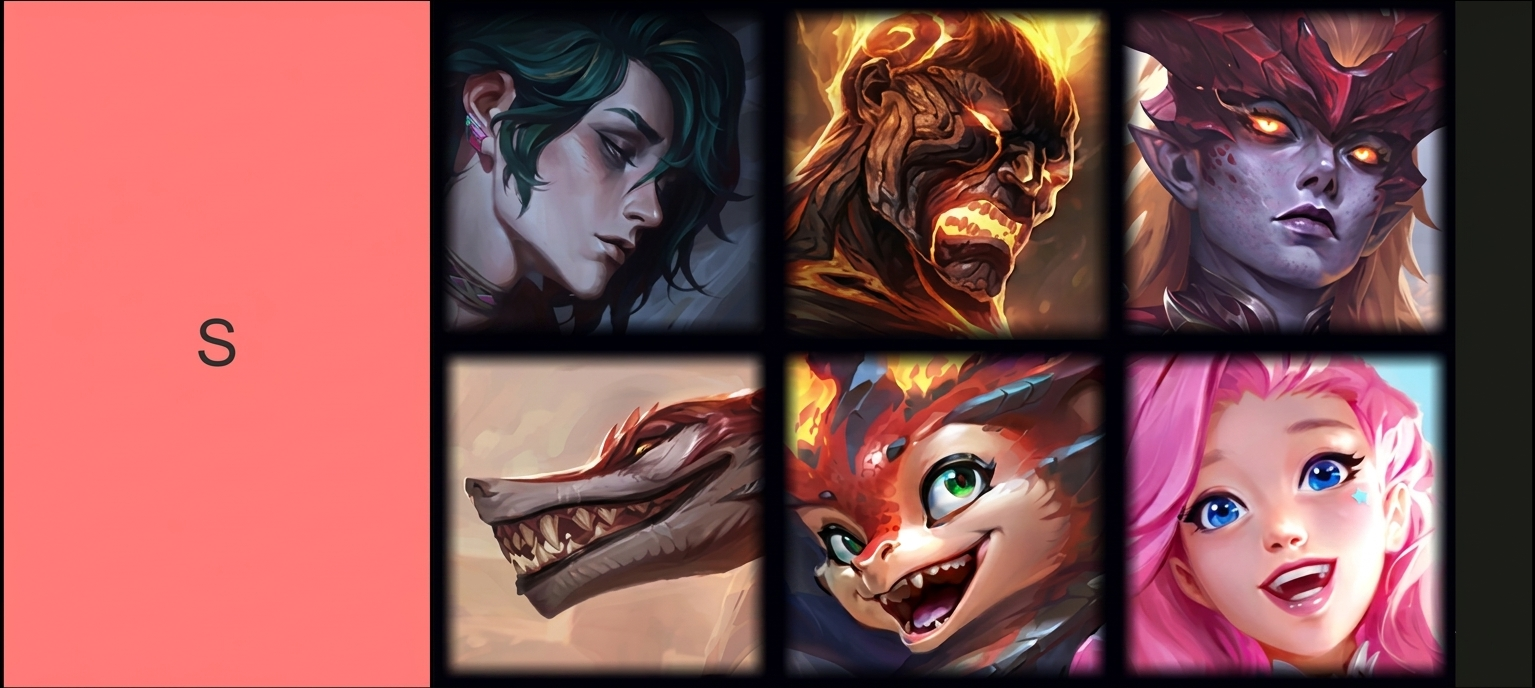
S-tier champions are the strongest default recommendations. They either have excellent current stats, high solo queue impact, or a role identity that works reliably across many drafts.
Hwei - Bot
- Role:Bot / APC.
- Stats:55.5% win rate, 0.3% pick rate, 1.6% ban rate.
- Best fit:Players who want a high-control mage bot with flexible spell options.
- Strengths:Huge spell variety, strong wave control, flexible teamfight tools.
- Weaknesses:Low pick rate, high execution demand, vulnerable when mispositioned.
- Play style:Scaling control mage bot that wins through spell layering and fight setup.
- Tips:Avoid wasting key cooldowns before objectives. Hwei is strongest when he controls space before enemies commit.
- Do not pick if:You need a simple marksman or you are uncomfortable managing many spell choices under pressure.
Brand - Bot
- Role:Bot / APC.
- Stats:55.5% win rate, 1.5% pick rate, 9.7% ban rate.
- Best fit:Players who want high damage in chaotic teamfights.
- Strengths:High area damage, strong lane poke, punishes grouped enemies.
- Weaknesses:Immobile, squishy, weak if caught before casting.
- Play style:Damage mage bot that burns teams down in clustered fights.
- Tips:Fight around choke points. Brand gets far more value when enemies group for objectives.
- Do not pick if:Your team already has enough magic damage and lacks consistent physical DPS.
Shyvana - Jungle
- Role:Jungle.
- Stats:54.5% win rate, 7.2% pick rate, 9.7% ban rate.
- Best fit:Junglers who like fast clearing, tempo, and objective-centered play.
- Strengths:Fast clear, strong farming tempo, powerful objective fights.
- Weaknesses:Limited early crowd control, punishable by coordinated invades.
- Play style:Farm-to-fight jungler that spikes around ultimate and objectives.
- Tips:Track Dragon-form timing before major fights. Do not start low-value skirmishes without your transformation.
- Do not pick if:Your lanes need early crowd control ganks before level six.
Naafiri - Mid
- Role:Mid.
- Stats:54.3% win rate, 4.0% pick rate, 22.6% ban rate.
- Best fit:Players who want direct assassin pressure and simple target access.
- Strengths:Strong all-in threat, easy target access, excellent carry pressure.
- Weaknesses:Predictable engage windows, weaker into peel and grouped teams.
- Play style:Assassin mid that punishes isolated targets and side-lane mistakes.
- Tips:Use fog of war before engaging. Naafiri is much scarier when enemies cannot track her approach.
- Do not pick if:The enemy draft has heavy peel, grouped front-to-back fighting, and few isolated targets.
Smolder - Bot
- Role:Bot / ADC.
- Stats:53.4% win rate, 10.9% pick rate, 5.7% ban rate.
- Best fit:Players who want a scaling carry with clear late-game payoff.
- Strengths:Excellent scaling, strong late-game cleanup, high-volume pick.
- Weaknesses:Needs time, can be punished in lane, positioning-dependent.
- Play style:Scaling marksman that farms safely and takes over longer games.
- Tips:Do not trade early health for low-value poke. Your goal is to reach reliable damage thresholds.
- Do not pick if:Your team needs immediate lane dominance and early objective fighting.
Seraphine - Support
- Role:Support.
- Stats:53.3% win rate, 10.9% pick rate, 3.7% ban rate.
- Best fit:Players who want teamfight control, shielding, poke, and crowd-control chains.
- Strengths:Teamfight control, shielding, poke, crowd control, strong scaling utility.
- Weaknesses:Squishy, vulnerable to hard engage, skillshot reliant.
- Play style:Enchanter-mage support that wins grouped fights through layered spells.
- Tips:Save key cooldowns before Dragon and Baron fights. Seraphine loses value when she wastes spells on harmless poke.
- Do not pick if:Your team badly needs a tanky primary engage champion.
Mobalytics’ Patch 26.9 all-role stats list Hwei, Brand, Shyvana, Naafiri, Smolder, and Seraphine among high-performing champions by win rate, pick rate, ban rate, and match count.
A-Tier Champions: Strong And Reliable Alternatives
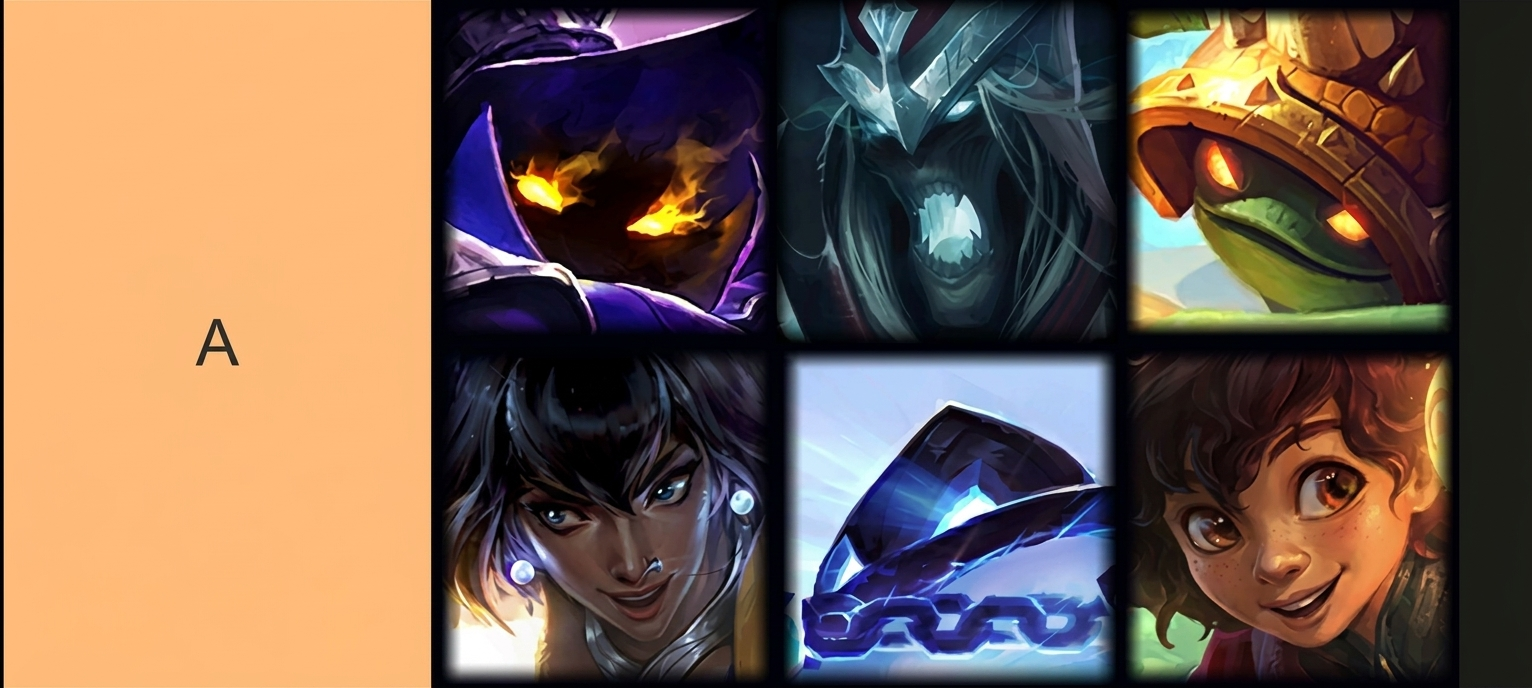
A-tier champions are strong picks, but they usually need slightly better matchup awareness, draft fit, or champion comfort than S-tier picks.
Veigar - Bot
- Role:Bot / APC.
- Stats:54.4% win rate, 0.9% pick rate, 4.0% ban rate.
- Best fit:Players who want scaling burst and zone control.
- Strengths:Scaling burst, cage control, strong late-game threat.
- Weaknesses:Low mobility, slow early tempo, vulnerable to dive.
- Play style:Scaling control mage that punishes enemies who walk into Event Horizon.
- Tips:Use cage to control space, not only to land stuns. Zoning can win fights before damage starts.
- Do not pick if:The enemy has multiple long-range threats and your team lacks peel.
Karthus - Bot
- Role:Bot / APC.
- Stats:54.3% win rate, 0.2% pick rate, 0.3% ban rate.
- Best fit:Players who can play for damage uptime and global pressure.
- Strengths:Global ultimate, high damage even after death, strong scaling.
- Weaknesses:Very low pick rate, vulnerable to early pressure, needs damage accuracy.
- Play style:Damage mage bot that wins through sustained DPS and global finishing power.
- Tips:Track enemy health after skirmishes. Karthus creates pressure even when he is not near the fight.
- Do not pick if:Your team needs lane priority from level one or consistent physical damage.
Rammus - Jungle
- Role:Jungle.
- Stats:53.8% win rate, 2.6% pick rate, 6.9% ban rate.
- Best fit:Countering heavy physical-damage and auto-attack teams.
- Strengths:Anti-AD durability, fast engage, strong ganks into auto attackers.
- Weaknesses:Weaker into magic damage, limited damage if behind.
- Play style:Counter-engage tank jungler that punishes physical-damage-heavy teams.
- Tips:Draft Rammus when the enemy has multiple auto attackers. Avoid forcing him into AP-heavy teams.
- Do not pick if:The enemy team has mostly magic damage and strong disengage.
Nilah - Bot
- Role:Bot / ADC.
- Stats:53.8% win rate, 1.2% pick rate, 2.2% ban rate.
- Best fit:Players who want a snowball melee carry with strong all-in lanes.
- Strengths:Snowball potential, strong all-ins, excellent melee skirmishing.
- Weaknesses:Short range, support-dependent, vulnerable to poke lanes.
- Play style:Aggressive melee carry that wants committed fights, not slow poke wars.
- Tips:Pair Nilah with engage or sustain. She needs help reaching fights safely.
- Do not pick if:Your support cannot help you survive poke or start favorable all-ins.
Xerath - Mid
- Role:Mid.
- Stats:53.4% win rate, 5.0% pick rate, 13.3% ban rate.
- Best fit:Players who want long-range poke and siege control.
- Strengths:Long-range poke, siege pressure, strong lane control.
- Weaknesses:Immobile, skillshot reliant, weak when flanked.
- Play style:Artillery mage that wins by controlling space before fights start.
- Tips:Ward side angles before sieging. Xerath is strongest when enemies must walk forward into poke.
- Do not pick if:The enemy has multiple flankers and your team cannot protect your backline.
Milio - Support
- Role:Support.
- Stats:53.1% win rate, 4.9% pick rate, 2.6% ban rate.
- Best fit:Players who want to protect and amplify a strong marksman.
- Strengths:Peel, cleanse value, marksman synergy, safe scaling utility.
- Weaknesses:Low damage, depends on allies, weaker without a strong carry.
- Play style:Protective enchanter that amplifies carries and denies enemy engage.
- Tips:Save defensive tools for the enemy’s real engage. Do not burn them on harmless poke.
- Do not pick if:Your team lacks damage and needs an engage support.
Mobalytics lists these A-tier-style alternatives among Patch 26.9’s high-performing champions, but their best use depends more on draft and player comfort than the S-tier defaults.
B-Tier Champions: Good But Situational
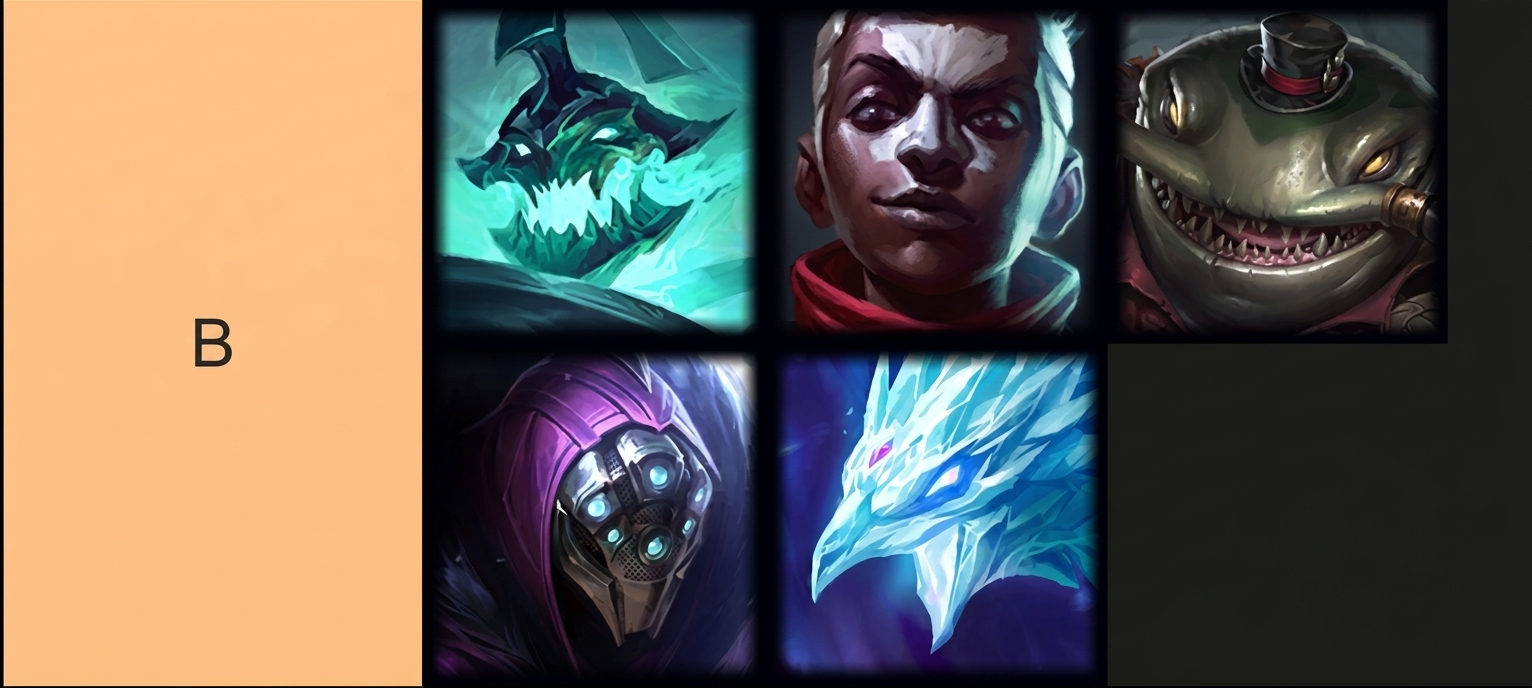
B-tier champions are playable and often strong in the right hands, but they are less universal. Pick them when the matchup, role, or team composition fits.
Hecarim - Jungle
- Role:Jungle
- Stats:48.56% win rate, 3.47% pick rate, 3.05% ban rate.
- METAsrc Tier:B Tier (Patch 26.9, 41,000+ games)
- Best fit:Players who understand tempo, flank angles, and jungle pathing.
- Strengths:Fast tempo, strong engage angles, powerful backline access.
- Weaknesses:Can fall behind early, needs good pathing, vulnerable to strong duelists.
- Play style:Tempo diver that turns speed into flank pressure.
- Tips:Do not only run straight at carries. Use side angles so your engage forces panic.
- Do not pick if:The enemy jungle can invade early and your lanes cannot move.
Ekko - Jungle
- Role:Jungle
- Stats:49.94% win rate, 2.76% pick rate, 2.01% ban rate.
- METAsrc Tier:B Tier (Patch 26.9, 35,000+ games)
- Best fit:Players who want AP burst, cleanup, and escape tools.
- Strengths:Burst, escape tools, strong cleanup, good scaling.
- Weaknesses:Needs setup, can struggle before items, punishable if ultimate is wasted.
- Play style:AP assassin jungler that looks for skirmishes and resets.
- Tips:Save Chronobreak for real danger. Ekko loses threat when enemies know he cannot reset.
- Do not pick if:Your team needs early crowd control or a tank front line.
Tahm Kench - Support
- Role:Support
- Stats:49.64% win rate, 2.83% pick rate, 2.57% ban rate.
- METAsrc Tier:B Tier (Patch 26.9, 46,000+ games)
- Best fit:Teams with a valuable carry who needs protection.
- Strengths:Peel, durability, anti-burst protection, strong into dive.
- Weaknesses:Short range, limited engage, weak into poke-heavy lanes.
- Play style:Defensive tank support that protects carries and punishes overcommitment.
- Tips:Pick Tahm Kench when the enemy wants to dive into you.
- Do not pick if:Your team needs primary engage or long-range lane pressure.
Jax - Jungle
- Role:Jungle
- Stats:53.33% win rate, 2.65% pick rate, 11.91% ban rate.
- METAsrc Tier:B Tier (Ranked for role reliability/score rather than win rate alone)
- Best fit:Players who want a dueling fighter that scales into skirmish pressure.
- Strengths:Strong dueling, scaling threat, good skirmish power.
- Weaknesses:Can be kited, needs farm and timing, weaker into disengage.
- Play style:Fighter jungler that scales into side-lane and skirmish pressure.
- Tips:Fight around Counter Strike value. Do not waste it before the enemy commits damage.
- Do not pick if:The enemy team has heavy disengage and you cannot stick to targets.
Anivia - Top
- Role: Top
- Stats:53.50% win rate, 1.39% pick rate, 5.29% ban rate.
- METAsrc Tier:B Tier (Patch 26.9, 13,000+ games)
- Best fit:Specialist players who understand mage spacing in top lane.
- Strengths:Wave control, zone denial, strong scaling, terrain disruption.
- Weaknesses:Low mobility, unusual top-lane profile, needs spacing discipline.
- Play style:Control mage top that denies movement and punishes short-range champions.
- Tips:Use wall to split fights, not just trap targets. Bad terrain can ruin enemy engages.
- Do not pick if:Your team needs a durable front line or you are blind-picking into unknown jungle pressure.
C-Tier Champions: Niche Or Counterpick-Dependent
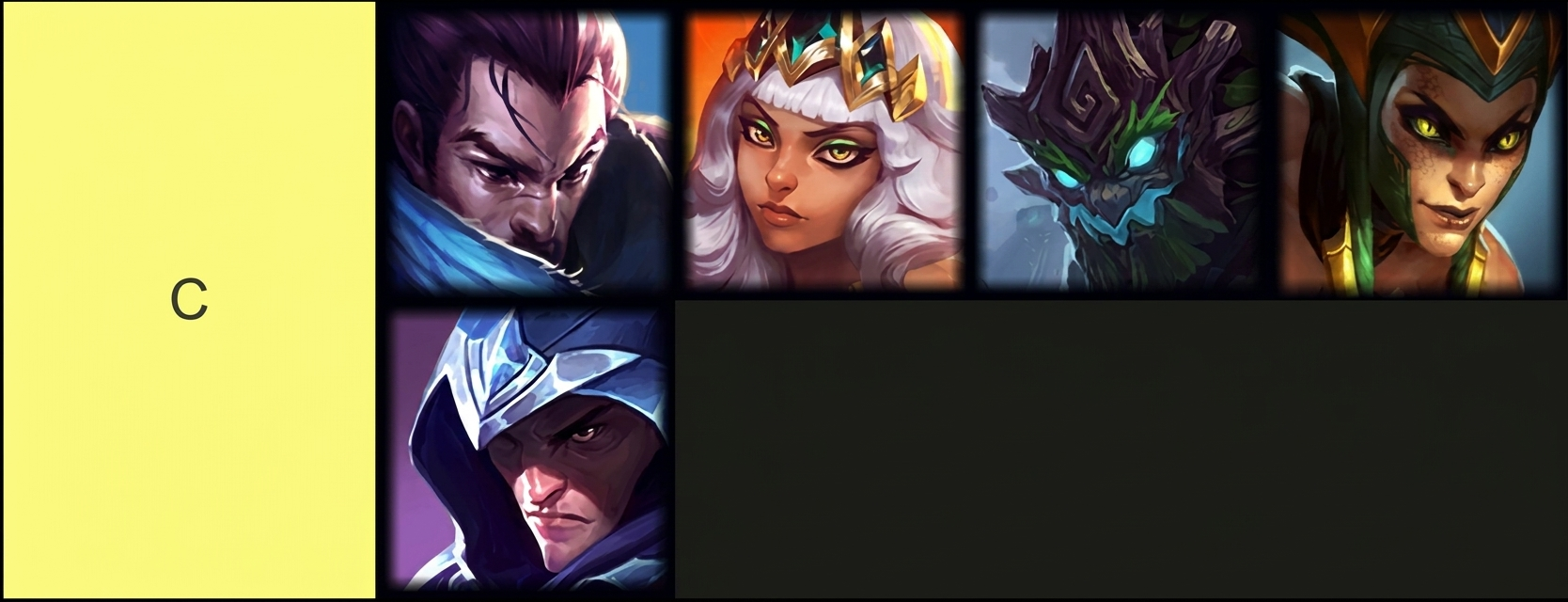
C-tier champions can work, but they are not ideal blind picks. They usually need a favorable matchup, specific team setup, or strong champion mastery.
Yasuo - ADC
- Role:Bot / ADC
- Stats:51.91% win rate, 1.31% pick rate, 17.53% ban rate.
- METAsrc Tier:C Tier (Patch 26.9, 17,000+ games)
- Best fit:Players with reliable knockup support and strong melee-carry mechanics.
- Strengths:Strong all-ins, Wind Wall utility, high snowball potential.
- Weaknesses:Short range, support-dependent, risky into poke and disengage.
- Play style:Melee carry bot that wants knockups, committed fights, and lane pressure.
- Tips:Draft Yasuo with reliable knockup support. Without setup, his lane becomes much harder.
- Do not pick if:Your support cannot enable all-ins or the enemy lane can poke safely.
Qiyana - Jungle
- Role:Jungle
- Stats:49.30% win rate, 1.29% pick rate, 2.97% ban rate.
- METAsrc Tier:C Tier (Patch 26.9)
- Best fit:Experienced assassin players who understand terrain-based fighting.
- Strengths:Burst, terrain-based playmaking, strong flank threat.
- Weaknesses:High execution demand, weak if behind, matchup-sensitive.
- Play style:Assassin jungler that needs creative angles and objective terrain.
- Tips:Fight near walls and river. Qiyana loses much of her threat in poor terrain.
- Do not pick if:Your lanes cannot create priority or your team needs reliable front-line engage.
Maokai - Jungle
- Role:Jungle
- Stats:50.70% win rate, 0.31% pick rate, 0.25% ban rate.
- METAsrc Tier:C Tier (Patch 26.9, <5,000 games)
- Best fit:Utility-focused junglers who want vision control and setup.
- Strengths:Crowd control, vision control, teamfight engage.
- Weaknesses:Very low pick rate, slower tempo, weaker carry threat.
- Play style:Utility tank jungler that sets up fights rather than carrying through damage.
- Tips:Use saplings for objective control before fights begin. Maokai wins by preparing terrain.
- Do not pick if:Your team needs jungle damage or early carry pressure.
Cassiopeia - ADC
- Role:Bot / APC
- Stats:52.46% win rate, 0.47% pick rate, 1.64% ban rate.
- METAsrc Tier:C Tier (Patch 26.9, <4,000 games)
- Best fit:Specialist mage players who can position like a carry.
- Strengths:Strong sustained damage, anti-dash control, scaling teamfight threat.
- Weaknesses:Very low pick rate, shorter range than many mages, high mechanics.
- Play style:Scaling DPS mage that wins extended fights through positioning.
- Tips:Treat Cassiopeia like a carry, not a poke mage. She needs space to keep casting.
- Do not pick if:The enemy has longer-range poke and your team cannot protect your spacing.
Talon - Mid
- Role:Mid
- Stats:48.11% win rate, 2.48% pick rate, 7.33% ban rate.
- METAsrc Tier:C Tier (Patch 26.9, 33,000+ games)
- Best fit:Players who understand wave timing and roam windows.
- Strengths:Roaming, burst, side-lane pick threat.
- Weaknesses:Low current win rate, weak if roams fail, struggles into durable teams.
- Play style:AD assassin that wins by leaving lane and attacking side lanes.
- Tips:Do not coin-flip every roam. Push first, then move when enemies must answer the wave.
- Do not pick if:Your team needs scaling magic damage or safe wave clear.
D-Tier Champions: Avoid Unless You Main Them
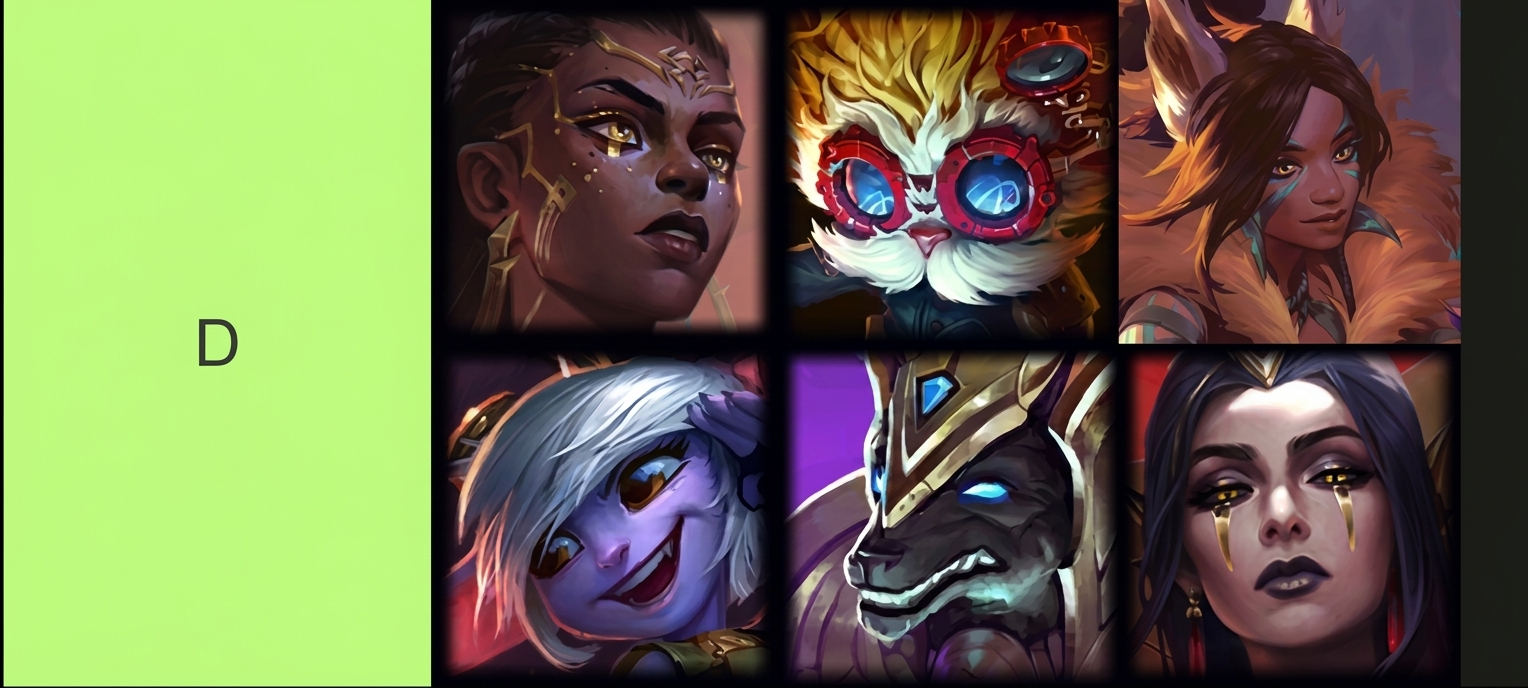
D-tier champions are not recommended as default picks for most players. They may still work for mains, but the average reader should treat them as risky, off-meta, or difficult to justify without a clear plan.
Mel - ADC
- Role:Bot / ADC
- Stats:47.90% win rate, 0.98% pick rate, 31.37% ban rate.
- METAsrc Tier:D Tier (Patch 26.9)
- Best fit:Specialist mage-bot players who understand her matchups.
- Strengths:Mage damage, strong spell pressure, high ban attention.
- Weaknesses:Low win rate, high ban rate, difficult bot-lane execution.
- Play style:Mage bot that needs controlled spacing and clean spell usage.
- Tips:Avoid blind-picking Mel ADC unless you know the matchup. Her ban rate suggests players respect her, but the win rate shows risk.
- Do not pick if:You need a stable, low-risk bot lane pick.
Heimerdinger - Top
- Role:Top
- Stats:54.58% win rate, 1.20% pick rate, 2.81% ban rate.
- METAsrc Tier:D Tier (Specialist champion with low pick rate)
- Best fit:Specialist players who understand turret setup, lane control, and jungle tracking.
- Strengths:Lane control, turret pressure, anti-melee zoning.
- Weaknesses:Very niche, vulnerable to coordinated ganks, awkward in standard team comps.
- Play style:Specialist lane-control mage that wins by forcing enemies into bad zones.
- Tips:Do not overpush without jungle tracking. Heimerdinger top collapses when enemies punish turret setups.
- Do not pick if:Your team needs a front line or you cannot track enemy jungle movement.
Nidalee - Support
- Role:Support
- Stats:Off-meta support pick with low reliability in standard solo queue. Exact stats vary by source and rank filter.
- METAsrc Tier:D-tier candidate / off-meta specialist.
- Best fit:Players using it as a poke-heavy off-meta pick, not as a standard support recommendation.
- Strengths:Long-range poke, trap vision, lane harassment.
- Weaknesses:Low peel, unreliable crowd control, weak engage, poor protection for many ADCs.
- Play style:Off-meta poke support that tries to win lane through pressure rather than utility.
- Tips:Only consider Nidalee support with a bot laner who can survive without strong peel.
- Do not pick if:Your team needs reliable engage, shielding, healing, or frontline utility.
Tristana - Mid
- Role:Mid
- Stats:50.57% win rate, 0.54% pick rate, 1.64% ban rate.
- METAsrc Tier:D Tier (Patch 26.9)
- Best fit:Players who can punish early windows without overcommitting.
- Strengths:Burst trades, tower pressure, reset potential.
- Weaknesses:Low pick rate, risky all-ins, vulnerable when Rocket Jump is mistimed.
- Play style:Marksman mid that wants early lane pressure and fast turret damage.
- Tips:Do not jump aggressively without knowing jungle position. One failed all-in can ruin the lane.
- Do not pick if:The enemy has reliable lockdown or your team needs magic damage.
Nasus - Mid
- Role:Mid
- Stats:50.81% win rate, 0.59% pick rate, 3.80% ban rate.
- METAsrc Tier:D Tier (Patch 26.9)
- Best fit:Specialist players who want scaling and understand early wave sacrifice.
- Strengths:Scaling, sustain, strong late-game dueling.
- Weaknesses:Weak early pressure, poor roam tempo, matchup-dependent.
- Play style:Scaling bruiser mid that sacrifices early map pressure for late-game power.
- Tips:Avoid Nasus mid if your team needs early skirmish strength. He can leave your jungler unsupported.
- Do not pick if:Your team needs mid priority or fast river movement.
LeBlanc - Support
- Role:Support
- Stats:48.93% win rate, 0.66% pick rate, 16.73% ban rate.
- METAsrc Tier:D Tier (Patch 26.9)
- Best fit:Off-meta specialists who want lane burst and harassment.
- Strengths:Burst threat, mobility, lane harassment.
- Weaknesses:Low utility, risky support economy, weak peel.
- Play style:Off-meta poke/burst support that tries to create pressure through damage.
- Tips:Do not pick LeBlanc support when your team needs peel, engage, or reliable crowd control.
- Do not pick if:Your ADC needs protection or your team lacks front line.
Top Lane Tier List
Top lane rewards matchup knowledge, patience, and side-lane discipline. The best top laner either survives bad lanes, wins side lanes hard, or gives the team reliable engage.
Best Top Lane Champions For Low ELO
Low-ELO top laners should favor champions with simple teamfight value or obvious scaling.
Good examples:
- Malphite:simple engage and strong anti-AD value.
- Shen:useful even when lane is quiet.
- Olaf:direct dueling and snowball pressure.
- Singed:disruptive style, but requires map awareness.
- Kayle:strong scaling if you can survive lane.
Best Top Lane Champions For Emerald+
Emerald+ top lane rewards champions that can punish matchup mistakes without becoming useless in teamfights.
| Champion | Why It Works |
| Kayle | Scaling threat that can take over if the early lane is controlled. |
| Malphite | Reliable engage and high ban pressure into physical damage teams. |
| Shen | Global impact that turns side-lane pressure into team advantages. |
| Olaf | Strong dueling and anti-control pressure. |
| Singed | Unusual play pattern that disrupts standard lane expectations. |
U.GG’s Patch 26.9 tier list uses Emerald+ Ranked Solo as one of its visible filters, so top-lane recommendations should always be checked with the correct role and rank settings before using exact stats.
Best Blind-Pick Top Laners
A blind-pick top laner should avoid catastrophic matchups and still provide value when behind.
Best blind-pick traits:
- Durable.
- Useful ultimate.
- Does not require lane dominance.
- Can farm safely.
- Gives the team engage or utility.
Malphite and Shen are easier blind-pick recommendations than fragile duelists because they still matter in teamfights.
Top Lane Champions To Avoid This Patch
Avoid top laners that require perfect lane snowballing unless you already main them. If a champion loses usefulness after one bad death, it is a risky recommendation for most solo queue players.
Jungle Tier List
Jungle is the role where tempo matters most. A strong jungler must clear well, influence lanes, and arrive at objectives with a plan.
Best Junglers For Climbing
The best climbing junglers are not always the flashiest. They are the champions that turn repeatable decisions into wins.
Strong current examples:
- Shyvana:efficient farming and objective timing.
- Nocturne:simple level-six pressure.
- Bel’Veth:strong carry threat.
- Rek’Sai:early pressure and map tempo.
- Briar:snowball fighting and chase power.
- Rammus:strong counterpick into physical damage teams.
Mobalytics’ Patch 26.9 low-ELO page names Nocturne as one of the best champions to climb with below low Diamond, while its stats table shows Shyvana and Briar among high-performing jungle options.
Best Low-ELO Junglers
Low-ELO jungle success usually comes from:
- Fast, repeatable clears.
- Simple gank angles.
- Strong dueling.
- Objective focus.
- Avoiding low-value fights.
Nocturne is a good low-ELO style pick because his level-six plan is obvious: farm efficiently, press ultimate when a lane overextends, and convert kills into objectives.
Best High-ELO Junglers
High-ELO jungle picks need to survive tracking, invades, and smarter lane movement.
Stronger high-ELO junglers usually offer:
- Flexible pathing.
- Early contest power.
- Objective control.
- Countergank threat.
- Clear identity in draft.
Bel’Veth and Rek’Sai fit this better than many beginner junglers because they can punish early mistakes and create pressure before the game becomes random.
Jungle Picks With Strong Objective Control
Objective control is not only about killing Dragon or Baron quickly. It is about arriving first, controlling vision, and forcing the enemy to walk into bad terrain.
Good objective junglers usually have:
- Fast clear.
- Good skirmishing.
- Reliable engage or chase.
- Strong health management.
- Threat around river fights.
Mid Lane Tier List
Mid lane controls the center of the map. Strong mid picks either create pressure, roam first, scale safely, or punish enemies from range.
Best Mid Laners For Solo Queue
Current strong mid choices include:
- Naafiri:all-in pressure and high ban rate.
- Xerath:poke and siege control.
- Ahri:safe playmaking.
- Zed:side-lane and kill threat.
- Vladimir:scaling and teamfight damage.
- Vex:anti-dash threat and reset pressure.
U.GG’s Patch 26.9all-role list shows Naafiri, Zed, Vladimir, Xerath, Anivia, and other mid picks among visible high-performing champions under its Ranked Solo filter.
Best Beginner-Friendly Mid Picks
Beginner-friendly mid laners should teach useful fundamentals without requiring perfect mechanics.
Look for:
- Safe wave clear.
- Simple trading patterns.
- Clear teamfight role.
- Reliable escape or crowd control.
Ahri is easier to recommend broadly than many assassins because she has mobility, pick tools, and safer lane patterns.
Best High-Skill Mid Picks
High-skill mid picks are powerful when the player understands wave timing, roam windows, and matchup limits.
Examples:
- Zed for kill pressure and side-lane threat.
- Xerath for precision poke and spacing.
- Naafiri for decisive all-ins.
- Vladimir for scaling and fight patience.
These champions can look weak when piloted poorly and oppressive when piloted well.
| Mid Style | Best Fit |
| Roaming / pick | Ahri, Naafiri, Zed. |
| Poke / siege | Xerath, Anivia. |
| Scaling / teamfight | Vladimir, Aurelion Sol. |
| Anti-engage | Vex, Lissandra. |
ADC / Bot Lane Tier List
Bot lane is no longer only traditional marksmen. Mages and scaling carries can both appear in bot tier lists, so the smart question is what your team needs from the lane.
Best ADCs For Ranked
Strong bot picks currently include:
- Smolder:scaling carry.
- Ashe:utility marksman.
- Nilah:snowball melee carry.
- Brand:mage damage and lane threat.
- Seraphine:utility mage bot or support-flex style.
- Karthus:high-damage mage bot.
U.GG’s Patch 26.9 all-role list shows several bot-lane mages and scaling carries near the top by win rate, while Mobalytics’ Patch 26.9 stats table also highlights Hwei, Brand, Veigar, Karthus, Nilah, Smolder, and Seraphine among high-performing picks.
Best Low-ELO ADCs
Low-ELO bot laners should avoid picks that require perfect spacing with no backup plan.
Prioritize:
- Range.
- Utility.
- Scaling.
- Simple teamfight output.
- A support pairing that makes lane playable.
Ashe is valuable because she contributes even when behind. Her slows, vision, and ultimate give teams ways to start fights.
Best Scaling Bot Laners
Scaling bot picks are best when you can farm safely and avoid doomed early fights.
Good scaling traits:
- Strong late-game damage.
- Safe farming tools.
- Useful teamfight range.
- Clear item spikes.
- Strong objective fighting.
Smolder fits this category because his value rises as the game extends.
Best Bot Lane Picks When You Lack Peel
When your team lacks peel, you need self-sufficient value.
Consider:
- Ashe for engage and slows.
- Seraphine for utility and teamfight control.
- Brand for high damage before dying.
- Smolder if you can position safely.
Support Tier List
Support decides how bot lane is played and how fights start. The best support is not always the strongest laner; it is the champion that gives your team the missing tool.
Best Engage Supports
Engage supports are best when your team needs someone to start fights.
Look for:
- Reliable crowd control.
- Good roaming.
- Tankiness.
- Flash engage threat.
- Strong synergy with aggressive carries.
If the enemy bot lane has no mobility, engage support value rises quickly.
Best Enchanter Supports
Enchanters are best when your team has carries worth protecting.
Strong enchanter-style choices include:
- Nami:lane sustain, trading, and carry setup.
- Milio:protection, cleanse value, and marksman amplification.
- Seraphine:teamfight control, shielding, and layered crowd control.
- Taric:anti-dive value and defensive teamfighting.
Seraphine appears as a strong Patch 26.9 support build on U.GG and as a high-performing champion in Mobalytics’ Patch 26.9 stats table.
Best Mage Supports
Mage supports are best when your team needs damage or lane pressure.
Good mage-support traits:
- Strong poke.
- Zone control.
- Objective pressure.
- Damage when underfed.
- Ability to punish short-range lanes.
Brand-style supports can carry low-ELO games because they punish grouped enemies and chaotic fights.
Best Supports For Low ELO
Low-ELO supports should choose champions with obvious value.
Good options:
- Nami for lane sustain and trading.
- Seraphine for teamfight utility.
- Leona or Nautilus-style champions for hard engage.
- Taric as a counter-engage pick.
- Mage supports when the team lacks damage.
Support picks should complete the team. Choose engage, peel, poke, or sustain based on what your draft lacks.
Support strength also depends on build choices, so pair these champion recommendations with a LoL support items tier listwhen deciding how to play the lane.
Best Champions To Climb By Rank
The same champion can be amazing in one bracket and frustrating in another. The lower your rank, the more you should value simplicity. The higher your rank, the more you should value matchup control and draft precision.
Best Champions For Iron And Bronze
Iron and Bronze players should choose champions that make the game simpler.
Prioritize:
- Obvious engage.
- Simple combos.
- Strong base durability.
- Clear damage windows.
- Useful ultimates.
Good examples:
- Malphite top.
- Nocturne jungle.
- Annie-style mid picks.
- Ashe bot.
- Nami support.
The goal is not to outplay every fight. The goal is to make fewer unforced mistakes.
Best Champions For Silver And Gold
Silver and Gold players can add more agency.
Good traits:
- Strong lane punishment.
- Easy objective setup.
- Useful roams.
- Reliable teamfight impact.
This is where champions like Ahri, Shyvana, Shen, and Smolder become stronger recommendations if the player understands their timing.
Best Champions For Platinum And Emerald
Platinum and Emerald players should start caring more about draft shape and matchup quality.
Prioritize:
- Flexibility.
- Counterpick value.
- Wave control.
- Mid-game objective strength.
- Consistent execution.
Champions like Xerath, Bel’Veth, Kayle, and Seraphine can gain value when players understand spacing and timing.
Best Champions For Diamond, Master, Grandmaster, And Challenger
High-ELO players are punished faster. Champion strength depends more on matchup, jungle tracking, lane priority, and draft value.
Riot explains that ranked play uses different queues and that higher tiers have special rules and restrictions, so rank-specific advice should not treat Bronze, Emerald, Master, and Challenger players as the same audience.
If you are below Gold, start with the champion that gives you the clearest plan in the first 10 minutes. If you are high ELO, start with the champion that gives your draft the strongest pressure point.
LoL Rank Tier List Vs Champion Tier List
Many searches mix up “LoL rank tier list” and “LoL champion tier list.” A rank tier list is about player progression. A champion tier list is about champion strength.
League Of Legends Ranks In Order
| Rank Concept | Explanation |
| Rank tiers | The ladder categories that group players by competitive level. |
| Divisions | Sub-levels within most ranks that show progress inside the tier. |
| Champion tiers | Ratings that rank champion strength in the current meta. |
| MMR | Matchmaking rating, which may differ from visible rank. |
League’s visible ranked ladder includes tiers from Iron through Challenger, and Riot’s ranked support materials explain that ranked queues have their own rules and restrictions.
Why Your Rank Changes Which Champions Are “Best”
Your rank changes what “best” means.
In low ELO, a champion that punishes obvious mistakes can be better than a champion that needs coordinated setups. In high ELO, the same simple pick may be easier to counter.
How MMR And Rank Affect Tier List Advice
If your MMR is higher than your visible rank, you may face stronger players than your badge suggests. That means your “best champion” might need to fit the lobby you are actually playing in, not the emblem on your profile.
Rank tiers measure players. Champion tiers measure picks. Good tier-list advice connects the two.
LoL Meta Tier List: What Makes A Champion Strong?
A champion becomes strong when the patch, role environment, item system, and player behavior all line up. That is why one champion can rise without receiving a direct buff.
Patch Buffs And Nerfs
Champion changes can directly raise or lower a pick. Damage buffs, cooldown reductions, durability changes, or ultimate adjustments can all shift a champion’s tier.
Patch notes should always be checked before making final claims because a small numerical change can matter when millions of players copy the same builds.
Item And Rune Changes
Items and runes can affect champions even when the champion is not directly changed.
A champion may rise because:
- Their core item is buffed.
- Their counter’s item is nerfed.
- A rune improves their trading pattern.
- A role system change improves their timing.
- Build diversity opens a new play style.
Patch 26.9 included item, rune, system, and role quest updates, so tier-list accuracy depends on more than champion-specific changes.
Skill Floor Vs Skill Ceiling
Skill floor is how hard a champion is to start using. Skill ceiling is how much mastery the champion rewards.
| Concept | Practical Meaning |
| Low skill floor | Easier to play at a basic level. |
| High skill floor | Harder to use without practice. |
| Low skill ceiling | Less room for advanced mastery. |
| High skill ceiling | Rewards mechanics, timing, and matchup knowledge. |
For climbing, a low skill floor is often more valuable than a high ceiling.
Solo Queue Reliability
A reliable solo queue champion can create value without perfect teammates.
Reliable champions usually have:
- Self-peel.
- Clear engage.
- Strong wave clear.
- Good objective presence.
- A useful role when behind.
Teamfight, Lane, Objective, And Split-Push Value
A champion’s tier depends on how they win.
Some champions win lane. Some win teamfights. Some win through side lanes. Some control objectives. A strong tier list should explain the path, because a player cannot use a champion well without knowing what kind of game that champion wants.
The meta is not one number. It is the interaction between patch changes, player behavior, and champion identity.
Why ARAM, Arena, And Brawl Need Separate Tier Lists
Summoner’s Rift rankings do not transfer cleanly to other modes. ARAM, Arena, and Brawl change champion value because they change the rules of the game.
Why ARAM Tier Lists Are Different
ARAM values teamfighting, poke, sustain, wave clear, and long-range engage more than lane matchups.
A champion that is mediocre in ranked can be excellent in ARAM because:
- There is constant grouping.
- Poke is easier to land.
- Sustain is more valuable.
- Side-lane weaknesses disappear.
- Objective control is less important.
Strong ARAM-style traits include long-range poke, area damage, sustain, engage, and wave control. Ranked Solo/Duo stats should not be used as ARAM rankings.
Why Arena Tier Lists Are Different
Arena rewards dueling, augments, short fights, and champion pair synergy. Riot’s Patch 26.9 notes describe Arena changes around build crafting, adaptation, experimentation, and tactical combat.
That means a ranked solo queue tier list should not be used as an Arena draft tool.
For mode-specific picks, use a dedicated League of Legends Arena tier listinstead of applying Ranked Solo/Duo rankings to Arena.
League Of Legends Brawl Tier List
Brawl has its own rules and therefore its own champion priorities.
Riot describes Brawl as a unique 5v5 mode on Bandlewood where each team starts with 250 shared Health and wins by reducing the enemy team’s shared Health to zero, not by destroying a Nexus.
Brawl tends to reward:
- Constant fighting.
- Area damage.
- Durable skirmishers.
- Fast resets.
- Champions that contribute without long setup time.
Starting Brawl-style picks usually come from champions that fight often, survive contact, or deal reliable area damage. Do not assume a slow-scaling Summoner’s Rift pick will keep the same value.
When Not To Use A Summoner’s Rift Tier List
Do not use a Summoner’s Rift tier list for:
- ARAM.
- Arena.
- Brawl.
- ARAM Mayhem.
- Wild Rift.
- Rotating modes with unique rules.
Wild Rift is Riot’s mobile-focused 5v5 MOBA experience with streamlined matches and mobile controls, so it should not be treated as the same balance environment as PC League of Legends.
Always match the tier list to the mode. The strongest ranked champion may be average in ARAM, Arena, or Brawl.
LoL Tier List Maker: How To Create Your Own Champion Ranking
A tier list maker is useful when you want to compare your own champion pool, create a community ranking, or organize picks by personal comfort. The key is separating personal preference from actual meta strength.
Best Use Cases For TierMaker
TierMaker is best for:
- Custom champion rankings.
- Community lists.
- Favorite champion lists.
- Role-specific personal pools.
- Content and social sharing.
TierMaker’s League of Legends category provides templates for creating and viewing community rankings, including role and champion tier-list formats.
How To Make A Useful LoL Tier List
A useful custom tier list should separate:
- Meta strength.
- Personal comfort.
- Role fit.
- Rank fit.
- Mode fit.
A good personal tier list might put your best comfort pick above a stronger meta champion you cannot execute.
Common Mistakes In Community Tier Lists
Avoid these mistakes:
- Ranking champions without specifying patch.
- Mixing ARAM, Arena, Brawl, and ranked data.
- Treating pro-play strength as solo queue strength.
- Ignoring rank bracket.
- Ranking every champion by personal frustration instead of performance.
A custom tier list is strongest when it explains the rules behind the ranking.
FAQs About League Of Legends Tier Lists
What Is A League Of Legends Tier List?
A League of Legends tier list ranks champions by current strength, usually using patch changes, role performance, win rate, pick rate, ban rate, and solo queue context.
What Is The Best League Of Legends Champion Right Now?
There is no single best champion for every player. The best pick depends on your role, rank, game mode, current patch, and champion comfort.
Which LoL Champions Are S Tier?
Strong S-tier-style examples include Hwei bot, Brand bot, Shyvana jungle, Naafiri mid, Smolder bot, and Seraphine support. Exact rankings can change by role, rank, region, and data source.
What Is The Best Champion For Low ELO?
The best low-ELO champion is usually simple, reliable, and useful when behind. Malphite, Nocturne, Ashe, and Nami-style picks fit that logic well.
Should I Pick The Highest Win-Rate Champion?
Not always. A high win rate can be misleading if the champion has a tiny pick rate, unusual matchup spread, or is played mostly by mains.
Why Do Different LoL Tier Lists Disagree?
Tier lists disagree because they use different ranks, regions, patches, sample sizes, update windows, scoring formulas, and definitions of “best.”
How Often Do LoL Tier Lists Change?
LoL tier lists can change every patch, especially when Riot updates champions, items, runes, roles, or game systems.
What Is The Difference Between LoL Rank Tiers And Champion Tiers?
Rank tiers measure player ladder position. Champion tiers rank how strong champions are in the current meta.
What Is The Best ADC Right Now?
Smolder and Ashe are strong bot-lane recommendations, while mage bot picks such as Brand, Hwei, Veigar, and Karthus can also perform well depending on draft and comfort.
What Is The Best Support Right Now?
Nami, Seraphine, Milio, and Taric are strong support-style recommendations because they offer lane value, protection, or teamfight utility.
Final Advice
A tier list is useful only if it helps you choose better champions. The smartest approach is to build a small pool: one main, one backup, and one ban for your role.
The best champion is the strongest pick you can play with confidence. If you cannot lane, farm, teamfight, or position correctly on an S-tier champion, it is not your best pick yet.
The better path is simple: pick a strong champion, understand why it is strong, learn its matchups, and keep your pool small enough to improve.
Jump to
League Of Legends Tier List: S To D Picks, Roles, And Tips
Quick Answer: Best LoL Champions To Pick Right Now
How To Use This League Of Legends Tier List
League Of Legends Tier List Methodology
LoL Champion Tier List: Key S, A, B, C, And D Picks
Top Lane Tier List
Jungle Tier List
Mid Lane Tier List
ADC / Bot Lane Tier List
Support Tier List
Best Champions To Climb By Rank
LoL Rank Tier List Vs Champion Tier List
LoL Meta Tier List: What Makes A Champion Strong?
Why ARAM, Arena, And Brawl Need Separate Tier Lists
LoL Tier List Maker: How To Create Your Own Champion Ranking
FAQs About League Of Legends Tier Lists
Final Advice
Latest Articles
Popular Articles