Valorant Map Tier List: Best Maps Ranked For 2026
Check the Valorant Map Tier List for 2026 to see which maps deserve practice, how side balance affects rankings, and why newer maps are harder to rate.
Sep 15, 202652K Shares743.9K Views

Every VALORANT Map Ranked: Current And Inactive Maps
For 2026, Haven and Split rank S tier, followed by Lotus and Ascent in A tier. Abyss and Sunset sit in B tier, while Summit is provisionally placed in C tier. The current Competitive pool contains seven maps: Haven, Ascent, Split, Sunset, Abyss, Lotus and Summit. Riot's latest rotation brought Abyss back and removed Breeze in Patch 13.04.
This Valorant Map Tier Listranks maps using more than win rate. Competitive relevance, map design, attack-defense balance, agent flexibility and practical ranked value all matter, while inactive maps are kept separate so you can see which layouts are actually worth prioritising in Competitive.
VALORANT Map Tier List - Quick Ranking
| Tier | Maps |
| S | Haven, Split |
| A | Lotus, Ascent |
| B | Abyss, Sunset |
| C / Provisional | Summit |
| Inactive in Competitive | Bind, Breeze, Corrode, Fracture, Icebox, Pearl |
This is not an official Riot classification. Current third-party competitive tracking shows Ascent, Lotus and Sunset leading active maps by play rate, while Abyss sits at the bottom of the tracked competitive pool.
Note: This tier list reflects the active Competitive map pool and agent statistics as of Patch 13.04 (V26 Act 5).
How VALORANT Maps Are Ranked
A useful tier list needs more than a win-rate column. The ranking below weighs statistics alongside what the map actually asks from a team.
Competitive Relevance
The first question is simple: is the map currently in Competitive?
Riot's V26 Act 5 rotation added Abyss and removed Breeze, leaving seven maps in the active pool: Abyss, Ascent, Haven, Lotus, Split, Summit and Sunset.
That matters because an inactive map can still be excellent, poor or strategically interesting, but it is not equally useful when deciding what to practise for ranked play.
Map Performance Data
Play rate and attack-versus-defense resultsprovide useful signals, but they are not a complete definition of map quality.
For example, current tracking shows Haven at a 14.2%play rate with a 50.0% attack win rate and 50.0% defense win rate, while Split has a 14.0% play rate with 48.5% attack and 51.5% defense.
Those figures help identify how frequently maps appear and whether one side has an advantage. They do not tell you whether a map is enjoyable, easy to coordinate or forgiving to solo players.
Map Design And Tactical Depth
Riot describes its mapsas purpose-built spaces for team strategies, with different layouts and mechanics creating different tactical problems.
The ranking therefore considers factors such as:
- How valuable mid control is.
- How many meaningful routes exist into each site.
- How quickly defenders can rotate.
- Whether teams can create multiple attacking looks.
- How much the map rewards information and utility discipline.
- Whether its unique mechanics add depth or mainly add complexity.
Agent Flexibility And Ranked Practicality
A map becomes easier to build around when several agent combinations can function well.
Current map-specific data illustrates that clearly: Killjoy leads the tracked agent results on Haven, Neon leads Split, Cypher leads Lotus and Clove leads Abyss.
The strongest maps are not simply those with the highest raw win rate; they are the maps that combine competitive relevance with strategic depth and workable team compositions.
S-Tier VALORANT Maps
These are the maps that currently offer the strongest combination of competitive importance, tactical quality and practical value.
Haven
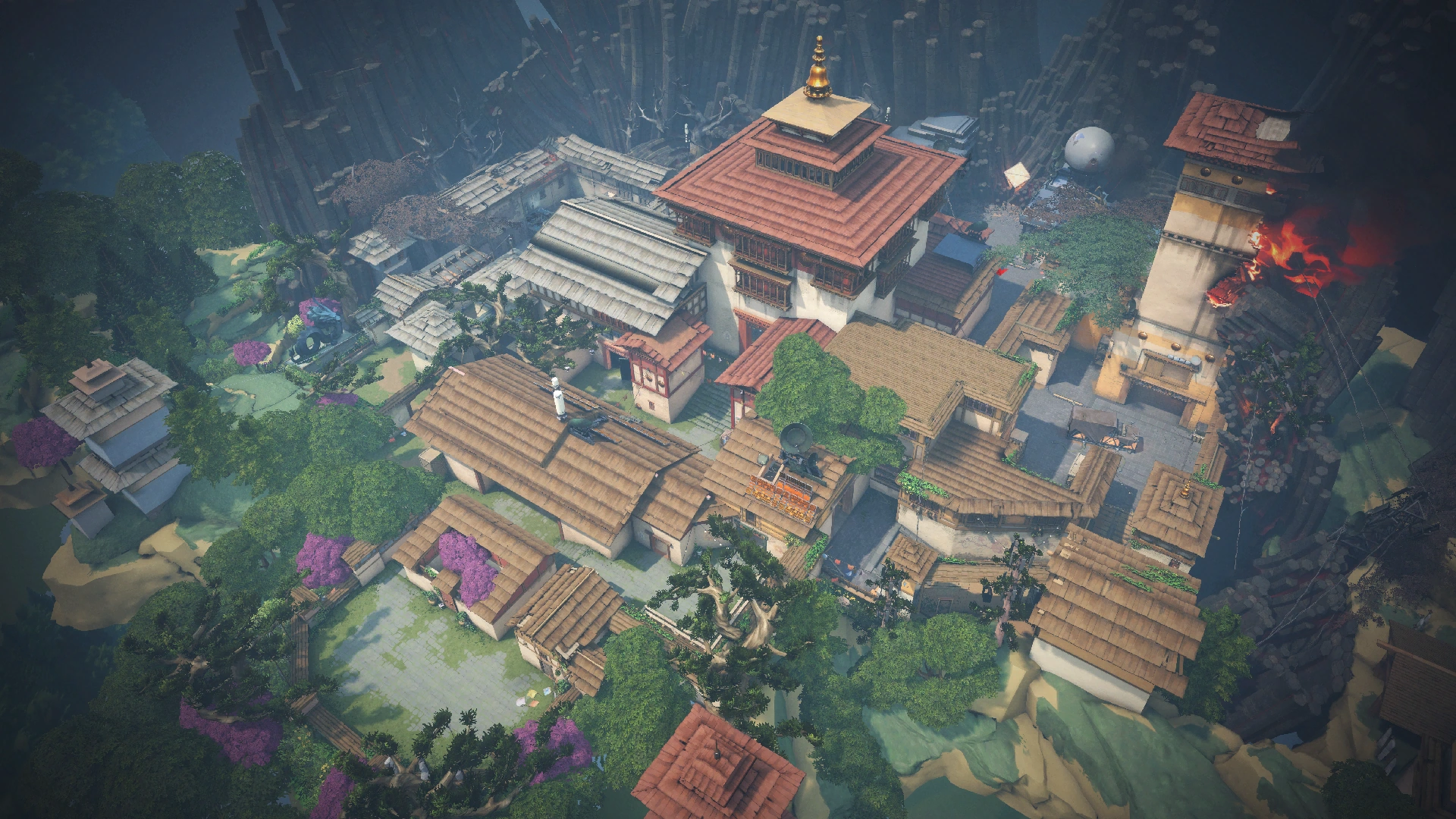
Haven is the clearest S-tier choice because it combines a three-site structurewith very high current usage and relatively modest side imbalance.
Riot's official description highlights the three-site layout, while current rankings show Haven maintaining roughly a 14.2% play rate.
The three-site design creates an unusual strategic trade-off. Defenders have more ground to cover, but that extra territory also gives them more opportunities to push and disrupt attackers before a full commitment.
For a ranked player, that makes Haven valuable for learning fundamentals that transfer elsewhere: information gathering, rotations, trading, site anchoring and deciding when notto over-rotate.
Current tracking shows Killjoy as the leading agent by win rate on Haven, though Neon remains a standout pick on the Valorant duelist tier list.
Why it is S-tier:high relevance, high usage, flexible strategy and a layout that consistently rewards good decisions.
Split

Split earns the other S-tier position because its layout has a strong strategic identity and remains one of the most frequently encountered maps.
Current tracking puts Split at a 14.0% play rate, with a 48.5% attack win rate against 51.5% on defense.
Its elevated center and tight vertical structure make map control especially important. An apparently small loss of territory can affect an entire attacking route, which makes timing and utility coordination more valuable than simply winning isolated duels.
Current tracking lists Neon as the leading agent by win rate on Split, followed by Clove and Fade.
Imagine a ranked team repeatedly forcing the same entrance without controlling the surrounding space. On Split, that approach can become predictable quickly. The map rewards teams that change the point of pressure instead of treating each site hit as a fixed routine.
Why it is S-tier:strong competitive relevance, clear tactical identity and substantial value for players who learn space control.
A-Tier VALORANT Maps
These maps are strong and highly playable, but they have clearer trade-offs than the S-tier choices.
Lotus
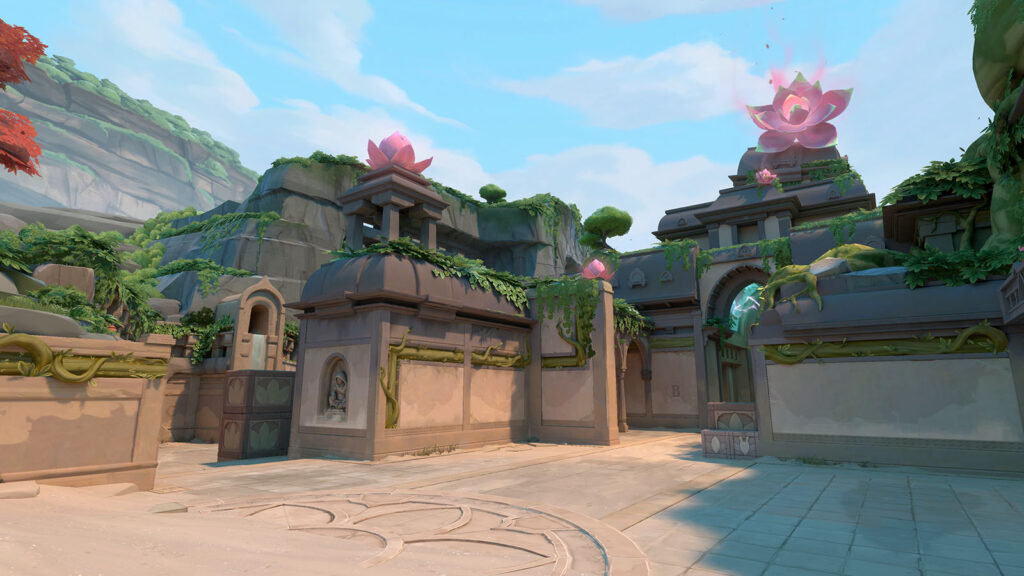
Offering excellent strategic variety, Lotus sets itself apart by combining a three-site layout with unique movement mechanics.
Riot specifically highlights its large stone doors and the three-site layout, giving teams more ways to manipulate movement and rotations than on a conventional two-site map.
Current tracking records a 14.4% competitive play rate, with a 51.6% attack win rate against 48.4% on defense.
That near-even side balance is useful, but Lotus demands awareness. A team can create pressure on one site while threatening a late rotation elsewhere, so information can become more valuable than an early duel.
Cypher currently leads the map's agent win-rate results, with Sage and Killjoy also among the leading performers.
Why it is A-tier:excellent strategic variety, strong side balance and good agent interaction, but more demanding than the most straightforward maps.
Ascent

A classic tactical battleground, Ascent forces a constant tug-of-war over central control due to its wide-open Mid.
Riot describes Ascent as an open playground built around positional attrition, with mechanical doors that can lock areas of each site.
The trade-off is that the current statistical profile is noticeably defense-sided. Current tracking shows a 14.5% play rate with a 46.6% attack win rate and 53.4% defense win rate.
That does not make Ascent a bad map. It means attackers have a clearer strategic problem to solve: Mid control, utility timing and coordinated site access become especially important.
Current agent data puts Clove first by win rate, with Sage and Killjoy also near the top.
Why it is A-tier:an excellent map for learning fundamental VALORANT concepts, though its strong defensive profile prevents it from taking the top spot here.
B-Tier VALORANT Maps
B-tier does not mean “bad.” These maps have worthwhile qualities but carry more situational drawbacks.
Abyss
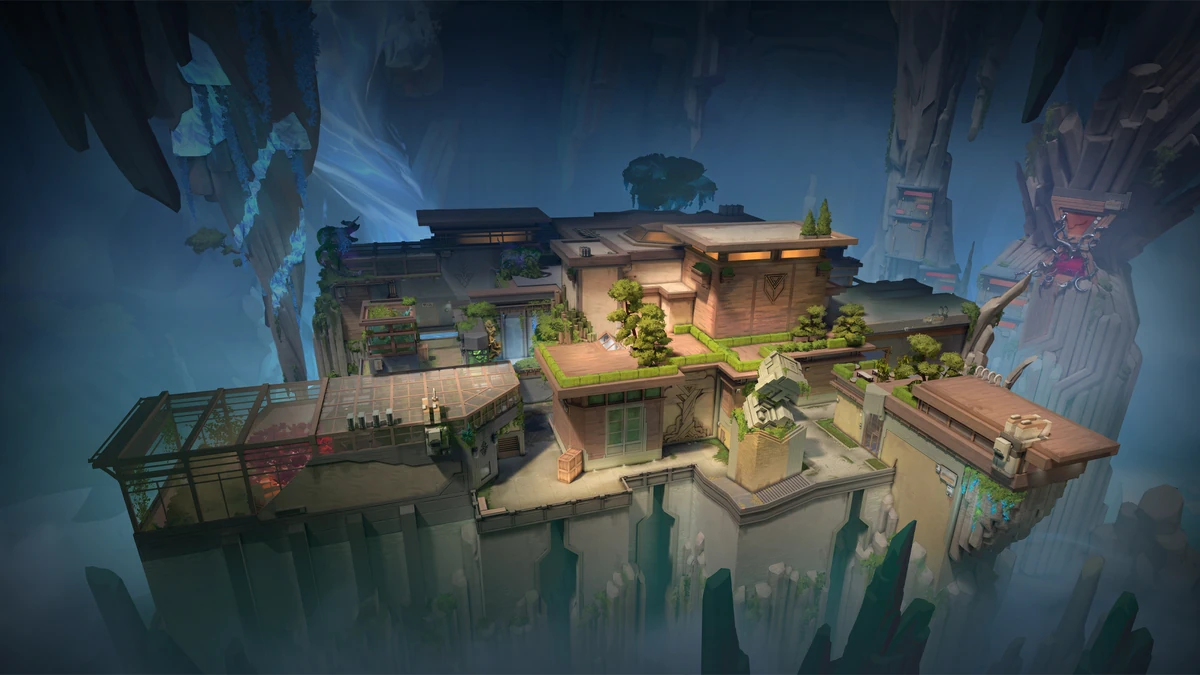
Standing out in the active pool, Abyss introduces high-risk positioning by challenging players to navigate around treacherous death drops.
Riot describes the map as a clandestine base within an endless chasm, where death drops can create both utility opportunities and dangerous mistakes.
Current tracking shows Abyss at a 10.1% play rate with attack winning 51.4% of rounds against 48.6% on defense.
That attack-side tilt gives the map a different rhythm from Ascent or Split. Teams can be more proactive when taking space, but the unusual geometry also increases the punishment for poor movement and positioning.
Clove currently leads Abyss's listed agent results.
Why it is B-tier:distinctive and strategically interesting, but its unusual geometry creates a higher execution burden.
Sunset
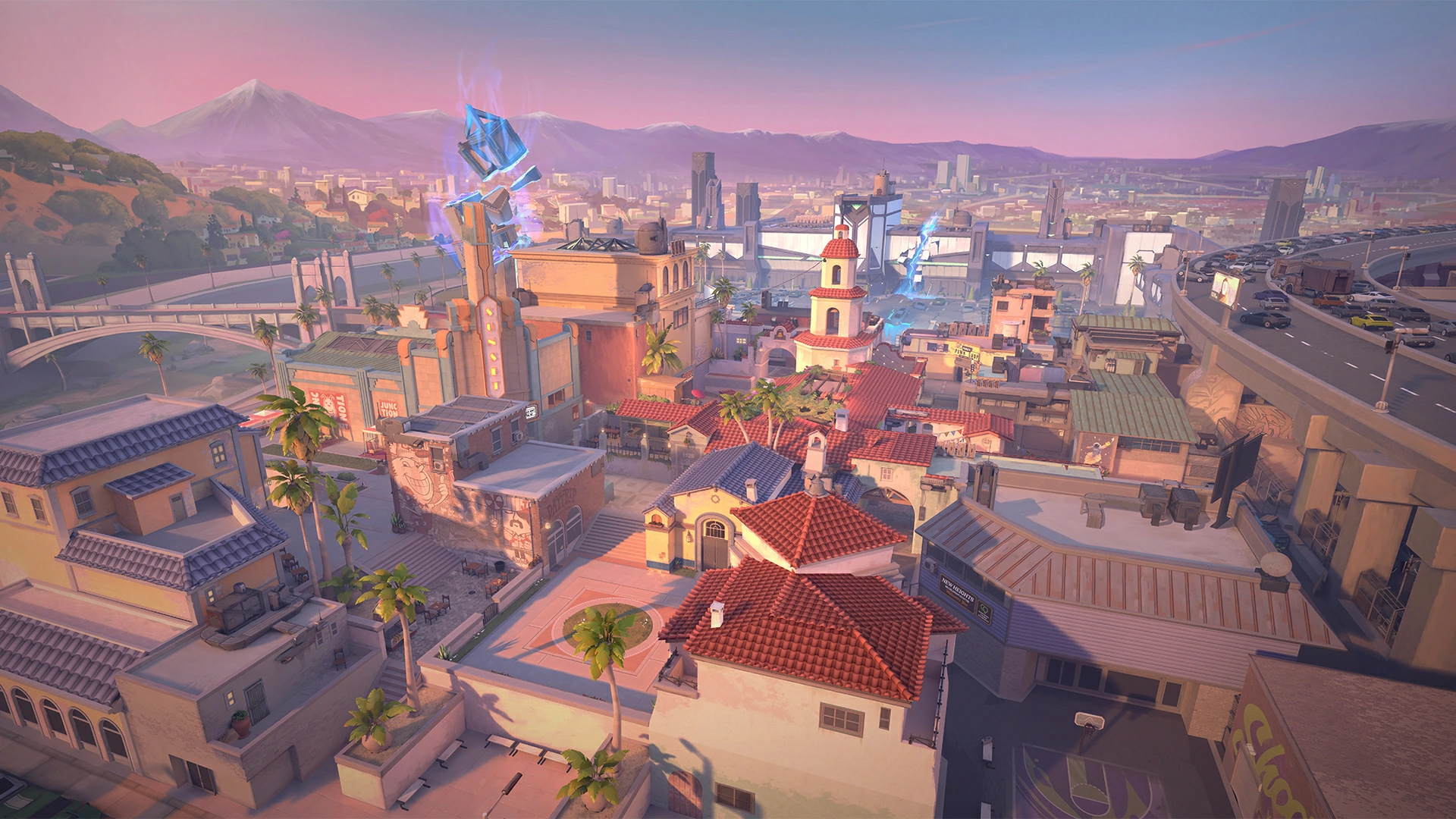
Sunset is a conventional three-lane map, which makes it easier to understand conceptually than Abyss.
Riot describes Sunset as a traditional three-lane map, while current tracking records a 14.3% play rate, with a fairly balanced 49.1% attack win rate versus 50.9% on defense.
Its conventional layout makes it relatively easy to understand conceptually, though it requires disciplined mid control to avoid becoming predictable on attack.
Fade currently leads Sunset's tracked agent results, followed by Cypher and Clove.
Why it is B-tier:familiar structure and usable agent options, but lower current relevance makes it harder to justify as a top practice priority.
C-Tier / Provisional - Summit
Summit is the most difficult map to rank confidently because it is still new relative to the established maps.
Why Summit Is Difficult To Rank
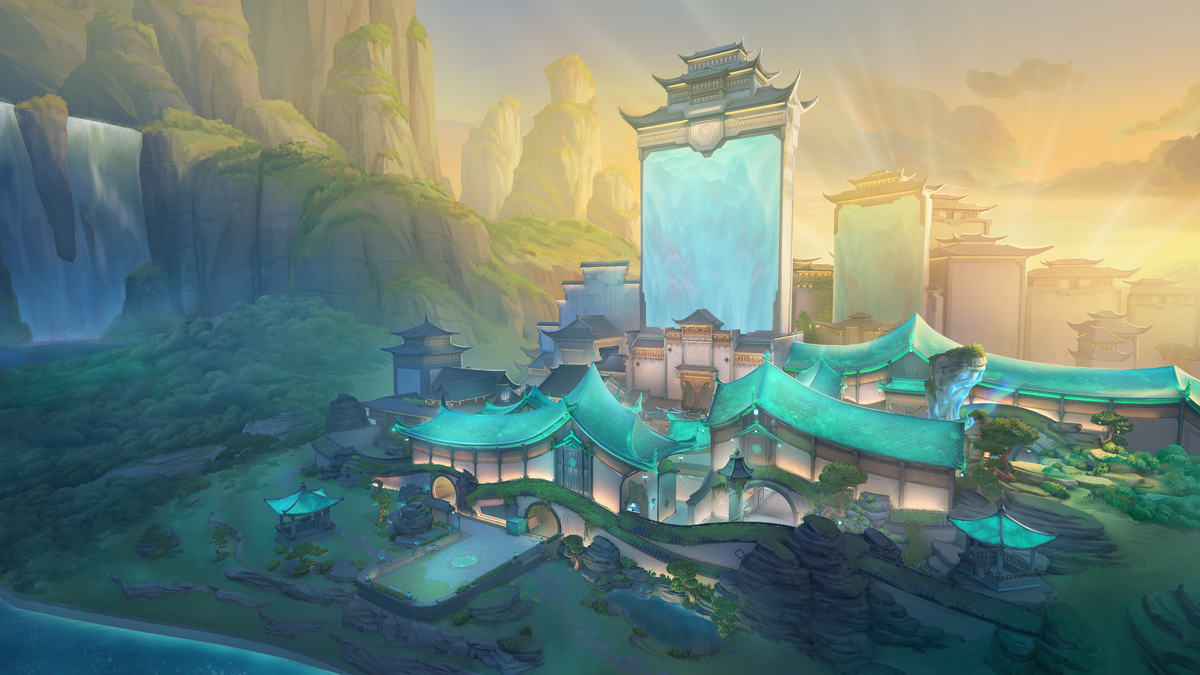
Riot introduced Summit in Patch 13.00 and placed it directly into Competitive. The map has three lanes, two sites and large droppable walls that reshape the battlefield for the rest of the round.
Current tracking records Summit with a 14.1% competitive play rate, featuring a 48.6% attack win rate and 51.4% defense win rate.
While this provides enough evidence to identify early tendencies, the map's recent introduction means its long-term competitive identity is not yet fully settled.
The map's core mechanic is also unusually consequential. A player does not simply use a piece of utility and see it disappear; dropping one of Summit's walls can permanently alter the route structure for that round.
Current agent data puts Vyse, Sage and Yoru among Summit's leading performers, but the sample is much smaller than the data available for Haven or Split.
Why it is C-tier provisionally:low current usage, meaningful defensive bias and a newer strategic environment make Summit harder to recommend as a top-priority practice map right now.
A ranked player encountering Summit should not interpret that placement as “ignore this map.” The better lesson is to learn its unique wall mechanic and basic routes before trying to master advanced setups.
Which Valorant Maps Are Currently Out Of Competitive?
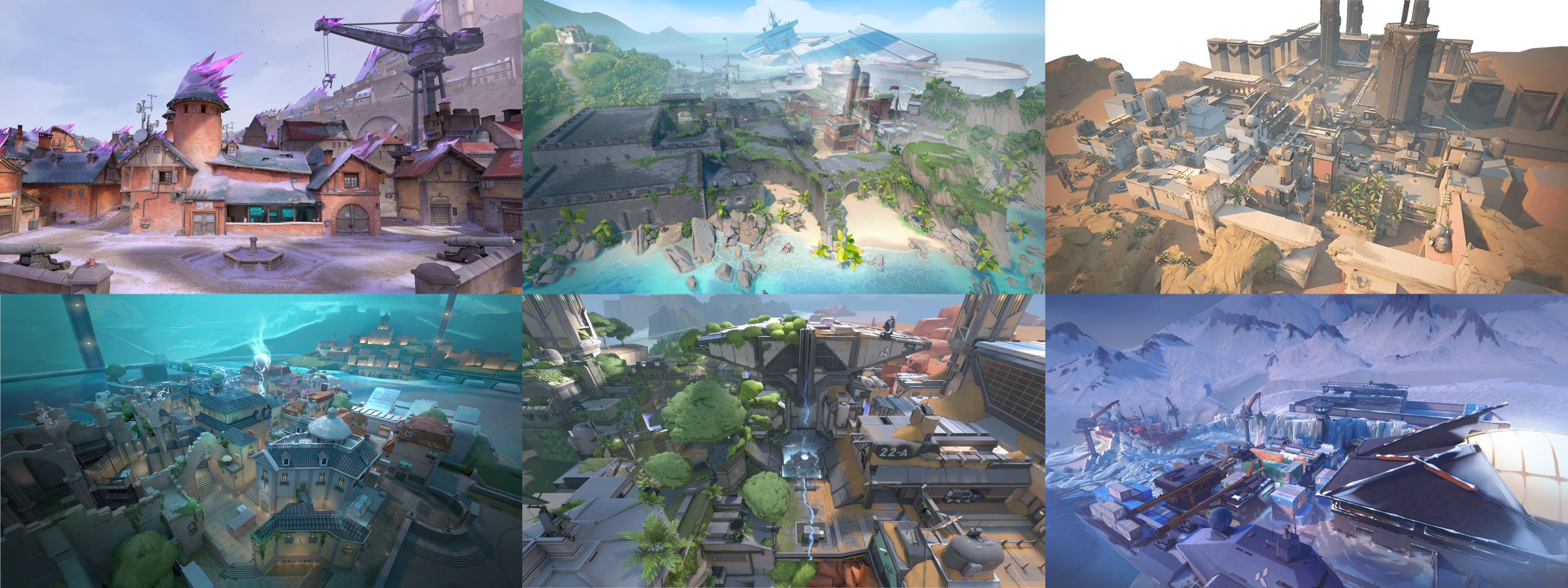
It is important to separate inactive maps from the active pool so you do not waste time practising layouts you will not actually encounter in your matches.
Riot's official map directory currently lists 13 standard maps. Under the current V26 Act 5 rotation, six of those are outside Competitive:
- Corrode:Introduced in 2025, this three-lane, two-site map is built around layered defensive positions and flooded walkways.
- Breeze:Heavily reworked in Patch 12.00 to reduce angle complexity and improve rotation times, but subsequently removed in Patch 13.04.
- Bind:Trades a traditional Mid for a unique teleporter system that completely alters how teams execute site rotations.
- Pearl:A two-site map with no special map mechanic, placing greater emphasis on geometry and conventional positional play.
- Fracture:Defined by its split layout and unusual defender-side structure that divides attacking options across the map.
- Icebox:Characterised by its extreme verticality, ziplines and arctic aesthetic.
What Makes A VALORANT Map Good Or Bad?
A strong map usually gives players meaningful choices without making every round depend on the same narrow sequence.
Side Balance
A map with a pronounced attack or defense advantage can still be good, but that imbalance changes how much work each side must do.
Ascent, for example, currently shows a much stronger defensive edge than Lotus.
Site Accessibility
Good maps generally give attackers credible ways to pressure sites rather than funneling every round through one predictable entrance.
The best layouts create decisions: split pressure, fake pressure, late rotations or early control of important territory.
Mid Control
Mid becomes especially valuable when controlling it changes how many areas of the map a team can threaten.
Ascent is the obvious example because its large central space connects so many strategic decisions.
Rotation Pressure
A site becomes strategically richer when defenders must decide whento rotate rather than simply where to stand.
Haven benefits from this particularly well because three sites stretch defensive resources while also creating opportunities for aggressive repositioning. Riot explicitly notes that defenders can use the extra territory for aggressive pushes.
Agent Flexibility
Agent interaction should add options rather than force every team into exactly one composition.
Current map-specific statistics show different leading agents across Haven, Split, Lotus, Abyss, Sunset and Summit, which supports the broader point that map and agent strength are closely connected.
Solo-queue Practicality
This is where a purely statistical tier list can become misleading.
Consider two teams entering the same map. The organised five-stack can call layered utility, trade carefully and manipulate rotations. The solo-queue team may not communicate at all.
A map that heavily rewards coordination can therefore feel substantially worse in ranked than its professional or aggregate statistics suggest.
The practical rule:map quality is a combination of measurable performance and how well the map's demands fit the environment in which you play.
Best VALORANT Maps For Different Players
The best map to practise depends partly on what you are trying to improve.
Best Maps For Beginners
Ascent and Havenare strong learning choices because their layouts make core concepts easy to observe: Mid control, site entrances, rotations, utility timing and defensive anchoring.
That does not mean beginners will automatically perform better on them. It means the maps provide clear opportunities to learn fundamentals rather than relying mainly on unusual mechanics.
Best Maps For Solo Queue
Haven and Splitare particularly attractive practice targets because they offer strong route identities and remain among the most frequently encountered maps in current tracking.
The bigger lesson is to choose maps where you can make useful decisions independently even when teammates provide limited coordination.
Best Maps For Tactical Teams
Lotus and Havenstand out for teams that enjoy manipulating rotations and attacking from multiple directions.
Lotus's three-site design creates several possible defensive rotations, while Haven's additional site changes the trade-offs involved in committing resources.
Best Maps For Learning Core VALORANT Fundamentals
Ascentis arguably the clearest classroom because Mid control, site doors, long sightlines and standard execute concepts are all highly visible.
A player who learns why space is valuable on Ascent can carry that thinking into maps with very different layouts.
Do Map-Specific Agents Change The Ranking?
They can change how a map feels, but they should not automatically change the entire map tier.
Current data illustrates why. Killjoy leads Haven's tracked agent rankings, Neon leads Split, Cypher leads Lotus and Clove leads Abyss, while Summit currently has Vyse at the top.
That variation suggests an important distinction:
Map strength asks how well the battlefield works; agent strength asks how effectively a specific kit exploits it.
An agent can perform exceptionally on one map without proving that the entire map is superior. While consulting the Valorant agent tier listhelps track overall character strength, the better approach for ranked play is to learn a preferred agent's strongest maps rather than blindly changing agents every time a tier list moves.
Current VALORANT Map Pool At A Glance
This is the quickest way to separate the maps you can encounter in Competitive from those currently outside the rotation.
| Status | Maps |
| Competitive | Haven, Ascent, Split, Sunset, Abyss, Lotus, Summit |
| Outside Competitive | Bind, Breeze, Corrode, Fracture, Icebox, Pearl |
Riot's Patch 13.04 confirms the latest change: Abyss entered Competitive and Breeze left.
How To Make Your Own VALORANT Map Tier List
A personal ranking becomes more useful when it separates preference from competitive strength.
Pick Your Criteria
Choose three or four criteria before ranking anything:
- Competitive value- How relevant is the map right now?
- Strategic depth- How many meaningful approaches does it offer?
- Ranked practicality- How manageable is it without perfect coordination?
- Personal strength- How well does it suit your agents and playstyle?
Separate Preference From Competitive Strength
It is completely reasonable to hate a map you consider strategically excellent.
A player might rank Split in S tier for competitive value but personally put it in B tier because they dislike its vertical structure. Those are different judgements, and mixing them creates confused tier lists.
Recheck The List After Map-pool Changes
This matters more than most players expect.
The 2026 rotation has already changed multiple times, and Riot's V26 Act 5 update removed Breeze and brought Abyss back.
Expert tip:when the pool changes, update the ranking first, then reconsider which maps deserve practice time. Do not assume an old tier list still reflects the live game.
Frequently Asked Questions
What Is The Best Map In VALORANT?
Haven is the strongest overall pick in this ranking, with Split close behind.Haven maintains a consistently high tracked play rate and combines a three-site layout with relatively balanced side statistics.
What Is The Worst VALORANT Map?
There is no universal worst map. In this ranking, Summit is placed lowest among the active maps, mainly because it is newer and currently shows a meaningful defensive bias, requiring more time for its competitive meta to settle.
What Maps Are In Competitive Right Now?
The current Competitive pool contains Haven, Ascent, Split, Sunset, Abyss, Lotus and Summit. Riot's latest rotation added Abyss and removed Breeze.
How Many VALORANT Maps Are There?
Riot's current standard map catalogue contains 13 maps, including Summit, Corrode, Abyss, Sunset, Lotus, Pearl, Fracture, Breeze, Icebox, Ascent, Split, Haven and Bind.
What Is The Newest VALORANT Map?
Summit is the newest standard VALORANT map.Riot introduced it in Patch 13.00 and placed it directly into the Competitive rotation.
Which VALORANT Map Is Easiest To Learn?
Ascent is one of the clearest learning mapsbecause its central Mid area, site entrances and mechanical doors make core tactical concepts easy to study.
Which VALORANT Maps Are Best For Solo Queue?
Haven and Split are strong practice prioritiesbecause they are among the most frequently encountered maps in current competitive tracking.
Which Agents Are Best On Each Map?
Agent performance varies by map. Current tracking has Killjoy leading Haven, Neon leading Split, Cypher leading Lotus and Clove leading Abyss.
How Often Does The VALORANT Map Pool Change?
Riot rotates maps periodically, including at Act changes. The exact timing is not permanently fixed, so the latest official patch notes are the safest source for the live pool.
Conclusion
The most useful way to read any VALORANT map tier list is to treat it as a decision tool rather than a permanent verdict. For current ranked play, Haven and Split are the strongest priorities, Lotus and Ascent remain reliable high-value maps, Abyss and Sunset are more situational, and Summit deserves a provisional ranking until its competitive identity becomes clearer. The pool itself can change again, so the smartest habit is to check Riot's latest update before rebuilding practice priorities, or browse other gaming tier listsfor more competitive rankings.
Jump to
Every VALORANT Map Ranked: Current And Inactive Maps
How VALORANT Maps Are Ranked
S-Tier VALORANT Maps
A-Tier VALORANT Maps
B-Tier VALORANT Maps
C-Tier / Provisional - Summit
Which Valorant Maps Are Currently Out Of Competitive?
What Makes A VALORANT Map Good Or Bad?
Best VALORANT Maps For Different Players
Do Map-Specific Agents Change The Ranking?
Current VALORANT Map Pool At A Glance
How To Make Your Own VALORANT Map Tier List
Frequently Asked Questions
Conclusion
Latest Articles
Popular Articles