Wooden Mechanical Puzzles Difficulty Levels: A Complete Guide
Explore how wooden mechanical puzzles vary in difficulty, from beginner to expert. Learn factors like design complexity, history, and tips to choose the right challenge.
Mar 25, 20254K Shares238.5K Views
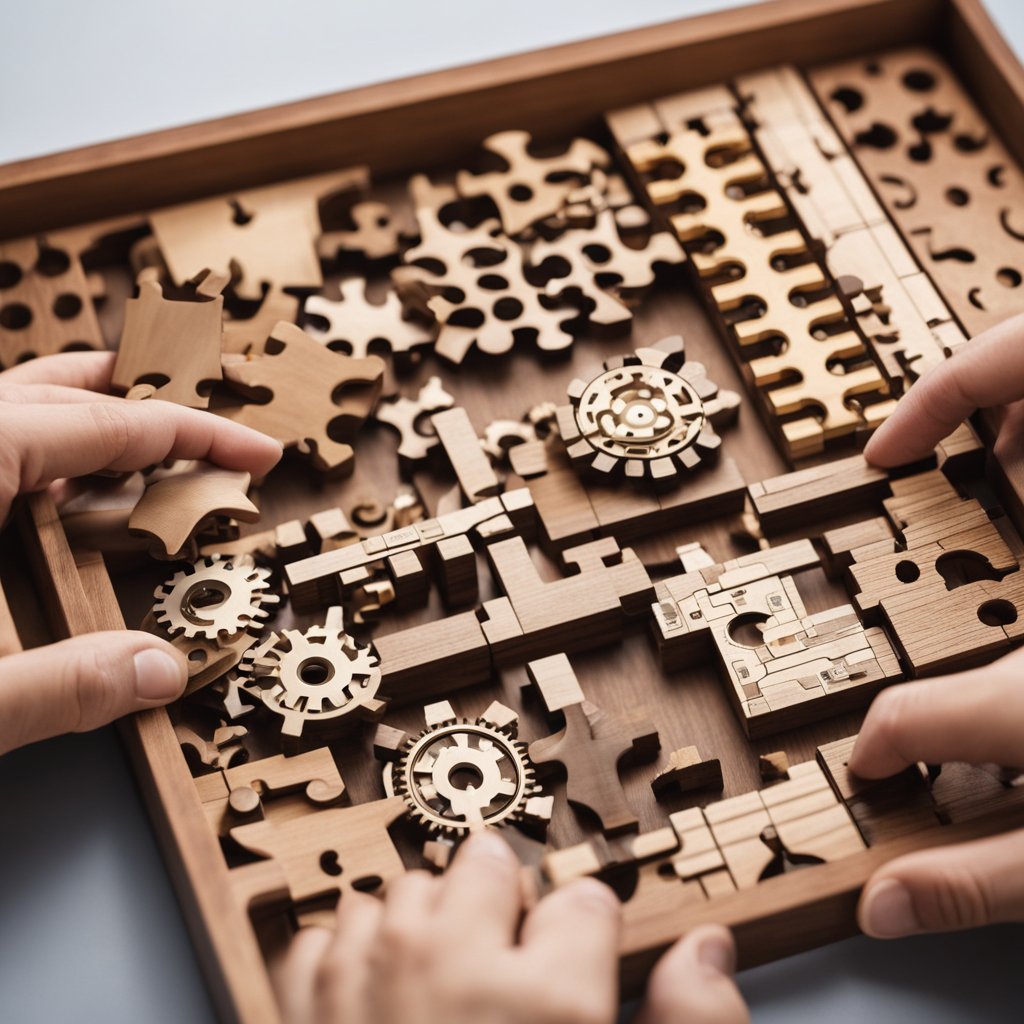
Wooden mechanical puzzles are hands-on challenges made from wood, where you manipulate pieces to solve a task—like unlocking a box or fitting parts together. Their appeal comes from blending creativity with logic, offering a satisfying "aha!" moment when solved.
Difficulty levels matter because they match the puzzle to the solver’s skill: simpler ones teach basics, while complex designs test even seasoned problem-solvers. These puzzles have deep roots in history. For example, Japan’s 19th-century "Himitsu-Bako" (secret boxes) protected valuables and required precise steps to open, while China’s ancient "Luban locks" were used to teach geometry and patience through intricate wooden shapes. When comparing metal and wooden puzzles, the tactile experience and historical significance of wooden puzzles are key factors that make them so appealing.
What makes these puzzles timeless is how they sharpen the mind. Solving them involves trial and error, spotting patterns, and planning moves ahead—skills that boost focus, spatial awareness, and persistence.
Unlike digital games, wooden puzzles offer a physical reward: the feel of sliding a piece into place or hearing a lock click open, making the victory tangible and deeply satisfying. In contrast, comparing metal and wooden puzzles reveals how metal puzzles often offer a different kind of challenge, often requiring more precision and a different type of mental engagement, yet both types provide valuable cognitive benefits.
Factors That Determine Puzzle Difficulty
The difficulty of a wooden mechanical puzzle depends on four main factors. First, design complexity: puzzles with hidden mechanisms, layered steps, or tricks (like false moves) are harder to solve. For example, a puzzle requiring you to twist three parts at once is tougher than one with a single sliding piece. Second, number of pieces: puzzles with more parts often demand more trial and error, but even a few pieces can be tricky if they fit in non-obvious ways.
Third, movement restrictions: some puzzles limit how pieces can shift. A cube puzzle that only lets you slide pieces sideways adds challenge compared to one with free movement. Lastly, solving time: puzzles meant to take hours (like multi-stage lock boxes) are ranked as harder than those solved in minutes. However, time alone doesn’t define difficulty—some quick puzzles are mentally demanding due to their clever design.
Beginner-Level Wooden Mechanical Puzzles
Wooden mechanical puzzles are physical challenges where you manipulate pieces to solve a task, like unlocking a box or fitting shapes together. They appeal to all ages because they mix creativity with logic—every solved puzzle feels like a small victory. Difficulty levels matter to match a person’s skill, from kids learning basics to adults testing their patience. Historically, these puzzles were practical tools: Japan’s 1800s "Himitsu-Bako" (secret boxes) stored valuables, while China’s "Luban locks" taught geometry. Solving them sharpens skills like pattern recognition and spatial thinking.
2. Factors That Determine Puzzle Difficulty
Four factors decide how hard a puzzle is:
- Design complexity: Puzzles with hidden steps (e.g., needing three moves at once) are tougher.
- Number of pieces: More pieces mean more trial and error, but even simple shapes can trick you.
- Movement restrictions: Limited sliding or twisting (e.g., a cube that only moves sideways) adds challenge.
- Solving time: Puzzles meant to take hours (like multi-lock boxes) are ranked harder, but quick solves can still stump experts.
3. Beginner-Level Wooden Mechanical Puzzles
These are simple, safe, and quick to solve. Examples:
- 3D burr puzzles: Interlocking cubes that slide apart in 2-3 steps.
- Disentanglement puzzles: Separating linked rings or metal hooks from frames.Ideal for kids or newbies, they use intuitive shapes (symmetrical blocks, rounded edges) and minimal steps. Brands like Huzzle focus on smooth, kid-friendly designs. Traditional examples include Japanese "Kumiki" animal puzzles (wooden animals that split into 3-4 parts).
4. Intermediate-Level Wooden Mechanical Puzzles
These require patience and basic strategies. Examples:
- Hanayama Cast puzzles: Twisted metal pieces needing alignment to separate.
- Interlocking cubes: Puzzles where you must rotate layers to free a key piece.They often have 5-10 steps and clues hidden in the design (e.g., grooves or symbols). Ideal for teens or adults who’ve mastered basics but aren’t ready for extreme challenges.
5. Advanced-Level Wooden Mechanical Puzzles
These demand precision and multi-step logic. Examples:
- Sequential discovery puzzles: Boxes requiring tools (hidden inside) to unlock compartments.
- Complex burr puzzles: 6-12 interlocking pieces needing exact movements.Popular with experienced solvers, they mimic real-world problems (e.g., opening a locked drawer without a key). Mistakes mean starting over, testing focus and memory.
6. Expert-Level & Collector-Grade Wooden Puzzles
These are rare, handmade puzzles with extreme complexity. Examples:
- Karakuri boxes: Japanese craftwork with 20+ steps, like sliding panels in a specific order.
- Pelikan’s "Devil’s Knot": A tangled wooden rope puzzle with no obvious start.Collectors value them for artistry and challenge. Some take days to solve and cost hundreds due to intricate craftsmanship.
7. How To Choose The Right Difficulty Level
Pick puzzles based on:
- Experience: Newbies should start with under-5-step puzzles.
- Patience: Complex puzzles need hours of focus.
- Goal: Relaxation (easy) vs. brain training (hard).Avoid frustration by checking reviews or labels like "beginner-friendly."
8. Tips To Progress From Beginner To Advanced Puzzles
- Start with puzzles that have tutorials (e.g., solution booklets).
- Learn common tricks (e.g., "reverse engineering" by taking solved puzzles apart).
- Join online communities (Reddit’s r/mechanicalpuzzles) for hints.
- Practice daily to build pattern-spotting skills.
9. The Role Of Materials & Craftsmanship In Difficulty
Hardwoods like maple or walnut last longer and allow precise cuts for tricky designs. Cheap plywood puzzles often jam or break, making them harder unintentionally. Handmade puzzles (e.g., by Artifact Puzzles) fit perfectly, so difficulty comes from design, not flaws.
10. Popular Wooden Puzzle Brands By Difficulty
- Beginner: Huzzle, Tangle Junior.
- Intermediate: Hanayama, Recent Toys.
- Advanced: Puzzle Master, CubicDissection.
- Expert: Karakuri Creation Group, Pelikan Wooden Puzzles.
Intermediate-Level Wooden Mechanical Puzzles
What Are These Puzzles?
- Puzzles designed to test problem-solving skills without being too easy or overly complex.
- Examples: interlocking cubes, 3D burr puzzles, moderate puzzle boxes(not basic, not expert-level).
- Often made of wood for durability and smooth movement.
Common Types & How They Work
- Interlocking Cubes
- 3D Burr Puzzles
- Puzzle Boxes
Skills Needed To Solve Them
- Patience: Solutions aren’t obvious; rushing can damage pieces.
- Observation: Spotting grooves, notches, or alignment clues.
- Basic Strategy:
Why They’re Moderately Challenging
- No instructions: Solvers rely on trial and error.
- Multi-step solutions: Require 5–10 moves to dismantle/reassemble.
- Hidden mechanisms: Some parts move only after others are adjusted.
Popular Examples
- Hanayama Cast Puzzle (metal, but similar difficulty):
- Traditional Wooden Burr Puzzles:
- Japanese Puzzle Boxes(Himitsu-Bako):
Tips For Solving
- Start by identifying loose or movable parts.
- Rotate the puzzle to view angles you might miss.
- If a piece won’t budge, check if another block is locking it.
Advanced-Level Wooden Mechanical Puzzles
Advanced-level wooden mechanical puzzles are designed for serious puzzle solvers who enjoy a significant challenge. These puzzles often require careful planning and precision to complete.
Complex Sequential Discovery Boxes
One of the most engaging types of advanced puzzles is the complex sequential discovery box. These puzzles involve multiple steps where each action reveals new parts of the puzzle. Solvers must think ahead and plan their moves carefully. Each step can lead to unlocking hidden compartments or finding new tools needed to progress. This type of puzzle tests both logical thinking and problem-solving skills.
Precision And Craftsmanship
High-level wooden puzzles are made with great attention to detail. They are crafted from high-quality materials, ensuring that each piece fits perfectly. This precision is crucial because even a small mistake can lead to frustration. The craftsmanship not only makes the puzzles durable but also adds to their visual appeal. Many people enjoy displaying these puzzles as works of art once they have solved them.
Niche Audience
Advanced wooden mechanical puzzles attract a specific audience. These are often collectors, hobbyists, and puzzle enthusiasts who appreciate the challenge and the design. Many of these individuals seek out unique and difficult puzzles to add to their collections. They enjoy sharing their experiences and solutions with others in the puzzle community.
Expert-Level & Collector-Grade Wooden Puzzles
Expert-level and collector-grade wooden puzzles are often rare and crafted by artisans. These puzzles are known for their extreme complexity and unique designs, making them highly sought after by enthusiasts.
Artisan-Made Puzzles
Artisan-made puzzles are created by skilled craftsmen who pay close attention to detail. Each puzzle is often handmade, which adds to its uniqueness. These artisans use high-quality materials, ensuring that the puzzles are not only beautiful but also durable. The craftsmanship involved in making these puzzles can take many hours, resulting in intricate designs that challenge even the most experienced puzzlers.
Karakuri Boxes
One of the most famous types of expert-level puzzles is the Karakuri box. These Japanese puzzles are known for their clever mechanisms and hidden compartments. To open a Karakuri box, solvers must follow a series of steps that often involve pressing or sliding pieces in a specific order. The complexity and surprise of discovering how to unlock the box make these puzzles a favorite among collectors. Each box is a work of art, showcasing both the skill of the maker and the ingenuity of its design.
Limited Editions
Many expert-level puzzles are produced in limited editions. This means that only a small number of each design are made, increasing their value and appeal to collectors. Limited edition puzzles often feature unique designs or special materials that are not found in regular puzzles. Collectors seek these items not only for their challenge but also for their investment potential.
How To Choose The Right Difficulty Level
Choosing the right difficulty level for a puzzle is important for an enjoyable experience. Buyers should consider their own experience, patience, and goals when selecting a puzzle.
Consider Your Experience
Your experience with puzzles can greatly influence your choice. If you are new to puzzles, it is best to start with easier options. These puzzles will help you build confidence and skills. As you become more comfortable, you can gradually move on to more challenging puzzles. For experienced puzzlers, selecting a high-difficulty puzzle can provide the right level of challenge and satisfaction.
Assess Your Patience
Patience plays a key role in solving puzzles. Some puzzles require a lot of time and focus, while others can be completed more quickly. If you enjoy spending hours working through a complex puzzle, you might want to choose one with a higher difficulty level. However, if you prefer a quicker, more relaxing experience, look for puzzles that are easier to solve. Understanding your patience level will help you select a puzzle that matches your expectations.
Define Your Goals
Your goals for solving a puzzle will also guide your choice. If you are looking for relaxation, consider puzzles that provide a calming experience. These might include simpler designs that allow you to unwind without much stress. On the other hand, if your goal is brain training or improving your problem-solving skills, opt for more challenging puzzles. These will stimulate your mind and encourage critical thinking.
Tips To Progress From Beginner To Advanced Puzzles
Moving from beginner to advanced puzzles can be a rewarding journey. Here are some practical tips to help you improve your skills and enjoy more challenging puzzles.
Start Small
- Choose Easy Puzzles: Begin with simpler puzzles that match your current skill level. This will help you build confidence and develop basic problem-solving skills.
- Gradually Increase Difficulty: Once you feel comfortable with easy puzzles, slowly move on to medium-level puzzles. This gradual increase will prepare you for more complex challenges without overwhelming you.
Learn Patterns
- Recognize Common Patterns: Many puzzles have common patterns or techniques that can help you solve them more easily. Take time to study these patterns, as they will make solving puzzles quicker and more efficient.
- Practice Regularly: The more you practice, the better you will become. Regular practice helps reinforce what you have learned and improves your ability to recognize patterns in new puzzles.
Use Communities And Puzzle Forums
- Join Puzzle Communities: Engaging with other puzzle enthusiasts can be very helpful. Online communities and forums allow you to share experiences, ask questions, and learn from others.
- Seek Advice and Tips: Many experienced puzzlers are willing to share their knowledge. Don’t hesitate to ask for tips on specific puzzles or techniques. You can find valuable insights that will aid your progress.
The Role Of Materials & Craftsmanship In Difficulty
The materials used in puzzles and the craftsmanship involved in their creation play a significant role in determining their difficulty. Here are some key factors to consider:
Wood Quality
- Durability: High-quality wood is more durable and can withstand repeated use. This durability means that the puzzle can maintain its shape and function over time, which is crucial for more complex puzzles that require precise movements.
- Texture and Finish: The texture of the wood affects how pieces fit together. Smooth finishes allow for easier sliding and movement, while rougher textures may create friction, making puzzles more challenging to manipulate.
Precision Cuts
- Fit and Alignment: Precision cuts ensure that each piece fits together perfectly. When pieces are cut accurately, it reduces the chances of frustration during solving. If pieces do not fit well, it can lead to confusion and increase the difficulty level.
- Complex Mechanisms: Advanced puzzles often involve intricate mechanisms that rely on precise cuts. These mechanisms can create complex challenges that require careful thought and planning to solve.
Design Influence
- Complexity of Design: The overall design of a puzzle can greatly influence its difficulty. Puzzles with more intricate designs often have hidden elements or require multi-step solutions, making them more challenging.
- Visual Cues: Some designs provide visual cues that can help or hinder the solving process. A well-thought-out design can guide the solver through the puzzle, while a confusing design may increase the challenge.
FAQs Section (Questions Only)
What Makes A Wooden Mechanical Puzzle "difficult"?
High-difficulty wooden puzzles use tricks like hidden compartments, precise alignment of parts, and layered steps that must be done in exact order. For example, some require solving 20+ smaller puzzles (like removing pins or decoding symbols) just to access the next step. The lack of instructions forces solvers to rely on subtle clues, such as faint sounds or tiny gaps in the wood. Designers also add decoy parts or mechanisms that seem stuck but need a specific twist. These puzzles often use tight-fitting joints (due to wood’s natural friction) and internal traps that reset progress if a step is done wrong.
Can Beginners Solve Advanced Wooden Puzzles With Practice?
Yes, but progress is slow. Beginners need to practice simpler puzzles first to learn basic mechanics (e.g., sliding panels, detecting hidden seams). Advanced puzzles demand pattern recognition for tricks like "fake seams" or traps that reset progress. Practicing with mid-level puzzles (e.g., 5–10 step boxes) builds skills for handling 20+ step challenges. Online puzzle communities often share tips, like listening for subtle clicks or testing rotational force. However, some advanced designs require niche techniques (e.g., creating tools from puzzle parts), which take time to master.
Are Expensive Wooden Puzzles Always Harder?
No. Price often reflects materials (e.g., rare woods), handmade craftsmanship, or limited editions, not difficulty. Some costly puzzles focus on artistic design or storytelling (e.g., Japanese Karakuri boxes) but have fewer steps. Conversely, cheaper puzzles can be tough if they use clever traps or multi-layered mechanisms. Difficulty depends on the designer’s goals—some prioritize challenge, others aesthetics or rarity.
How Long Does It Take To Solve An Expert-level Wooden Puzzle?
Solving time varies widely. A 20-step puzzle might take 5–10 hours for experts, but newcomers could spend weeks. The hardest designs (e.g., Lock 269with 26+ steps) take 50+ hours even for skilled solvers. Factors include hidden time traps (e.g., mechanisms that reverse progress) or steps requiring decoding symbols. Designers test puzzles for months to ensure no shortcuts exist. Some solvers document attempts over months, pausing to study clues. Community forums note that puzzles with "story-based" layers (e.g., heist-themed boxes) often take longer due to narrative distractions.
Jump to
Factors That Determine Puzzle Difficulty
Beginner-Level Wooden Mechanical Puzzles
Intermediate-Level Wooden Mechanical Puzzles
Advanced-Level Wooden Mechanical Puzzles
Expert-Level & Collector-Grade Wooden Puzzles
How To Choose The Right Difficulty Level
Tips To Progress From Beginner To Advanced Puzzles
The Role Of Materials & Craftsmanship In Difficulty
FAQs Section (Questions Only)
Latest Articles
Popular Articles