Brain Teaser Puzzles That Sharpen Your Mind Fast
Discover how brain teaser puzzles improve focus, memory, and creative thinking for kids, teens, adults, and seniors in fun and easy ways.
Mar 21, 2025422 Shares46.8K Views
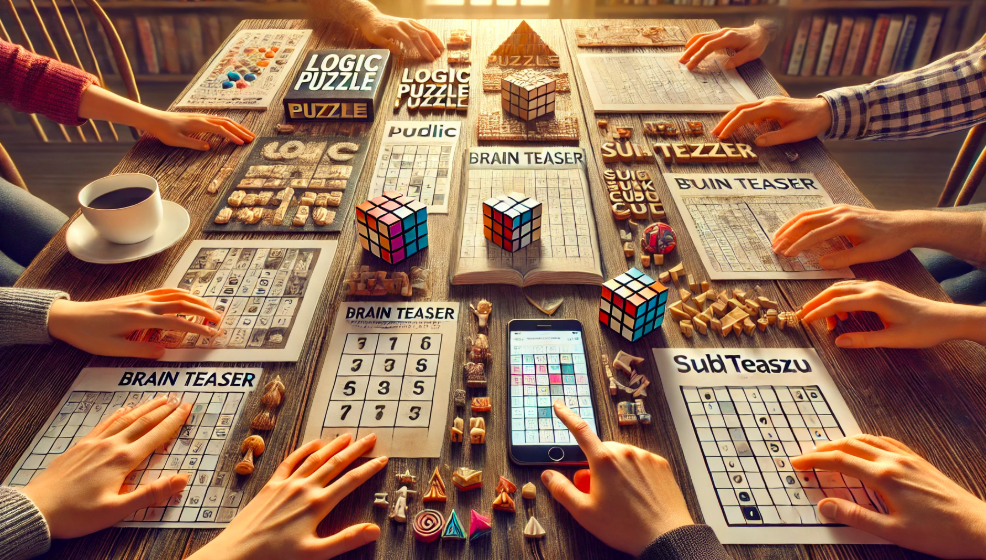
What Are Brain Teaser Puzzles?
Brain teaser puzzlesare short, challenging problems that test your thinking ability. They are designed to stretch your brain by making you think in creative or unexpected ways. Unlike traditional puzzles like jigsaws or crosswords, brain teasersfocus more on logic, wordplay, reasoning, and problem-solving.
What makes brain teasers unique is that they often present a question or situation that looks simple at first but requires careful thought to solve. They may not follow regular patterns and often push players to think outside the box.
- Riddles:These are short questions or statements with clever or tricky answers.Example:"What has keys but can’t open locks?" (Answer: A piano)
- Lateral Thinking Puzzles:These require solving problems in creative ways rather than straightforward logic.Example:"A man pushes his car to a hotel and tells the owner he’s bankrupt. Why?" (Answer: He’s playing Monopoly.)
- Visual Puzzles:These involve images, patterns, or shapes that challenge your perception or visual reasoning.Example:Spot the difference, pattern sequences, or find hidden objects.
History And Popularity Of Brain Teasers
Brain teasers have been around for centuries, starting with logic puzzles used by ancient Greek thinkers like Archimedes and Euclid. In the Middle Ages, riddles became a popular form of entertainment in poetry and storytelling. By the 19th and 20th centuries, brain teaserswere commonly found in books, newspapers, and classrooms, where teachers used them to improve students' reasoning, focus, and problem-solving skills.
Today, brain teasers are enjoyed by people of all ages through mobile apps, online games, and learning platforms like Lumosity and Brainzilla. These puzzles are now used not just for fun, but also in education, job interviews, and brain-training programs. Their mix of challenge and entertainment has made them a lasting favorite in both traditional and digital formats.
Benefits Of Solving Brain Teaser Puzzles
Solving brain teaser puzzlesis a great way to keep the mind active. These puzzles improve critical thinking by helping the brain look at problems from different sides. They also support memory by making the brain recall and store information better. When a person solves puzzles, their focus also improves because the brain learns to stay on one task without getting distracted. In addition, puzzles help grow creativity by encouraging new ways of thinking and finding patterns, which is useful in many areas like art, writing, and problem-solving.
Brain teasers are used in schools to build thinking skills and make learning more fun. Teachers use them to increase class participation and improve attention. Offices use puzzles in training and team-building to improve communication and teamwork. In healthcare, brain teasers are used in cognitive therapy to help people recover from memory loss or brain injuries. Trusted sources like the American Psychological Association and Harvard Health Publishing explain that these activities not only support mental growth but also reduce stress, helping people feel better emotionally.
Common Types Of Brain Teasers And How They Work
Brain teasers come in different forms, and each type works in a unique way to challenge the brain. They help improve thinking, memory, and problem-solving skills by using different mental processes. Here are the most common types of brain teasers with short examples to explain how they work.
Word-based teasersfocus on language and wordplay. They help build vocabulary, attention to detail, and understanding of how words connect. A simple example is: What has hands but can’t clap?The answer is a clock. It uses words in a fun and tricky way to make the brain think deeper.
Logic puzzlestest reasoning skills. They often involve rules or patterns that need to be followed to find the right answer. An example: A man is looking at a picture. Someone asks, “Whose picture is it?” He replies, “Brothers and sisters, I have none, but that man’s father is my father’s son.” Who is the man in the picture?The answer is his son. These puzzles train the brain to think step by step.
Math riddlesmix numbers with logic. They improve calculation skills and the ability to think clearly under pressure. For example: If two’s company and three’s a crowd, what are four and five?The answer is nine. It sounds like a word puzzle but is solved with math.
Visual brain teasersuse pictures, patterns, or shapes. They help improve attention and the ability to recognize small differences. A common example is spotting the difference between two similar images or finding a hidden object in a picture.
Trick questionsare designed to confuse the brain. They often use common words in an unexpected way. For example: What gets wetter the more it dries?The answer is a towel. These puzzles teach the brain to think outside the box and not just take words at face value.
Brain Teasers For Different Age Groups
Brain teasers are designed to match the thinking skills of different age groups. From young children to older adults, these puzzles help improve focus, memory, and problem-solving. The level of difficulty changes depending on the age and mental abilities of the person. Studies from sources like Harvard Health and Scholastic show that age-appropriate brain challenges help boost brain function and keep the mind active.
For kids, brain teasers are simple and focus on fun learning. These puzzles help children grow their vocabulary, learn basic logic, and improve attention. An example for kids is: What has four legs but can’t walk?The answer is a table. Such puzzles are easy to understand and help children learn how to think in a structured way.
For teens, puzzles become more complex and may involve patterns, numbers, or wordplay. They support problem-solving, creative thinking, and mental flexibility. A good example for teens is: I speak without a mouth and hear without ears. I have no body, but I come alive with wind. What am I?The answer is an echo. This level of puzzle helps improve deeper thinking and reasoning.
For adults, brain teasers often involve logical reasoning, memory, and multitasking. These puzzles are useful for managing stress and staying mentally sharp during busy daily life. An example is a Sudokupuzzle or a logic riddle like: You see a boat filled with people, but there isn’t a single person on board. How is that possible?The answer is they are all married. This type of puzzle builds focus and mental clarity.
For seniors, brain teasers are designed to support memory and cognitive health. They are helpful in keeping the brain active and slowing down age-related decline. Simple crossword puzzles, word searches, or visual puzzles are common. A gentle riddle for seniors could be: What comes once in a minute, twice in a moment, but never in a thousand years?The answer is the letter M. These puzzles are fun, low-stress, and support brain wellness.
How To Create Your Own Brain Teasers
Brain teasers are short puzzles or questions that test your thinking. They are fun to solve and also good for the brain. If you want to create your own brain teasers, follow this simple guide. This step-by-step method will help you make puzzles that are clever, clear, and fun.
Step 1: Pick The Type Of Puzzle
Start by choosing what kind of brain teaser you want to make. There are many kinds. Here are a few examples:
- Word puzzles (play with words or meanings)
- Math puzzles (use numbers or counting)
- Logic puzzles (use clues and reasoning)
- Trick questions (sound easy, but are not)
Decide which kind you like best. This helps you stay focused while designing.
Step 2: Begin With A Simple Concept
Great brain teasers often come from simple ideas. You don’t need a big story or many details. Start small. For example:
- A question with two meanings
- A sentence where something is missing
- A riddle with a hidden clue
The simpler the idea, the easier it is to shape into a teaser.
Step 3: Add A Clever Twist
The twist is what makes your brain teaser special. It’s the part that surprises the reader. This could be:
- A word that sounds like something else
- A detail that most people will miss
- A trick in the question that changes the meaning
The twist should not be unfair. It should be something that makes sense after the answer is known.
Step 4: Keep It Clear And Short
One of the most important parts of a good brain teaser is clarity. The reader should understand the question right away. Use short sentences and simple words. Avoid too much detail. Every word should help the reader move toward the answer—or away from it, if that’s your trick!
Also, brain teasers work best when they are short. People enjoy solving quick puzzles. If it takes too long to read, they may lose interest.
Step 5: Make Sure The Logic Works
Now test your puzzle. Try to solve it yourself. Ask others to solve it too. Make sure there is only one correct answer. If people come up with different answers, your puzzle might be too vague or confusing.
Good logic means that the answer clearly fits the clues. The reader should feel like, "Oh, I missed that!"—not "That made no sense."
Step 6: Write The Answer Clearly
Once your teaser is ready, write the answer down in a clear way. You can share the answer below the puzzle or keep it hidden to challenge others. Be ready to explain how you reached that answer if someone asks.
This helps people understand your logic and learn how to think in new ways.
Step 7: Try It On Others
Test your brain teaser on a few people. See how they respond. If they smile or say, “That’s clever,” you’ve done well. If they get confused or frustrated, try to make it clearer. Maybe the wording needs to be shorter, or the clues need to be stronger.
What Makes A Brain Teaser Effective?
Three things make a brain teaser really work:
- Clarity: The question must be easy to understand.
- Twist: There should be something unexpected or tricky.
- Logic: The answer must follow clear reasoning. Even if it’s tricky, it should make sense once revealed.
A good brain teaser makes the reader think, pause, smile, and say, “Oh! Now I get it.”
Start Creating Today
Now that you know the steps, try making a brain teaser of your own. Don’t worry if your first one isn’t perfect. Like any skill, it gets better with practice.
Start small. Choose a simple idea, add a little twist, and keep it clear. Share it with friends and see how they respond. You’ll get better with every teaser you create.
Online Resources And Apps For Brain Teaser Puzzles
There are many websites, mobile apps, and YouTube channels where people can enjoy brain teaser puzzles. Some are free, and others offer extra content for a small cost. These platforms are great for beginners as well as advanced puzzle lovers. Here are some of the best resources available online:
Websites
1. Braingle (www.braingle.com)
Braingle is a large website filled with thousands of brain teasers, riddles, and logic puzzles. It offers daily challenges, quizzes, and a community forum. You can even create your own puzzles and share them with others. This site is free and suitable for all skill levels.
2. Puzzle Prime (www.puzzleprime.com)
Puzzle Prime provides a wide range of puzzles including logic problems, riddles, and brain teasers. The website is easy to use, and puzzles are grouped by category and difficulty. It’s a good choice for both beginners and experienced users.
3. Riddles.com (www.riddles.com)
This site is great for quick access to short brain teasers and riddles. Puzzles are listed by category, and each one includes an answer that can be revealed after guessing. The site is free and perfect for casual users.
Mobile Apps
1. Brain Test: Tricky Puzzles (iOS, Android)
This app offers fun and creative brain teasers with a twist. It includes tricky logic and funny situations that test your thinking. The app is free with optional in-app purchases. It works well for all ages, especially beginners.
2. Peak – Brain Training (iOS, Android)
Peak includes a wide selection of brain games, including logic puzzles and memory challenges. The app tracks your progress and adjusts difficulty based on your skill level. It’s free with a premium option for more features.
3. Brain It On! (iOS, Android)
This app is a mix of brain teasers and physics puzzles. Players draw shapes to solve problems. It is fun and challenging for people who like creative thinking. The app is free with ads and offers in-app purchases.
4. Elevate (iOS, Android)
Elevate is a brain training app focused on improving thinking and logic through games. It includes puzzle-based challenges that increase in difficulty. It’s free to start and has a premium version with more tools. Suitable for intermediate to advanced users.
YouTube Channels
1. MindYourDecisions (by Presh Talwalkar)
This YouTube channel shares math puzzles, logic brain teasers, and tricky riddles. The host explains each solution clearly. Puzzles are often based on real-world thinking and are great for learners of all levels.
2. TED-Ed Riddles
TED-Ed has a playlist of animated riddles and brain teasers. Each video presents a short story or puzzle, followed by a solution. The animations make the puzzles fun to watch and easy to understand. These are ideal for beginners and visual learners.
3. Puzzle Guy
This channel focuses on logic puzzles, escape room challenges, and creative brain games. It’s best for users who enjoy complex thinking and unique ideas. Many puzzles are explained step by step.
Accessibility for All Levels
These resources are suitable for different skill levels:
Beginners: Try apps like Brain Test or watch TED-Ed Riddles.
Intermediate Users: Use websites like Braingle or apps like Peak.
Advanced Puzzle Solvers: Watch MindYourDecisions or try the harder levels on Brain It On! and Elevate.
Many of these platforms offer content in different formats: text, games, and videos. Whether you're learning or practicing, these resources can help you build better thinking skills.
Brain Teasers In Education And Learning
Brain teasers are short puzzles that challenge the mind. They are now widely used by teachers and parents to support learning. These fun questions help students think in new ways and improve their problem-solving skills. Research in education shows that brain teasers can also boost focus, memory, and confidence in children of all ages.
How Teachers Use Brain Teasers In The Classroom
1. To Start the Day or a LessonMany teachers begin a class with a brain teaser. This helps students get ready to think and focus. It creates a positive learning mood and wakes up the brain. A short puzzle at the start of class can also help reduce stress and make students more alert.
2. To Build Thinking SkillsBrain teasers help students learn how to look at a problem from different angles. They train the brain to be more flexible. Teachers often use them during math, language, or science lessons to help develop logical thinking, pattern recognition, and attention to detail.
3. To Support Group WorkIn classrooms, brain teasers are often solved in pairs or small groups. This improves teamwork and communication. Students learn how to share ideas, listen to others, and solve problems together. It also builds a classroom culture where thinking and sharing are encouraged.
4. To Help All LearnersTeachers like brain teasers because they work well with different learning styles. Visual learners, hands-on learners, and even those who struggle in traditional lessons can enjoy brain teasers. They can be adjusted for different levels, from easy to challenging, making them useful for both younger and older students.
How Parents Use Brain Teasers At Home
1. To Reduce Screen TimeParents often use brain teasers as a healthy alternative to video games or social media. These puzzles can be done without screens and are a fun way to spend time with children while helping them learn.
2. To Make Learning FunMany parents use brain teasers during daily routines, such as car rides or dinner time. This turns learning into a fun, family activity. It helps children see that learning doesn’t always need a book or classroom.
3. To Improve Focus and MemoryBrain teasers support skills like memory, focus, and attention span. Parents use them to help their children build stronger study habits in a stress-free way.
Educational Benefits Of Brain Teasers
Studies from education experts, such as those published by the National Association for the Education of Young Children (NAEYC)and Edutopia, highlight several learning benefits of using brain teasers:
- Improve problem-solving and critical thinking
- Boost creativity and imagination
- Increase motivation and class participation
- Strengthen reasoning and logic
- Encourage a growth mindset (the belief that ability improves with effort)
FAQs For “Brain Teaser Puzzles”
What Is The Purpose Of Brain Teaser Puzzles?
The purpose of brain teaser puzzles is to improve thinking skills such as problem-solving, focus, and logic. They help train the brain to think in new ways, support memory, and build mental flexibility. Brain teasers also make learning more fun and engaging for both children and adults. They are often used by teachers and parents to boost confidence and encourage creative thinking.
Are Brain Teasers Good For Brain Health?
Yes, brain teasers are good for brain health. They help keep the brain active and sharp by challenging memory, focus, and reasoning. Regularly solving brain teasers can support mental fitness, especially as people get older. According to health experts, mental exercises like puzzles may help slow down age-related memory loss and improve thinking speed. Brain teasers also reduce stress and boost mood by giving the brain a fun and healthy activity. They are a simple way to support long-term brain health for people of all ages.
Can Kids Solve Brain Teasers?
Yes, kids can solve brain teasers. In fact, brain teasers are often designed to match different age levels and learning stages. For children, these puzzles help build thinking, focus, and problem-solving skills in a fun way. Teachers and child development experts use brain teasers in classrooms to support learning and improve attention. When kids solve puzzles, they learn how to think carefully, make decisions, and try new ideas. Brain teasers also boost confidence and help children enjoy learning through play.
Where Can I Find Brain Teaser Puzzles Online?
You can find brain teaser puzzles on many websites that offer free or paid content for different age groups and skill levels. Websites like Braingle.comhave a large collection of riddles, logic puzzles, and quizzes. PuzzlePrime.comalso shares high-quality puzzles with clear solutions and categories for all levels. Riddles.comis another easy-to-use site with short and fun brain teasers for kids and adults. These platforms are trusted by teachers, parents, and puzzle fans around the world. Many of them are free and can be used on phones, tablets, or computers.
Do I Need To Be Smart To Solve Brain Teasers?
No, you do not need to be smart to solve brain teasers. Brain teasers are made for all kinds of thinkers, not just those with high test scores. They help people learn how to look at problems in new ways. The more you practice, the better you get at solving them. Experts say that solving brain teasers builds thinking skills over time. It is not about being smart from the start — it’s about learning and growing through practice. Brain teasers are for everyone, and they help improve focus, logic, and confidence, no matter your skill level.
Jump to
What Are Brain Teaser Puzzles?
History And Popularity Of Brain Teasers
Benefits Of Solving Brain Teaser Puzzles
Common Types Of Brain Teasers And How They Work
Brain Teasers For Different Age Groups
How To Create Your Own Brain Teasers
Online Resources And Apps For Brain Teaser Puzzles
Brain Teasers In Education And Learning
FAQs For “Brain Teaser Puzzles”
Latest Articles
Popular Articles